
Every year, Austria inspires many travelers, like you and us. Sadly, this also creates a problem: the Alps inspire a lot of people, especially during the two high seasons, summer and winter. Too many. That’s one of the reasons we’ve created this Green Travel Guide, to help you prepare for your next vacation in Austria — and to help you travel in a more sustainable and eco-friendly way while you’re there.
Popular, more popular, Austria
In 2025, Austria broke another visitor record, surpassing 40 million overnight stays between May and July. As host Marco Spiess explained in an interview, this delighted tourist regions such as Tyrolean Oberland, Tyrol, and East Tyrol. However, it also brought a host of challenges.
Preserving the stunning natural environment requires sustainable behavior when vacationing in Austria. But what does that actually mean?

What does sustainable travel mean in Austria?
Sustainable travel encompasses many aspects. If you’d like to learn more, check out these two blog posts on the basics and tips of sustainable travel.
In general, the journey to your destination plays a significant role in the harmful climate impact of tourism. That’s why the general rule is that the shorter the journey, the better.
To learn more, read our background article on sustainable travel or check out our expert tips.
Austria is centrally located in Europe and easily accessible by public transportation. This means you can comfortably leave your car at home and travel by bus or train. Flying? It’s unnecessary within Europe!
Additionally, more and more vacation destinations are committing to sustainability by supporting the local economy, facilitating green travel, and creating local incentives for emission-free transportation. We’ve compiled a list of ways you can contribute to a sustainable vacation in Austria in our Green Travel Guide.
Green Travel Guide: Sustainable vacation in Austria

Tips for Your Trip
Take the train instead of driving. Avoid short-haul flights from neighboring countries or within Austria. Also, pack light. Not only will you have less to carry, but vehicles also consume more fuel when they’re heavily loaded. This is especially relevant if you end up driving. Another often-overlooked option is the long-distance bus. They are often much cheaper than trains and, according to calculations by the Environmental Agency, just as eco-friendly.
Local Mobility
An increasing number of destinations are offering their guests the opportunity to plan sustainable vacations. This can be through improved rail connections, guest cards, or incentives created by accommodations, such as free e-bike rentals for guests arriving by train. One example is the Hotel Klosterbräu in the popular vacation region of Seefeld.
Other destinations have joined the Alpine Pearls initiative, thereby committing to climate protection and sustainable tourism practices. The three Alpine Pearls destinations in Austria—Mallnitz and Weissensee in Carinthia and Werfenweng in the Salzburg region—are car-free. Hiking, valley, and ski buses take guests everywhere. Additionally, e-bikes and bicycles are provided free of charge.

The regions along the Danube have also partnered to ensure sustainable mobility for guests. In addition to buses, trains, and bicycles, the Transdanube Pearls offer boat trips that connect the towns.
Side Note: Cable Car
Criticism is often voiced when new cable cars are built. However, people often focus solely on recreational activities, such as skiing, or tourist traffic. Yet, cable cars are a form of public transportation, just like buses and trains and serve as vital supply routes for remote mountain huts and alpine pastures.
At first glance, the right-of-way that must be cleared for construction seems to conflict with nature, but if you consider how much space a road would take up, not to mention the additional noise, materials, and time required, you may realize, as we have, that a cable car actually takes up less space.
Ultimately, a cable car’s environmental impact depends on how it is operated. According to a WKO survey, 85% of member cable car companies use green electricity, often from hydropower, and 78% have photovoltaic systems. Cable cars also fulfill a social purpose by enabling seniors, people with disabilities, and children to experience the mountains. You can read more about this here.
Sustainable Hotels and Vacation Homes in Austria
One way to make your vacation in Austria more sustainable is to choose eco-friendly accommodations. These establishments are dedicated to preserving Austria’s unique natural environment and take their responsibilities seriously. This allows you to enjoy your stay with a clear conscience.
Look for specific certifications, such as the EU Ecolabel, the Austrian Ecolabel, or GreenSign, to identify sustainable hotels and vacation homes. You can also find them on curated platforms like the Green Pearls® network, where each property’s sustainable initiatives are listed transparently. Familiarize yourself in advance with the criteria an accommodation must meet. At Green Pearls®, for instance, these include sustainable energy production, local food sourcing, environmental protection during construction and operation, and social responsibility (employees, community projects, etc.).
Green Pearls® Partner in Austria
Hotel Stanglwirt, Kitzbühel, Tyrol
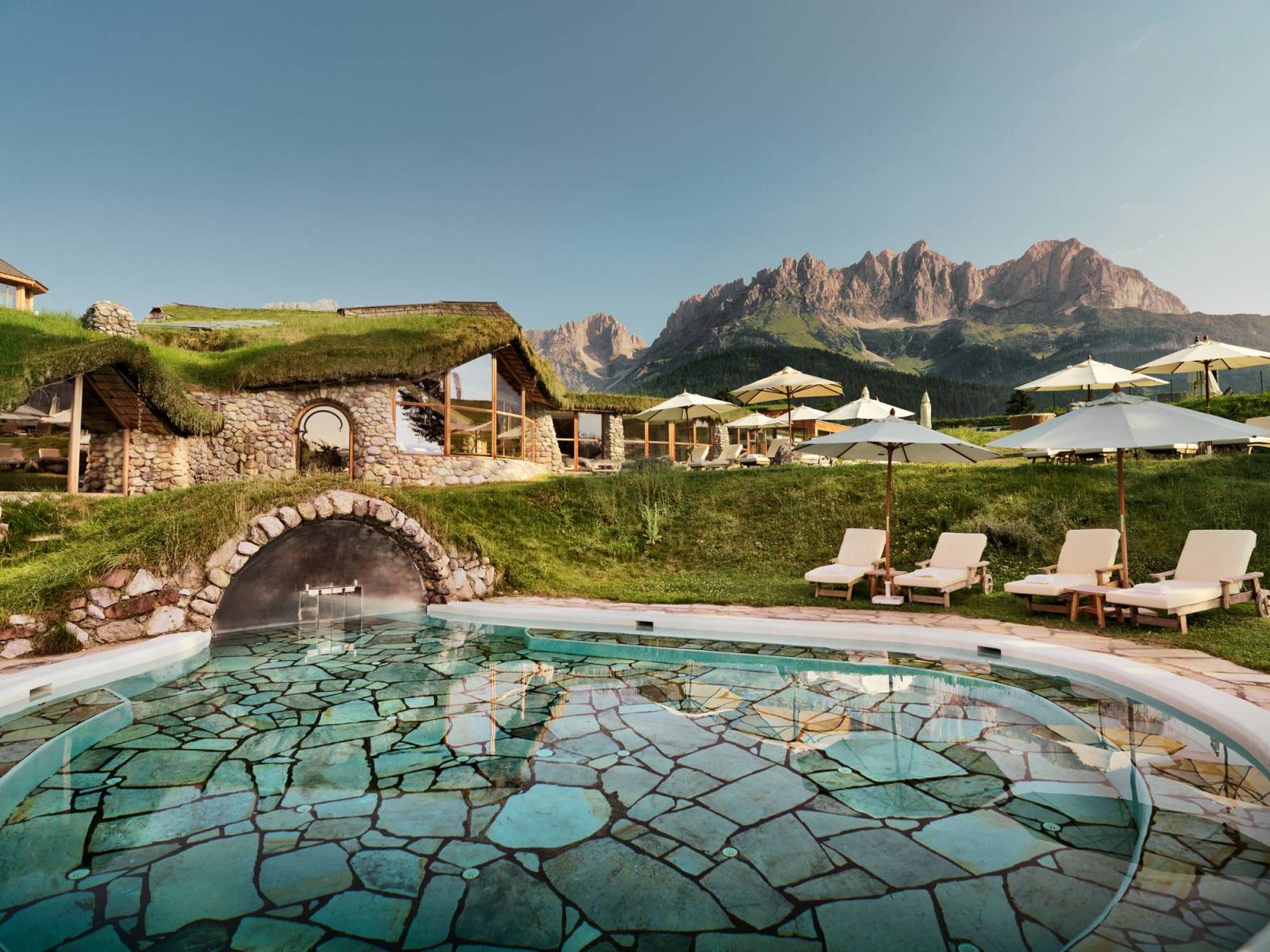
Traditional hotel on the Wilder Kaiser near Kitzbühel, Tyrol • Sustainable luxury hotel with its own biomass power plant • Integrated into an organic farm • Huge spa with sauna area and rock pool • Sports pools, tennis courts, Lipizzaner stud farm • Childcare
Discover the hotels and vacation rentals at Green Pearls®: Hotel Klosterbräu | Stanglwirt Organic & Wellness Resort | Ebner 1822 | Hygna Chaltes | Schloss Lerchenhof | Naturhotel Outside | Summit Lodges Pfunds | LENI MOUNTAIN Apartments & Chalet | The Peak Sölden
Good for you and for the region
When you stay at a sustainable hotel, regional products are provided, but even if you do your own shopping because you’re staying in a vacation home or eat out, you should make a point of choosing regional products.This way, you’re supporting the local economy and local farmers. Good guidelines for shopping and finding restaurants include the AMA seal, whose standards exceed those of the EU organic label, as well as Bio Austria, Demeter, and the Grüne Haube.
Sustainable Activity Guide for Austria
The best way to explore Austria is on foot. There are numerous hiking trails — according to the Alpine Club, around 40,000 kilometers — that lead you to remote regions and through virtually untouched nature. In this blog post, we highlight some easily accessible hiking trails near Green Pearls® Hotels.
If you’re interested in hiking in Austria’s largest national park, Hohe Tauern, Karin, the hiking concierge at Naturhotel Outside, shares important insider tips about the largest national park in the Austrian Alps in this interview: https://green-travel-blog.com/de/insider-tipps-fuer-ein-nachhaltiges-wanderwochenende-im-nationalpark-hohe-tauern/.

The Alpine region is not only perfect for hiking. Cyclists, from touring cyclists to mountain bikers, will also find plenty to enjoy. You can explore Austria on horseback or by kayak, emission-free and from a whole new perspective. If you’re not into athletic activities, how about a wellness vacation at a sustainable wellness hotel?

If you want to actively contribute to environmental protection while on vacation, why not join a CleanUP Day organized by Patron e.V., Plasticfree Peaks, and local communities? You’ll clean up trash from the trails with a group of like-minded people and make a difference.
Sustainable Vacations in Austria – Sustainable Essentials for Your Packing List
Although packing is very personal, there are a few essentials that should be included in every suitcase for a sustainable vacation. Here’s a quick overview:
● Glass or metal water bottle to avoid single-use plastic bottles
● Jute or cloth bags for your shopping
● Beeswax wraps or a lunchbox for your snack on the mountain
● Natural cosmetics, solid soaps, and more are free of microplastics.
(Tip: If you have small, travel-size shower gel bottles at home, don’t throw them away. Instead, refill them with your shower gel or shampoo for shorter trips, if you don’t already use solid products.)
● Eco-friendly sunscreen (even in winter!)
Tip: Take advantage of rental services offered by hotels and vacation homes. Many eco-friendly accommodations also rent out equipment. The Naturhotel Outside, for example, provides guests with hiking backpacks, poles, snowshoes, and other items. The most important thing to bring is a good pair of shoes.
Feel free to add to the list in the comments 🙂
Take your time and let go

Austria has so much to offer that it’s tempting to rush from one beautiful spot to the next. But we strongly encourage you to take your time and enjoy a sustainable vacation in Austria. Let a place slow you down and discover it in a whole new way during your vacation. By the way, this doesn’t have to be during peak season. The mountains are beautiful in spring and fall, too. Maybe even a little more beautiful. 😉
This is an update from January 13, 2023
You want to save the travel guide for your next sustainable vacation in Austria? Then pin one of the pins or use the button at the end of the article.


1 thought on “Sustainable Vacation in Austria – All about eco-friendly travel, accommodations and activities (Green Travel Guide)”