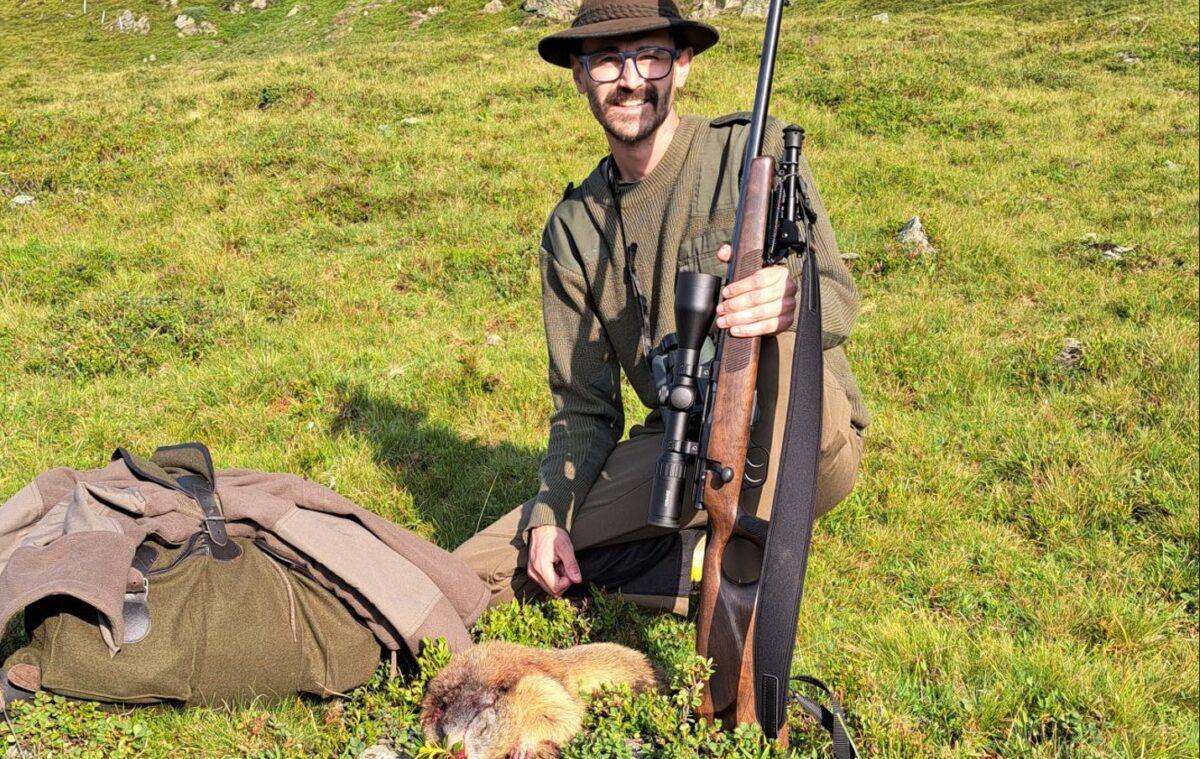
Within the Green Pearls® network, we have observed two developments. First, more and more hotels are intentionally offering less meat, or even eliminating it from their menus entirely. On the other hand, many of our hosts highly value wild game. They consider it a regional and natural alternative to conventional animal husbandry. Hunting is defended with arguments such as protecting the forest, regulating wild animal populations, and contributing to species conservation. But what is really true?
Many questions and heated debates
Do we need hunters to maintain healthy forests? Wouldn’t wild animal populations regulate themselves without human intervention? Is wild game really the better choice? It’s a topic that one could describe as “charged.” Therefore, we spoke with people who are directly involved.
Among them are hunters from our hotel network and a veterinary pathologist who examines several hundred wild animals each year. Additionally, we look to Switzerland, where private hunting has been banned in one entire canton for over 50 years.
Why do we hunt?
“Hunting and sustainability aren’t a contradiction to me, but they shouldn’t always be seen as a symbiotic relationship either,” says Marco Spiss. A passionate hunter, he is the host of the Summit Lodges Pfunds vacation homes in the Tyrolean Oberland.
Reason #1: Controlling the wild animal population
For him, controlling the wild population is a crucial task. In fact, both the BUND Naturschutz nature conservation association and the Swiss WSL research institution confirm that high deer and elk populations can impede forest regeneration. The animals eat buds and young shoots, making it difficult for certain hardwoods and firs to grow back. In extreme cases of wild browsing, the forest’s composition can change in the long term.
Marco also mentions the natural predators of wild animals. Wolves, lynxes, and bears are no longer present or only in small numbers in many regions. Without these predators, ungulates (e.g., X, Y, and Z) can multiply more easily.
However, he also recognizes the responsibility of humans.
“At the same time, we must keep in mind that these problems were created by humans, who are taking more and more of the natural landscape away from our wildlife. This forces them to concentrate in small areas, in part due to tourism, just to find some peace and quiet.” —Marco Spiss
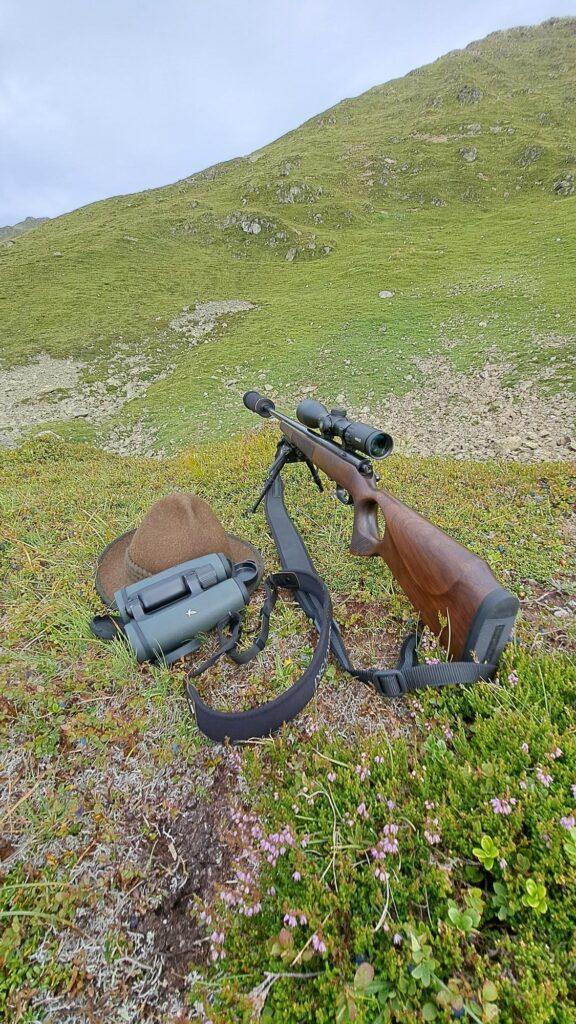
Wouldn’t wild animal populations regulate themselves?

To answer this question, we turned to Dr. Maja Eydner. She is a veterinarian and veterinary pathologist in Germany who specializes in wild animal diseases.
Her assessment of hunting is even more critical:
“What lies behind it [the hunt] are, of course, human interests.” —Dr. Maja Eydner, veterinary pathologist
When hunters argue that they need to protect the forest by shooting animals, they are essentially imposing their vision for the forest’s development.
“A forest can only become ‘too crowded’ if there are limits. If there are no limits, the population regulates itself and the forest is not destroyed.” – Dr. Maja Eydner
But does this also work in our modern, fragmented cultural landscapes?
Large parts of Central Europe are no longer pristine natural spaces. Forests are shrinking and are almost always exploited for economic purposes. Residential areas and roads cut through habitats. However, agricultural areas provide additional food sources for some species of wild animals. Simultaneously, large predators are absent from many areas.
The landscape is shaped by people

Therefore, the decisive question is not whether the plant and animal world can regulate itself — we know it can without human disturbance — but rather, which developments do we want, should, and can we allow in our human-shaped landscape?
Thus, we return to Maja’s argument. Today’s wildlife management goals are largely defined by us humans. Examples include rejuvenating certain tree species, protecting agricultural yields, and preventing wildlife accidents.
Those are all good reasons – from a human perspective!
Additional sources
Um tiefer in das Thema einzutauchen, lies gern hier weiter:
- Universität Freiburg: Können Raubtiere zur Lösung des Wald-Wild-Konflikts beitragen?
- Universität Göttingen: Der Wald-Wild-Konflikt.
Reason #2: Hunting helps prevent animal diseases
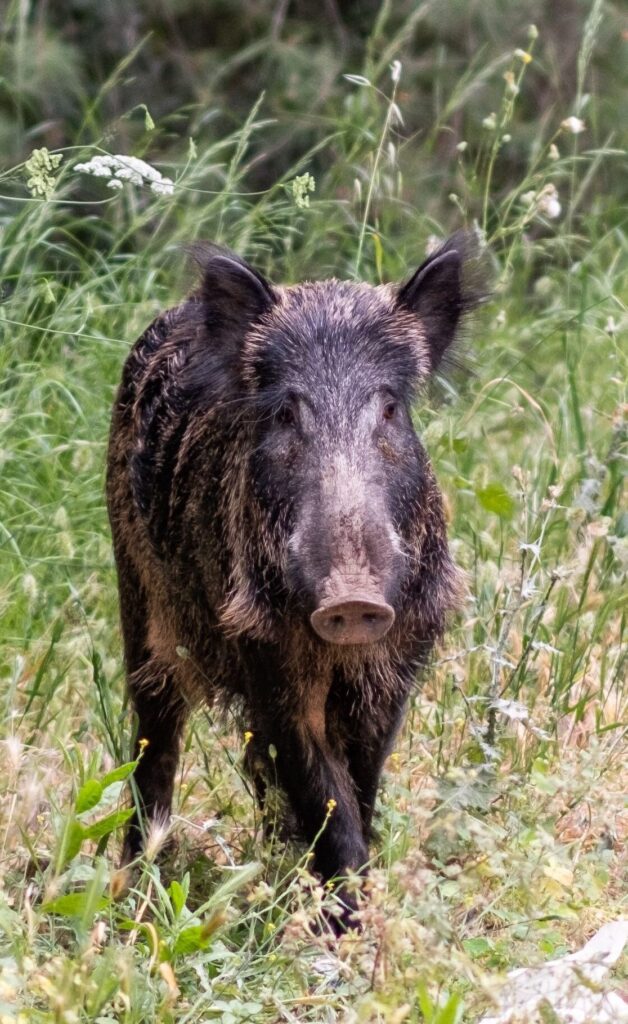
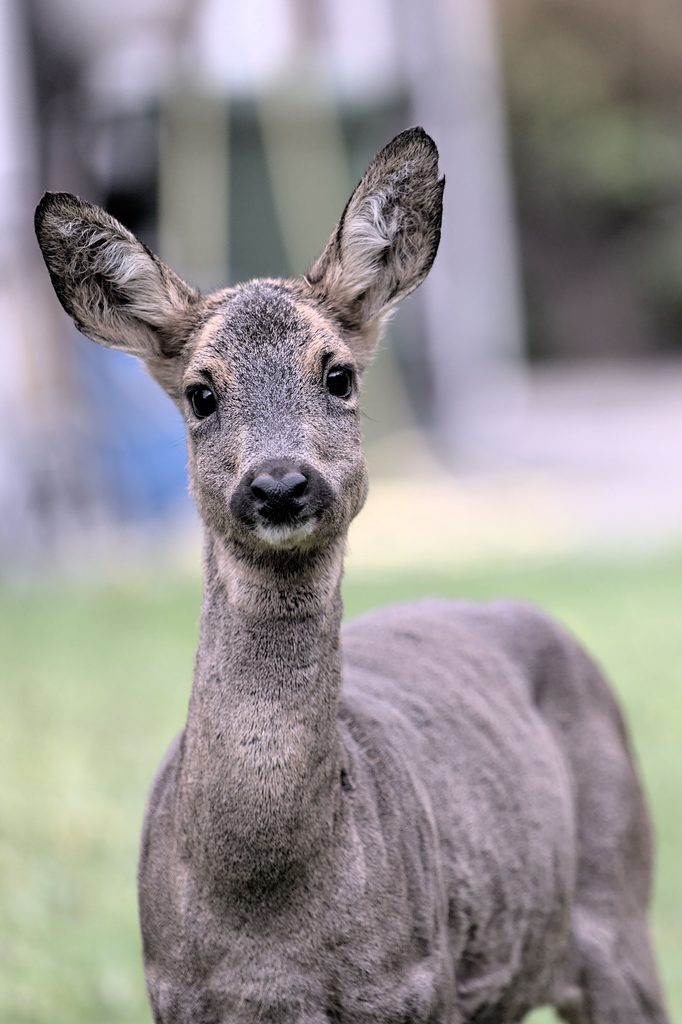
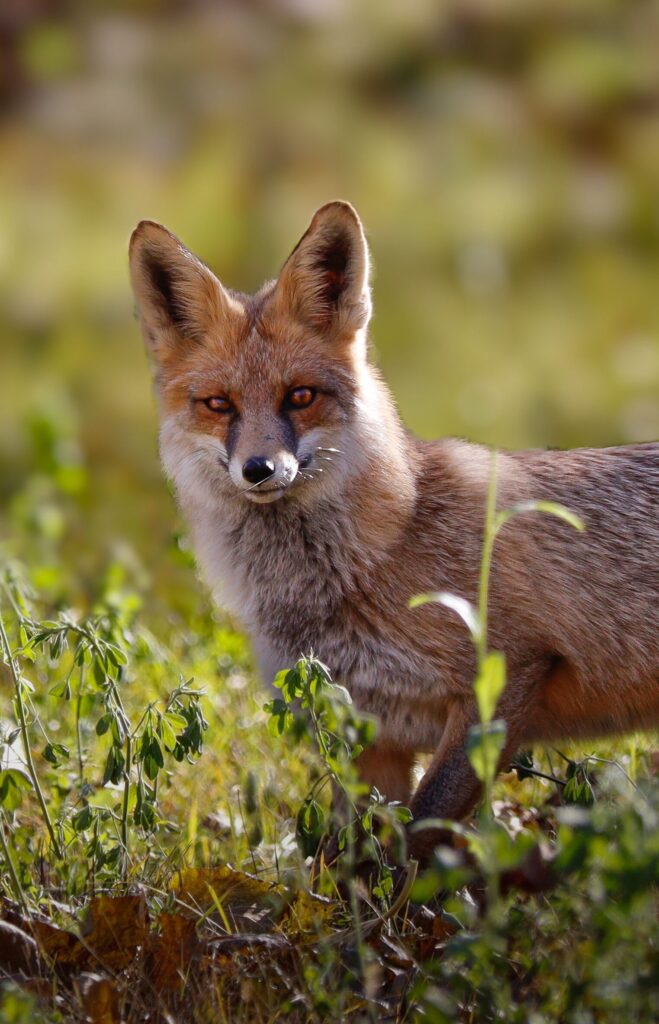
Wild boars, roe deer, and foxes call the forests of Central Europe home. | IMAGES: Pexels
Another argument for hunting is controlling animal diseases such as African swine fever. This viral disease is dangerous for domestic and wild pigs but harmless to humans.
Once again, Maja sees a connection to human interests.
“If we consider the African swine fever in wild boars, for example, the greatest interest lies in preventing its spread because the economy does not want the domestic pig herds, which are kept for meat production, to be affected.” – Dr. Maja Eydner
The eradication of the disease actually also (or even primarily) serves to protect the agricultural livestock industry. At the same time, the goal is to prevent further infections and the resulting animal suffering. Whether hunting helps depends on the circumstances. The Friedrich Loeffler Institute (FLI) points out that the measures must be carefully tailored to the local situation in the event of an outbreak. Because: If infected wild boars are startled, they can wander off and spread the virus.
Health monitoring by hunters
Maja emphasizes, however, an important task of hunters: health monitoring. The FLI explicitly calls on hunters to report any unusual or dead wild boars and to have the necessary samples examined.
“There are many hunters who are very careful and bring suspicious samples to the veterinary laboratory.” —Dr. Maja Eydner
Thus, they provide crucial information about diseases affecting wild animal populations.
Reason #3: Hunting is a tradition
However, regulation of wild populations is only one argument. Although it is often mentioned, one could argue that it is not really at the heart of hunting. More often, hunting is closely tied to regional culture and defended on that basis.
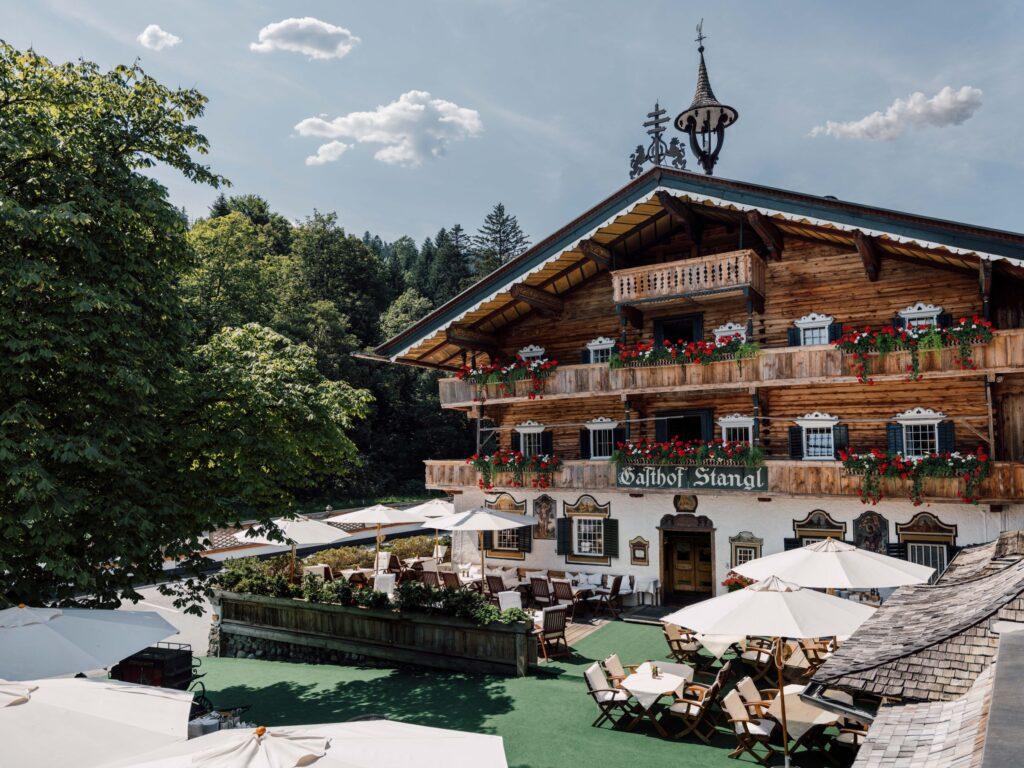
The Organic Green Spa Resort Stanglwirt in Tirol is one example. The traditional hotel has been rooted in the region for centuries. Traditional lederhosen, folk music, and hunting trophies are all part of the hotel’s identity, as is its own farm.
The Stanglwirt operates a certified organic farm with intentionally limited production. The farm raises cows for its own milk and cheese production. While the hosts are aware that raising cattle and producing milk is associated with greenhouse gas emissions, they still want to preserve this form of agriculture as part of their regional tradition.
The Stanglwirt’s hunting ground experience
The same goes for hunting. The hotel has a 600-hectare hunting reserve near Wilder Kaiser. It is managed according to current hunting and management regulations. As a guest, you can explore the area with a guide. According to the hotel’s website, you can also book hunting experiences and have the opportunity to take home a personal trophy.
Clearly, this is about more than just forest protection. Hunting is also a cultural practice, a recreational activity, and for some people, an expression of their connection to their homeland.
This human interest should be acknowledged. The desire to preserve a tradition or take home a hunting trophy is not an ecological necessity.
Can we do without hunting? The example of Geneva
The Swiss canton of Geneva demonstrates that things can be done differently. In 1974, private hunting was banned by popular vote.
And what has happened since then?
According to the official report of the canton of Geneva, numerous species of wild animals have flourished. The number of overwintering waterfowl has increased, rabbits are present in relatively high numbers, and larger wild animals such as deer, elk, and wild boars are also present in the canton.
But: Wild animals are also shot in Geneva.
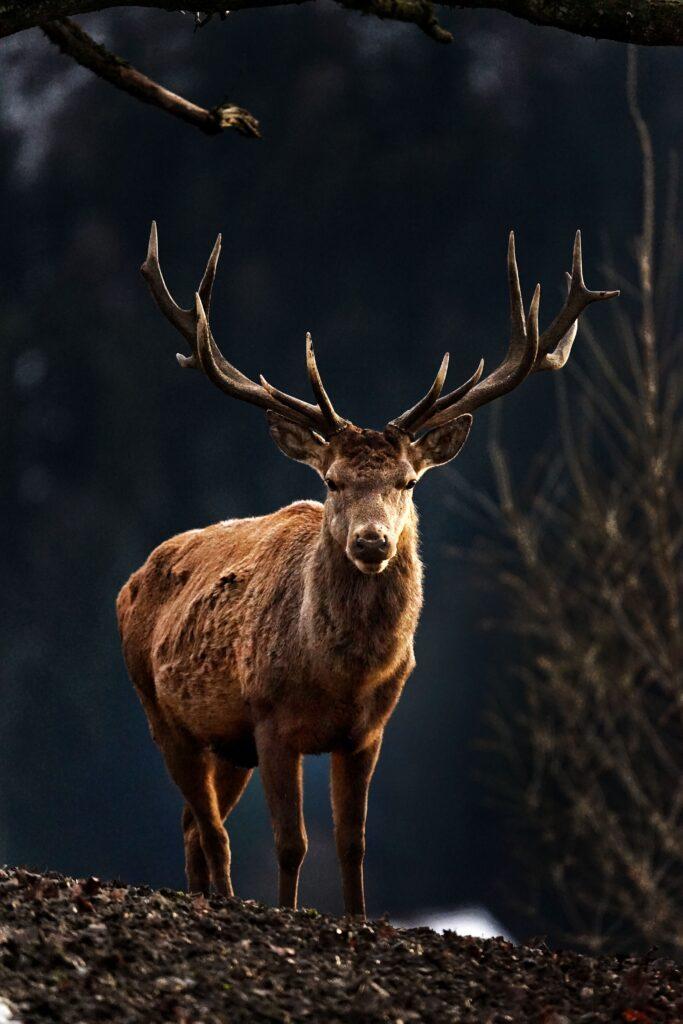
However, not by private hunters, but by state wildlife officers. They monitor the populations and carry out “targeted shootings” when necessary.
Only in June 2026 did the Geneva State Council once again decide to regulate wild boars and red deer. The decision was made in response to damage to agricultural crops and forest areas.
So, does this mean that hunting is necessary?
Geneva’s example shows that we certainly don’t need it as a tradition or purely recreational activity, as we see in many places today. In our densely populated, economically intensive landscape, however, conflicts between humans and wildlife are inevitable. Targeted interventions in wildlife populations remain virtually unavoidable, especially when large predators such as wolves and bears are not present in sufficient numbers.
“To put it plainly: From a human perspective, animals must be killed to meet our needs and protect the remaining population so the surviving animals have sufficient space and food in their drastically reduced habitats. From our perspective, however, the truly crucial question is how we can provide wild animals with more suitable and contiguous habitats on this planet. Only in this way can we reduce human interference.”
Is wild game meat the better choice?
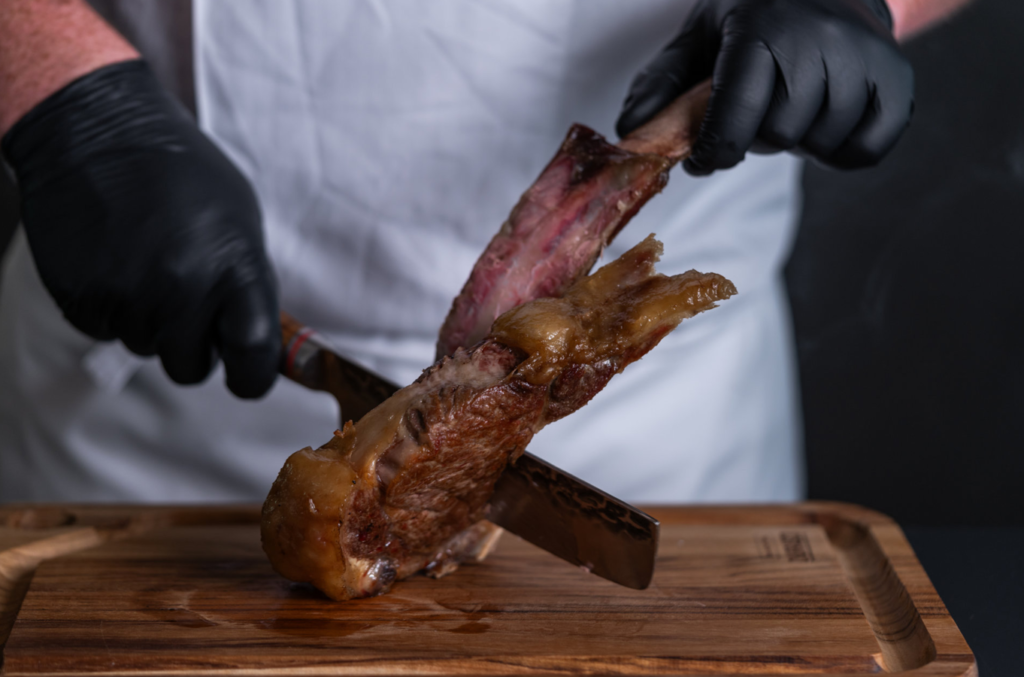
Now, let’s talk about wild game ragout. After all, regardless of why an animal was shot, it’s important to consider what happens to the meat afterwards.
At STURM in the Rhön, locally sourced game is a prized part of the menu. Junior host Xaver Schulze Diekhoff goes hunting in the local grounds himself. The kitchen prepares the meat, which is supplemented by game from trusted regional hunters.
During our interview with STURM’s next generation, Xaver discussed how hunting changed his perspective on food:
“‘I am a passionate hunter, and that is precisely why I have developed a special appreciation for meat. People who know where it comes from and take responsibility for it automatically treat it with greater care.” — Xaver Schulze Diekhoff
Wild animals do not live in barns. They bask in the sun and feed on whatever their habitat provides. Marco Spiss of Summit Lodges sees this as a major advantage. For him, the regional origin of the meat, the short distance between the hunt and processing, and the opportunity to replace meat from intensive livestock farming are precisely the reasons that make game meat the better choice.
He also places great importance on “nose-to-tail” processing. When it comes to marmots, for example, he doesn’t just eat the meat; he also uses the fat. “The fat is boiled down and then either drunk or rubbed into the skin. It’s an effective home remedy for stomach ulcers or joint pain because it contains natural cortisone,” he says.
Wild animals have better lives than livestock raised for meat
Dr. Maja Eydner understands the issues surrounding animal life. She considers meat from wild animals to be a reasonable alternative to meat from animals raised in intensive farming operations, but only in moderation.
This is because the animal was able to engage in its natural behaviors before it died. It could move about, forage for food, and interact socially with other members of its species. That does not mean its life was free from hunger, disease, or stress. However, it had opportunities that animals in highly restricted housing systems lack.
Did you know? A pig raised for meat has an extremely short life. Instead of living up to 15 years, it only lives six months. According to a fact sheet from the Thünen Institute, the pig spends this time crammed into an area smaller than one square meter of bare concrete, being fattened up to a slaughter weight of 120 kilograms in record time with high-energy feed provided around the clock.
Why game ragout should remain an occasional meal
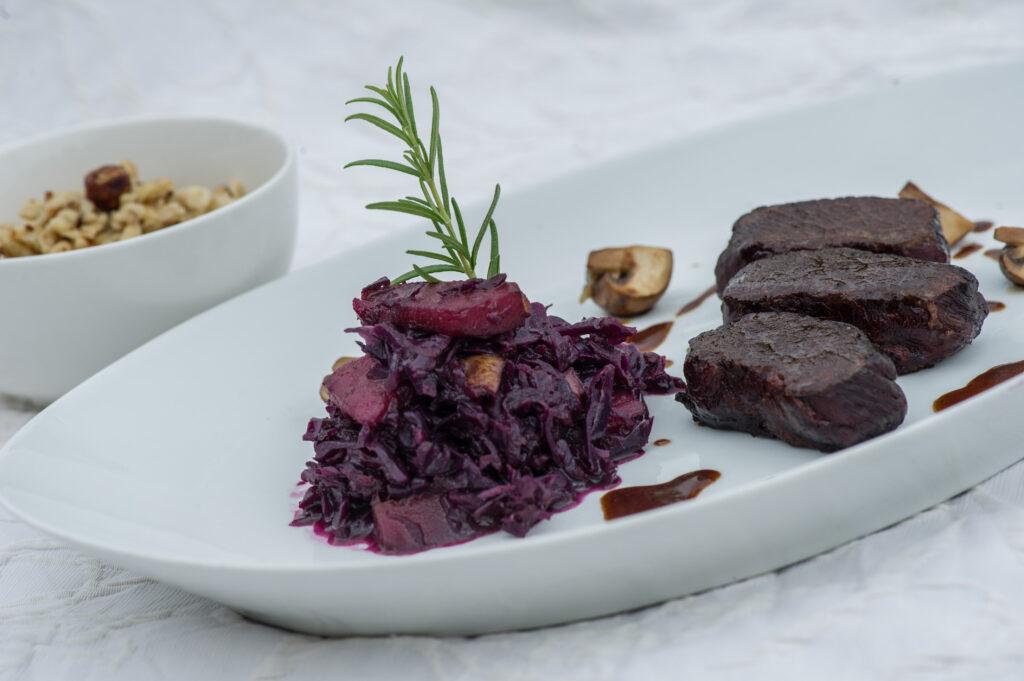
Suppose you decide to only eat meat from wild animals. You don’t want to support intensive animal farming, and you want to know where the meat comes from. In that case, however, you also have to accept that game meat is only available in limited quantities.
“If a hotel says, ‘We want to offer venison year-round,’ then I can’t imagine that there’s enough venison from the local hunt to feed many people in large quantities.” – Dr. Maja Eydner
Of course, a hotel can source wild game from specialized suppliers outside of the regional hunting season. However, those who want to offer locally sourced game are dependent on local supplies, hunting seasons, and available quantities.
An increased demand should not lead to the hunting of more wild animals just so a certain dish can remain on the menu.
Maja therefore considers it sensible to view wild game as something special: a dish that is only offered when the corresponding meat is actually available.
From forest to plate: How hotels use wild game meat
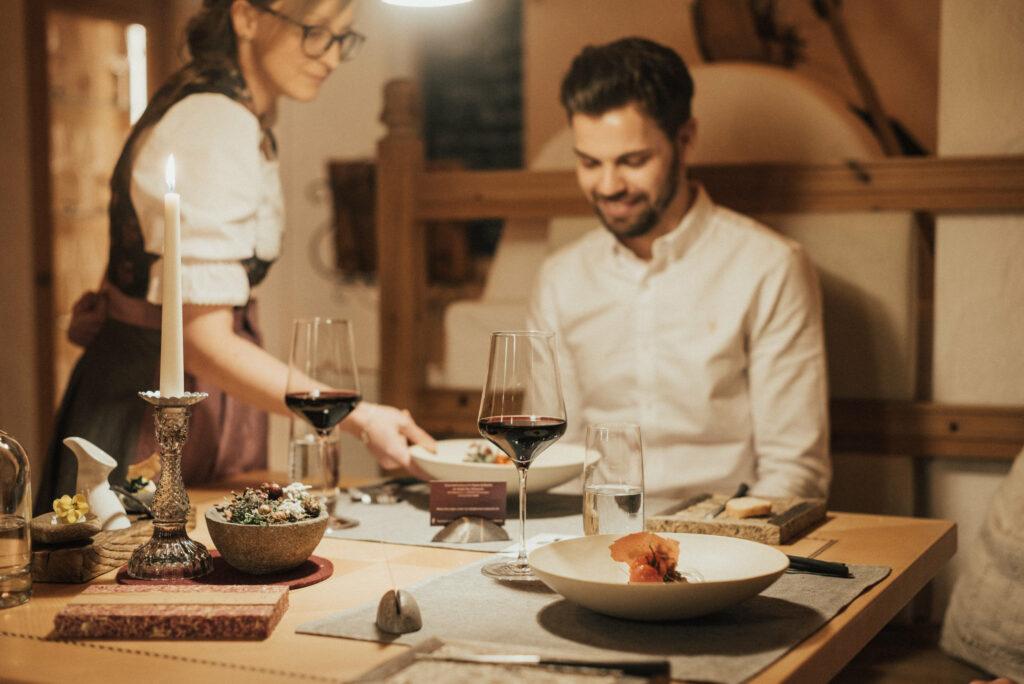
Located in the Allgäu region, the Hotel Das Rübezahl showcases the possibilities of traceable meat sourcing. Owner Alexander Thurm works with hunters from Schwangau and the surrounding area. The hotel kitchen processes the game as efficiently as possible.
“What’s important to us are short distances, personal partnerships, and transparency instead of anonymous goods.” —Hotel Das Rübezahl
At the Naturresort Gerbehof on Lake Constance, hunting is a family affair. Father Bruno Wagner and son Ralph are both hunters. While mother Ursula is deeply involved in preparing the game and even shares her knowledge through recipe videos on youtube and the Green Travel Blog, among other places.
As a certified organic hotel it places a high value on regional produce and traceable origins. They are sceptical of industrially produced meat alternatives. A piece of game that they have hunted themselves is far more natural than a “vegan sausage” from the supermarket. (An argument that actually holds up in a direct comparison, but you could also argue that it’s a thousand times more natural than conventional sausage.)
People need to eat less meat
Conventional meat production uses valuable agricultural land, consumes large amounts of feed, and contributes to global warming — particularly through the climate-damaging methane that ruminants like cows release during digestion. Therefore, the Federal Environment Agency recommends reducing the consumption of animal products. The German Society for Nutrition also recommends consuming no more than 300 grams of meat and sausage per week.
However, wild game alone is not a viable solution for maintaining our current consumption levels (even if they were limited). A sustainable mix of wild game, certified organic meat, and new alternatives such as lab-grown meat could be, however.
Ultimately, there is an undeniable biological fact: meat is no longer necessary for survival today.
Conclusion: It’s impossible to get meat without killing
One thing is clear: in our world, we need people who care for wildlife populations, monitor habitats, and, in certain situations, cull animals. But is hunting—as a recreational activity, a tradition, a tourist experience, or for trophies—necessary for that? That’s another question.
Marco Spiss of Summit Lodges hopes that critics will one day accompany a hunter to learn about their work and the responsibilities that come with it.
Here’s a very concrete offer for you: Would you like to see it for yourself? Contact us directly via the blog.


