
Greywater in the toilet, zero-kilometer vegetables on your plate, and a “Tiny Forest” behind the hotel. Why does heat recovery—though it sounds wonderfully unsexy—often matter more to a hotel than a bamboo straw? We’ll break down the vocabulary of sustainable travel for you.
Let’s get started.
A for astronaut shower and amenities

Amenities: You’ve probably held some of these items in your hands at a hotel before. These include miniature shampoo bottles, shower caps, sewing kits, toothbrushes, and disposable hotel slippers. However, time is running out for certain small, single-use packages of cosmetics, hygiene products, and toiletries: Starting January 1, 2030, accommodations in the EU will no longer be permitted to provide them. Green Pearls® partners are already switching to refillable dispensers, bar soaps, and other solutions to avoid waste while ensuring your comfort. Many accommodations also explicitly recommend that you bring your own slippers.
Astronaut Shower: Shower like you’re on Mars? Almost. The recirculating shower from Orbital Systems was inspired by an idea Mehrdad Mahdjoubi had during a NASA project for a Mars mission. Used water is tested, filtered, reheated, and reused. At the Hotel Luise in Erlangen, this technology reportedly saves about 90 percent of water and 80 percent of energy compared to conventional showers.
B for B Corp and biodiversity
B Corp: B Corp is an international certification program administered by B Lab that not only evaluates environmental criteria, but also corporate governance, employees, customers, and social impact.
Biodiversity: The term refers to biological diversity and includes the diversity of species, genes, and ecosystems. In the context of the hospitality industry, this could mean designing outdoor spaces to be more harmonious with nature or preserving and restoring habitats. The Inkaterra Machu Picchu Pueblo Hotel in Peru, for instance, was built on land that had originally been used as farmland and therefore cleared. Over the course of several decades (since 1975), the hotel has planted thousands of native plants and gradually restored the original cloud forest. Today, several hundred species of birds, butterflies, and other animals, as well as numerous native orchids, inhabit the area.
„Every forest we preserve, every species we protect, and every landscape we care for is part of a shared future.” — Inkaterra
C for carbon footprint and circular hospitality
Carbon credits: This term refers to emission credits generated, for example, by climate protection projects. They have long formed the basis of many offsetting models. An important distinction is between reducing one’s own emissions and financing projects outside one’s value chain. The two are not the same.
Charity Hotel: Go on vacation and help fund social projects at the same time? That’s how “charity hotels” are supposed to work (Note: The term is not a registered trademark.) According to the resort, at The Pavilions Himalayas – The Farmin Nepal, 70 percent of net proceeds go to the organization Right4Children, which supports children and young people in Nepal.
Circular Hospitality: A circular economy for hotels can work. This includes, for example, measures such as upcycling furniture instead of throwing it away or having mattresses taken back (e.g., by SWISSFEEL, a manufacturer of circular mattresses). The goal is to keep resources in circulation for as long as possible

Carbon footprint: In simple terms, this describes the amount of greenhouse gas emissions caused by a person, a product, or a trip. Strictly speaking, the term CO₂ equivalents (CO₂e) should be used, since it takes into account other climate-impacting gases in addition to CO₂.
Community-based tourism: This is a type of tourism in which local communities play a key role in its development and in generating economic value. What matters is not that tourists visit a village, but who decides how tourism is organized and, above all, who benefits from it.
The Cradle-to-Cradle Principle: It literally means “from cradle to cradle” and follows an approach similar to the circular economy and hospitality industry. Products should be designed so that their materials can serve as raw materials for new products after use. Hotel Luise and SCHWARZWALD PANORAMA have designed entire hotel rooms according to this principle.
Climate neutrality: This is one of the terms we should do away with once and for all. Not only because EU Directive 2024/825 (effective as of late September 2026) explicitly prohibits statements such as “climate neutral,” “certified CO₂-neutral,” “CO₂-positive,” or “climate-offset,” if this gives the impression that a product or service has a neutral, reduced, or positive impact on the climate, even though only the greenhouse gas emissions have been offset.
This does not mean that companies can no longer fund external climate protection projects. They are also permitted to publicize this fact. However, paying a certain amount to offset a flight does not make it “neutral” with no climate impact. The climate impact remains the same.
D for direct booking and destination stewardship
Destination Stewardship: A cumbersome term with an interesting concept. A travel destination is not merely viewed as a product for tourists, but also as a living environment for which the local population and local businesses share responsibility for long-term development. In the Ahrntal and Sand in Taufers regions, this approach is being implemented through initiatives such as improving mobility, supporting local economic cycles, and protecting nature and culture. Right in the heart of it all is the Green Pearls® partner aparthotel OLM Nature Escape, which has been awarded the South Tyrol Sustainability Label Level 3 and is GSTC-certified.
Digital Detox: A break from screens—including your cell phone—and a trip to the woods. From a sustainability perspective, this isn’t really a true or effective environmental strategy, but it’s certainly an intriguing way to rethink your relationship with travel and nature. Those who spend less time scrolling through their feed may (probably) take in more of the place where they happen to be. Certain hotels, such as the Hotel Weiherhof on the Ritten in South Tyrol, offer their guests special digital detox packages.
Direct Booking: When you book directly with the hotel, either through their internal booking system, by phone, or by email, no commission is paid to a booking platform. This means more of the money stays with the hotel. This is one reason why Green PearlsⓇ encourages direct bookings

E for energy self-sufficiency and Ecolable
Electric vehicle charging station: Fortunately, charging options for electric vehicle drivers are becoming increasingly commonplace, particularly at accommodation providers that prioritise sustainability. The environmental impact of a charging station depends on the type of electricity used — for example, whether it comes from the regular grid, green energy sources, or the property’s own solar power system. Tip: In this article, you’ll find 15 hotels with electric charging stations and green electricity.
Energy Self-Sufficiency: A building or facility is considered energy self-sufficient if it can fully meet its own energy needs, making it independent of external suppliers. The OLM Nature Escape, for example, achieves this with the help of geothermal probes and solar panels.
EU Ecolabel: The small flower surrounded by an EU star is the European Union’s official eco-label. Hotels can be awarded this label if they meet specific criteria regarding energy, water, and waste. Some Green Pearls® partners with the EU Ecolabel include the Klosterhof – Alpine Hideaway & Spa in Berchtesgadener Land and the Hotel Luise in Erlangengehört beispielsweise der Klosterhof – Alpine Hideaway & Spa im Berchtesgadener Landsowie das Hotel Luise in Erlangen.
F for farm-to-table and flight offsetting
Fair Trade: Fair Trade aims to provide producers with better trading conditions. The Fairtrade seal is particularly important for imported goods, such as spices and coffee, because it ensures that farmers, such as those who grow cocoa and coffee, receive a fair wage.
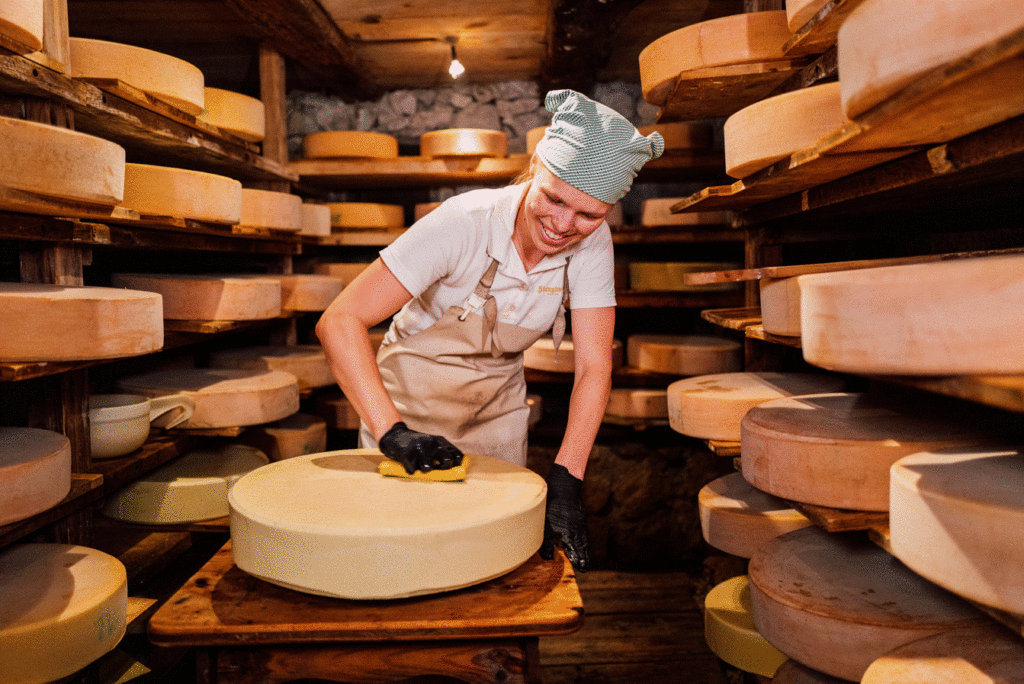
The “farm-to-table” concept: From the farm straight to the table—at least in theory. It refers to the shortest possible distance between producers and restaurants, as well as the shortest possible distance from production to your plate. One notable example is the Stanglwirt Organic and Wellness Resort, which calls itself “a farm with an attached luxury hotel.” The hotel owns pastures and alpine meadows; it has cows, and the resort has its own cheese dairy where their milk is processed. You can find these products on your plate and in the hotel shop. On a smaller scale, but with equal dedication and care, Schloss Lerchenhof in Carinthia runs its own farm and incorporates it into its Slow Food concept for guests.
Flight Offsetting: This involves calculating the emissions from your flight and investing a corresponding amount of money in climate protection projects. Note that this does not eliminate the emissions from your flight, nor is it an invitation to fly frequently. More information is coming up under “c” for “climate-neutral.”
G for graywater and greenwashing
Guest Card: In many destinations, you will receive one when you stay overnight. On the Ritten, for example, you can get the RittenCard at Hotel Weiherhof, ADLER Ritten, and APIPURA hotel rinner. With this card, you can ride buses, trains, and cable cars for free, and you can also get discounted admission to museums. This allows you to leave your car behind.
Geothermal energy: Geothermal energy is the use of heat from the Earth. Hotels can use it via heat pump systems for heating, and sometimes cooling, too. The OLM Nature Escape in South Tyrol uses a geothermal system with 126 ground probes at a depth of 100 meters. In conjunction with its photovoltaic systems, this makes the aparthotel completely energy self-sufficient.
Greywater: Relatively clean wastewater that has already been used, such as water from showers or sinks, can be treated and used for purposes such as flushing toilets or watering plants, depending on the system. This ensures that drinking water isn’t wasted with every toilet flush.
Greenwashing: The term “greenwashing” has become established to describe situations in which companies portray their environmental performance in a more positive, comprehensive, or unambiguous light than can actually be substantiated. Even vague terms, irrelevant individual measures, or the highlighting of a “green” (but rather insignificant) detail can create a distorted overall picture.
Green Electricity: According to Utopia magazine, “true green electricity” is electricity that comes exclusively from renewable energy sources and is supplied by providers that offer genuine added value, such as investing in renewable energy rather than operating coal-fired or nuclear power plants. ehmen ihre Umweltleistung positiver, umfassender oder eindeutiger darstellen, als sie tatsächlich belegt werden kann, hat sich der Begriff Greenwashing etabliert. Auch vage Begriffe, irrelevante Einzelmaßnahmen oder das Hervorheben eines „grünen“ (aber eher unwichtigen) Details können ein verzerrtes Gesamtbild erzeugen.
H for homemade and honey
Homemade: According to Lebensmittelklarheit, a product labeled as “homemade” should be prepared by the kitchen staff themselves. However, the term “homemade” doesn’t reveal where the ingredients come from or whether they’re organic. You’ll have to ask for that information separately.
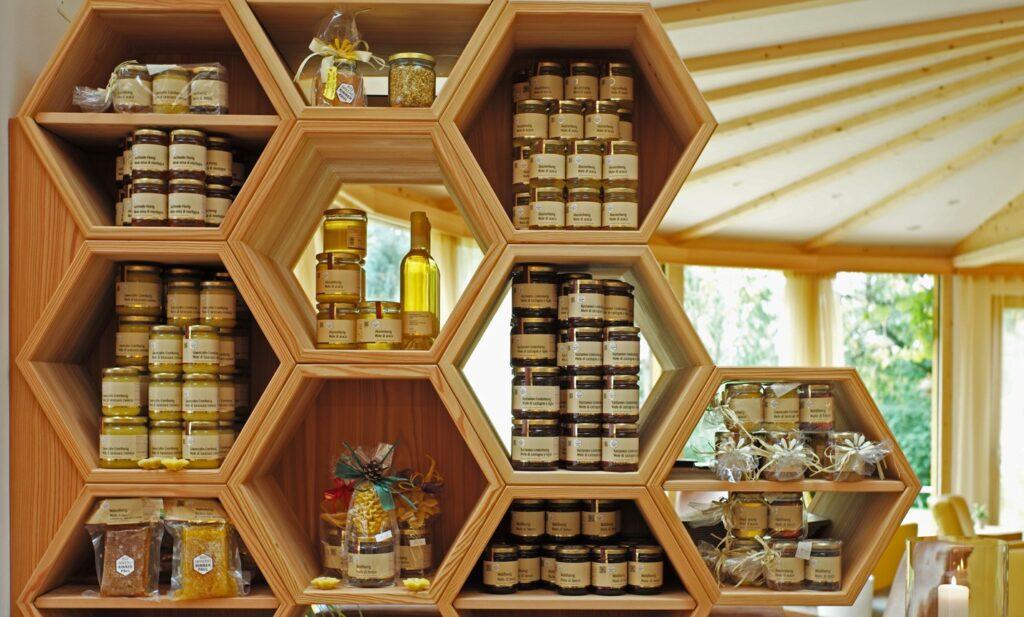
Honey: “Our own honey”: A surprising number of lodging establishments use these or similar words to advertise. But now it’s time to play detective: Do the beehives really belong to the hotel? Are they located on the hotel grounds or elsewhere? Does a local beekeeper tend to them, or does the hotel have its own beekeeper? Is it perhaps just the hotel’s label on the jar? Starting June 14, 2026, stricter origin rules for honey will apply in the EU. For blends, the countries of origin and their proportions must be specified exactly. That’s a good reason to turn the honey jar upside down. If you’d like to chat with a pro, talk to Paul Rinner, the host from the APIPURA hotel rinner. His organic apiary is part of the hotel, and you can watch the bees at work while strolling around the grounds.
Heat recovery: The heat from exhaust air, cooling systems or wastewater, which would otherwise be lost, is captured and reused. For example, at the Hotel Das Rübezahl, it is used to heat the outdoor pool. This reduces the need for additional energy.- Imkerei gehört zum Hotel und die Bienen kannst du bei einem Spaziergang auf dem Hotelgelände bei ihrer Arbeit beobachten.
I for impact
Impact: Or, in other words: effect. This term is appearing more and more frequently in sustainability reports. Instead of simply listing measures, the question is asked: What has actually changed as a result?
J for JOMO

JOMO (Joy of Missing Out): As a counterpoint to FOMO (fear of missing out), the joy of missing out is becoming increasingly important. Rather than checking off five sights in a day, you’d prefer to spend an extra hour sitting by the lake. Rather than driving to the popular scenic overlook, you take the quieter hiking trail next door. While JOMO isn’t an official sustainability concept, it aligns well with more mindful and slower travel.
L for low-mileage produce and the “local-first” principle

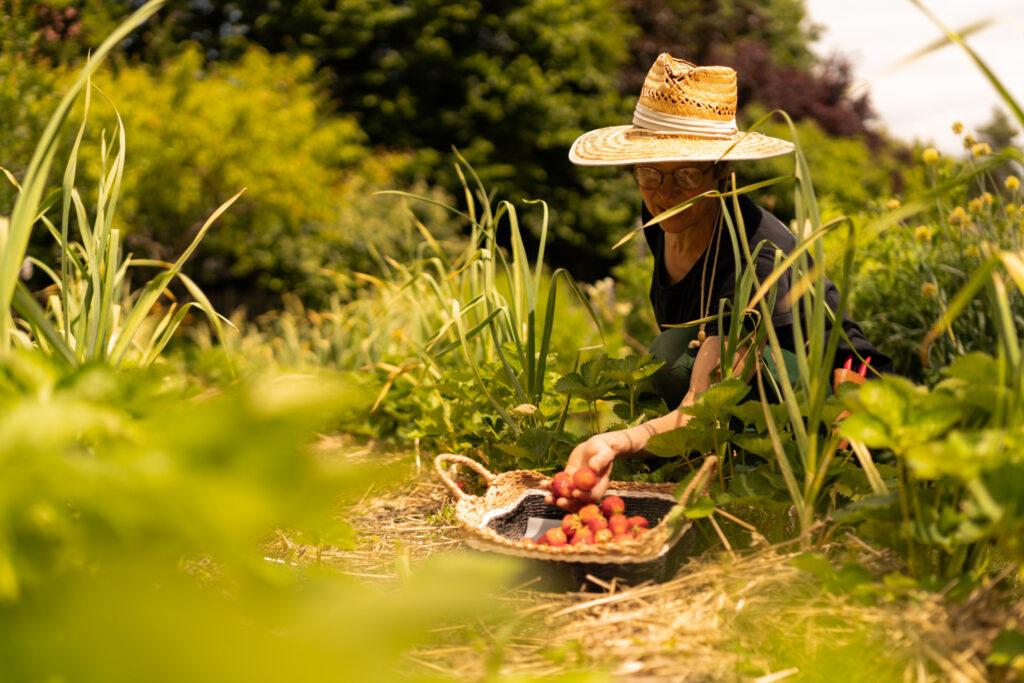
“0-km” foods: “Zero-kilometer” products refer to foods with extremely short supply chains and locally produced foods. This is especially true when lettuce, herbs, or fruit are grown right in the hotel garden.
The “Local-First” Principle: See what’s available locally before looking beyond the region or country. This applies not only to food, but also to artisans, furniture, services, and employees in this case. By doing so, a hotel generates local economic value and ensures that money from tourism benefits the region and local community.
M for microforests and microplastics

Microplastics: Every substance and material breaks down over time. The same is true for plastic. But since plastic isn’t biodegradable, it doesn’t eventually turn into soil; instead, it simply breaks down into smaller and smaller particles that we now ingest and inhale, and which accumulate in our bodies. The effects of microplastics on the environment and humans are still far from being fully understood. They’re probably not going to be good.
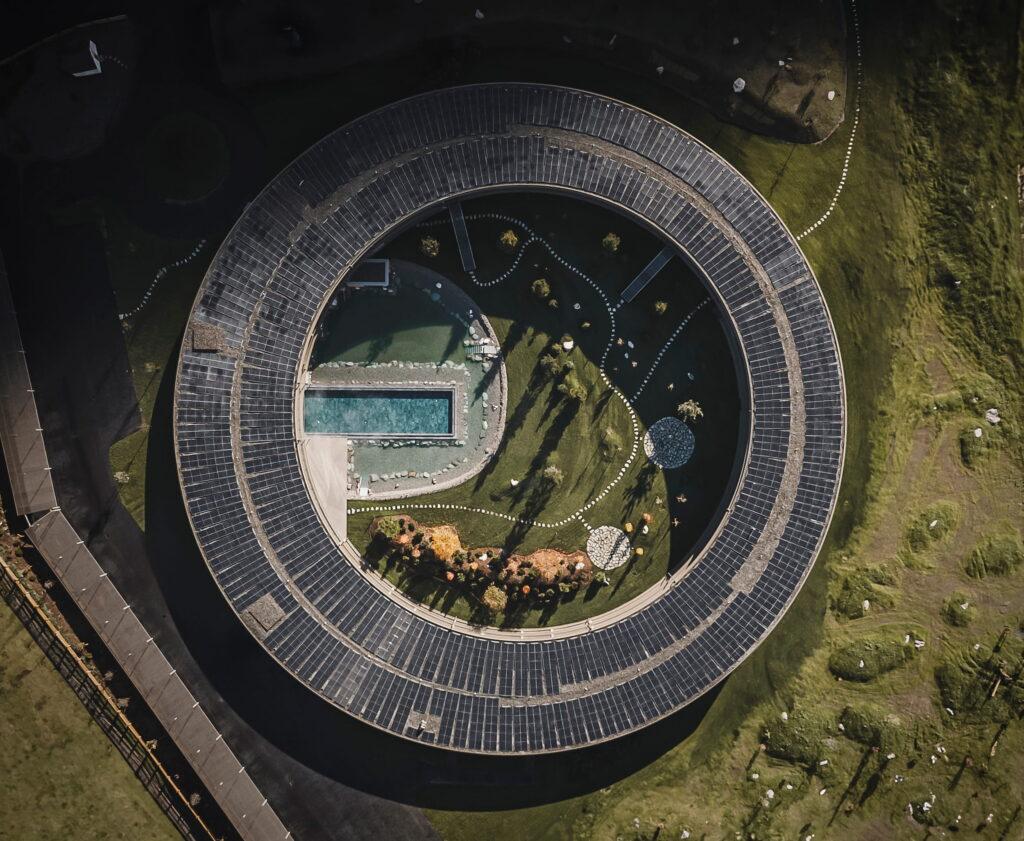
Microforest: This initiative, also known as a “tiny forest,” is based on a Japanese concept. Native tree and shrub species are planted in a small area in a way that allows a small, structurally rich forest to develop quickly—one that provides the same benefits as a large forest. At the Hotel Luise, a microforest in front of the city hotel helps keep the building’s façade cool.
Mobility Concept: How do guests without cars get to the hotel and get around the area? A well-thought-out plan might include train shuttles, public transportation, bicycles, e-bikes, and information on car-free travel options.
N for net zero and nature positive
Night Train: A means of transportation and a hotel room in one convenient package. On European routes especially, the night train can be an alternative to a short-haul flight.

Nature Positive: This buzzword from the tourism and sustainability industries refers to an approach that goes beyond merely reducing harm; it aims to contribute to the restoration of nature. The WTTC, UN Tourism, and the World Sustainable Hospitality Alliance are developing corresponding initiatives for the tourism sector. The key question remains: What measurable improvements does this claim entail?
Natural cosmetics: Cosmetics in which all ingredients come from nature. Petroleum-based products (silicones, paraffins, microplastics) are prohibited, as are synthetic ingredients (fragrances, colorants, and preservatives).
Net Zero: Net zero means that remaining greenhouse gas emissions are to be offset by permanent removals from the atmosphere. The term should not be confused with “zero emissions” and always requires context: What is being measured, which target year applies, and how is the reduction to be achieved?
O as in overtourism and organic
Overtourism: Unfortunately, many places have been destroyed by tourists simply because they were too beautiful — for example, Maya Bay in Thailand. Vacationers damaged over 90% of the coral there no sooner than they discovered this idyllic bay. Machu Picchu was also in danger of being destroyed by overtourism, but the Inkaterra hotel group worked with local authorities to address the issue and set an example.
Organic: Unlike many other sustainability terms, “organic” is legally regulated in the EU with regard to food. Before a farm can be certified as organic, it must meet strict requirements. Therefore, an organic egg is different from an “egg from a happy chicken.” When it comes to hotels, it’s worth taking a look at the overall concept. For example, is the entire food and beverage selection certified organic, as is the case at SCHWARZWALD PANORAMA in Bad Herrenalb, which holds “Bioland Gold” certification? Or, do only certain foods come from organic farming? If you’re wondering whether organic is really better, We address this exact question in the linked article.
Organic Hotel: Unlike tomatoes, hotels are complex entities, so it’s difficult to label an entire hotel as “organic.” Some Green Pearls® partners, such as STURM and the Hotel Bella Vista Zermatt, have removed “organic” from their names but still use many organic products in their kitchens and spas. The Naturresort Gerbehof is a member of the BIO HOTELS association. Its guidelines cover certified organic food, as well as areas such as cosmetics, energy, cleaning, and amenities. Therefore, it is entitled to call itself an organic hotel, though it goes by the name “Naturresort Gerbehof.”
Offsetting: A company offsets its own emissions by funding projects designed to prevent or reduce emissions—or sequester CO₂—elsewhere. That’s the theory, at least. While this can be useful, it does not eliminate the need to reduce one’s own emissions. The practice becomes problematic when it creates the impression that a flight or hotel stay is “climate-neutral”—meaning it has no impact on the climate. The EU will prohibit these kinds of offset-based claims in the future.
Off-season: The off-season refers to the months of the year that are not considered part of the peak season. However, there are now other seasons as well (such as the shoulder season). Traveling outside the most popular travel periods (vacation periods, summer, or winter) eases the pressure of large crowds and also distributes tourism revenue more evenly throughout the year.
P for photovoltaics and plant-based

Plant-Based Cuisine: Many hotels now prefer the term “plant-based” to “vegan” because it emphasizes nutrition and enjoyment rather than the ethical perspective and lifestyle associated with veganism. This term is more neutral and allows for greater flexibility in the kitchen. This means that small exceptions, such as a spoonful of honey, are possible.
Photovoltaics: With the largest power plant capacity worldwide, photovoltaics already exceed coal, gas and nuclear power in terms of rated output, according to the International Energy Agency (IEA). However, as the sun does not shine constantly, the actual amount of electricity generated still lags behind that of coal. Nevertheless, the scale is enormous: even now, the energy generated by solar power systems worldwide is sufficient, in theory, to cover the entire electricity demand of all 27 EU member states.
Packaging-Free: Contrary to the myth that hygiene regulations prohibit packaging-free products, this approach is actually encouraged in the hospitality industry and will soon even be required. Starting in 2030, the EU Packaging Regulation (PPWR) will completely ban single-use mini-packages for hotel toiletries as well as single-serving packages at breakfast. For example, cereal will come from a dispenser, butter from a butter dispenser, and shampoo from a refillable bottle.
Prevention: Perhaps the least spectacular sustainability strategy of all. What isn’t consumed in the first place doesn’t need to be recycled, offset, or disposed of.
R for regenerative travel and regional

Refill: The concept is based on allowing travelers to refill their own reusable bottles for free at stations (listed, for example, in the Refill app) or at the hotel’s own filtration systems.
Regenerative travel: This approach goes beyond traditional sustainable tourism. Instead of merely minimizing one’s ecological footprint and reducing one’s impact, the goal is for a trip to measurably improve the destination. For travelers, this means transitioning from being consumers to being creators.
Regionality: In the context of hotel kitchens, this term is popular in marketing. However, consumer advocates point out that “regional” is not legally protected or tied to a fixed distance limit. According to consumer surveys, guests expect a radius of 50 to 100 kilometers when they hear “regional.” Pioneering sustainable hotels list the names of producers and distances directly on the menu or are happy to provide this information upon request.
Reforestation: Planting new trees always sounds like a good idea at first. However, factors such as location, tree species, management practices, and the nature of the previous ecosystem are crucial from an ecological perspective. Furthermore, reforestation should not be viewed as permission to emit more greenhouse gases elsewhere.
Renewable Energy: Energy from sources such as the sun, wind, water, geothermal energy, and biomass is called “renewable energy.” Unlike fossil fuels, such as oil or natural gas, these sources are naturally replenished and are not depleted by their use. Things get interesting in the hotel when we look specifically at where the energy comes from and what percentage of consumption it covers.
S for slow travel and seasonal
Seasonality: Seasonal cuisine is based on the natural availability or readiness for harvest of foods in a given region.
Slow Travel: This concept emerged in the mid-2000s (as outlined in the 2009 Slow Travel Manifesto), but its roots lie in the 1986 Italian Slow Food movement. Unlike “fast travel,” which involves seeing as many sights as possible in record time, slow travel emphasizes slowing down, staying longer in one place, and using low-carbon transportation, such as trains.
Social Sustainability: Fair working conditions, participation, accessibility, local value creation, and human rights. Sustainability in tourism isn’t just about energy and water; it’s also about people, which is why social sustainability is a key pillar.
Stay Longer: The length of your stay can be a key factor, especially when travel accounts for a large portion of your carbon footprint. The longer you stay, the more worthwhile a long trip becomes and the more the local community benefits from your visit.
Spring water: “Water from its own spring” is fundamentally sustainable in tourism, as it eliminates packaging waste and long transport distances. To avoid greenwashing, however, the water must be extracted in a circular manner and in harmony with the local ecosystem—as is the case at the Stanglwirt Organic and Wellness Resort. (MAYBE link to their website?)
We take a closer look at this topic in our article, “Are We Still Allowed to Fly?”.
T for tourism tax and towel change
Tourism Tax: Often levied as a visitor or lodging tax, this fee is generally met with resistance from travelers and hoteliers because it creates additional bureaucratic burdens and increases vacation costs. However, it can be sensible and sustainable when the funds are earmarked for specific purposes. For example, if the money goes toward preserving nature parks or expanding free public transportation for visitors, the tax becomes an effective tool for countering the negative consequences of mass tourism.
Towel Change: You’ve seen the sign: “Help us protect the environment. Hang up your towel.” It makes sense in principle, but it’s considered a classic example of hotel greenwashing! In fact, this has long been standard practice even in luxury hotels. The Hotelstars Union’s 2025–2030 criteria catalog has even strengthened this system across Europe. Towel replacement has shifted from an opt-out system (towels are replaced by default unless the guest objects) to a clear opt-in system (towel change on demand).
U for upcycling and unpackaged

Unpackaged: Contrary to the myth that hygiene regulations prohibit unpackaged products, this approach is encouraged in the hospitality industry and will soon be mandatory. From 2030 onwards, the EU Packaging Regulation (PPWR) will prohibit single-use mini-packets of toiletries in hotels, as well as single-serve packages at breakfast. Cereal, for example, will be served from a dispenser, as will butter and shampoo.
Upcycling: The process of creating something new from a used object or material. In addition to fun, decorative crafts, some hotels upcycle entire rooms, giving the endeavor greater significance.
V for vegan
Veganism: Adopting a purely plant-based diet is one of the most effective ways to combat climate change within the tourism industry. Serving vegan meals in hotels results in up to 80% fewer greenhouse gas emissions and significantly less water consumption than meat-based menus. The Green Pearls network already includes three entirely meat-free hotels: the LA VIMEA and the Paradiso Pure.Living Vegan Hotel in South Tyrol, Italy, and the vegetarian Hotel Korinjak in Croatia. However, veganism is about more than just avoiding animal products. It reflects a moral and ethical way of life based on not exploiting any living being. Because of this ‘moral connotation’ and because many people immediately reject the word ‘vegan’, many restaurants and hotels choose to use the term ‘plant-based’ instead.

W for water footprint and wildflowers
Water consumption: While the average direct consumption by a hotel guest—at about 300 liters per night—is already more than twice as high as at home (approx. 125 liters), luxury resorts with extensive golf and spa facilities can drive that figure up to 1,000 liters per nigh.
Wildflower Meadow: A native wildflower meadow can serve as an essential food source and habitat for hundreds of insect and bird species, offering a nature-friendly alternative to the immaculate hotel garden with its English lawn. But be careful: Simply ‘leaving an area alone’ during a hotel’s day-to-day operations often results in overgrowth by a few dominant plants, such as stinging nettles or thistles, rather than a species-rich wildflower meadow. True renaturation requires expertise, patience and proper management (e.g. reducing soil fertility).
Water-saving showerhead: Less water, same showering comfort? That’s the promise of water-saving shower fixtures and additional systems like EcowaterJet by rabmerⓇ, which use the Venturi principle to mix air into the water. Water pressure remains the same, while significantly less water (up to 50% less, according to rabmer) is used.
Waste separation: It really should go without saying (though here in Germany, we could certainly be world champions in waste separation). In a hotel, however, it’s more complex than the three bins at home: the kitchen, housekeeping, spa, and guest rooms produce very different types of waste, which are (or can be) separated more or less consistently. In many places, it’s simply not possible for guests to participate in waste separation because there’s only one trash can available. At the ADLER Ritten, on the other hand, guests have the option to sort their own waste even in their guest rooms, and at the SCHWARZWALD PANORAMA, the team even sorts the waste into 13 different categories, including bottle caps and wax residue.

X for xeriscaping
Xeriscaping: A sustainability term for Scrabble experts or the next game of Hangman. This term, which sounds like something from a science fiction novel, refers to a landscaping approach that requires as little additional irrigation as possible. Plants are selected to suit the local climate and spaces are designed to use water efficiently. This approach is of particular interest to hotels in arid regions and those that are, or will be, severely affected by human-induced climate change.
Y for yield management
Yield management for visitor flow control: A digital system that adjusts ticket prices for national parks and tourist attractions based on crowd levels, helping to prevent overtourism and protect the natural environment.

Z for zero waste travel
Zero-Waste Travel: This concept aims to reduce waste, especially single-use plastic and food waste, to nearly zero through careful planning while traveling. This concept is particularly relevant in the context of travel because people tend to produce a lot of waste while on vacation.
According to studies by the United Nations Environment Program (UNEP) and the EU, tourists generate twice as much waste per day as local residents in the same location. We’ve compiled these zero-waste travel tips to help you do better.


