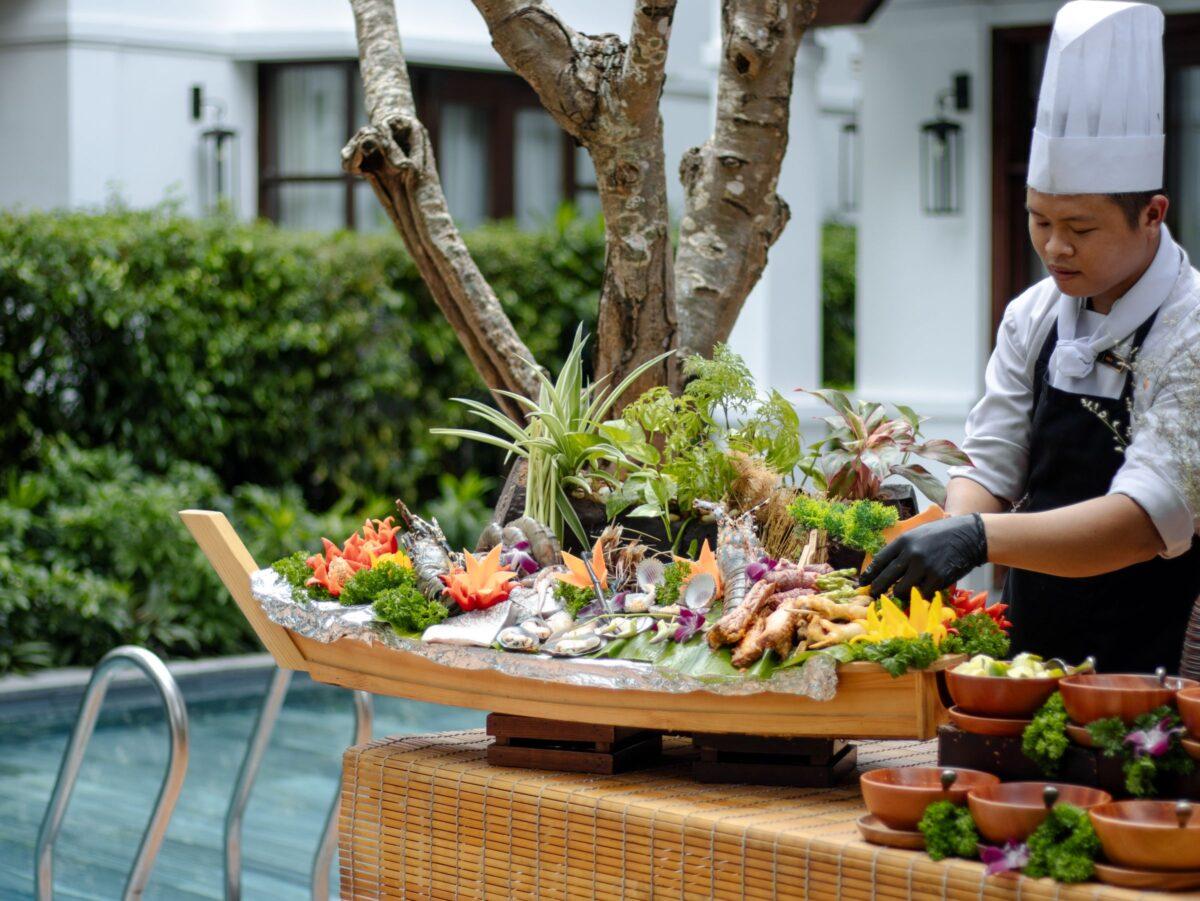
Anyone travelling to Vietnam for the first time would probably expect to find rice noodles, spring rolls and plenty of fish on the menu. However, many wouldn’t expect to find croissants or coffee with condensed milk. Yet these items are an integral part of everyday Vietnamese cuisine. Their history began during the French colonial era — and it certainly doesn’t end with the baguette. In fact, Vietnam took the ingredients brought by the colonisers and turned them into something entirely its own.
A culinary adventure in Southeast Asia
For many Europeans, as well as people from North and South America, Africa and North Asia, a trip to Vietnam is a culinary adventure. Rather than bread, the diet consists of rice and rice noodles; rather than butter and cheese, fresh herbs, vegetables, fish and aromatic broths take centre stage.
With its more than 3,200-kilometre-long coastline and fertile river deltas, the tropical country of Vietnam offers ideal conditions for fishing and rice cultivation. Dairy farming, on the other hand, has traditionally played a minimal role. Consequently, butter, cheese and cream were not originally part of Vietnamese cuisine.
French influence and a uniquely Vietnamese cuisine
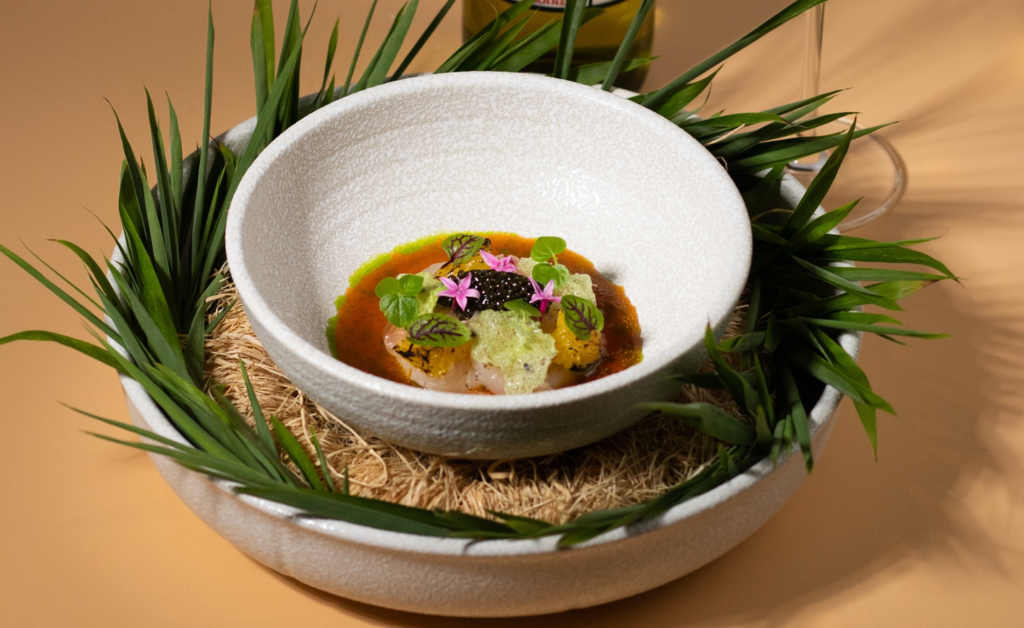
During the French colonial period, many previously little-known ingredients and foods made their way to Vietnam.
“The French introduced butter, cheese, cream, and condensed milk to Vietnam, thereby significantly expanding the range of ingredients available in Vietnamese cuisine” — Trung Bao Nguyen of The Anam Hotels
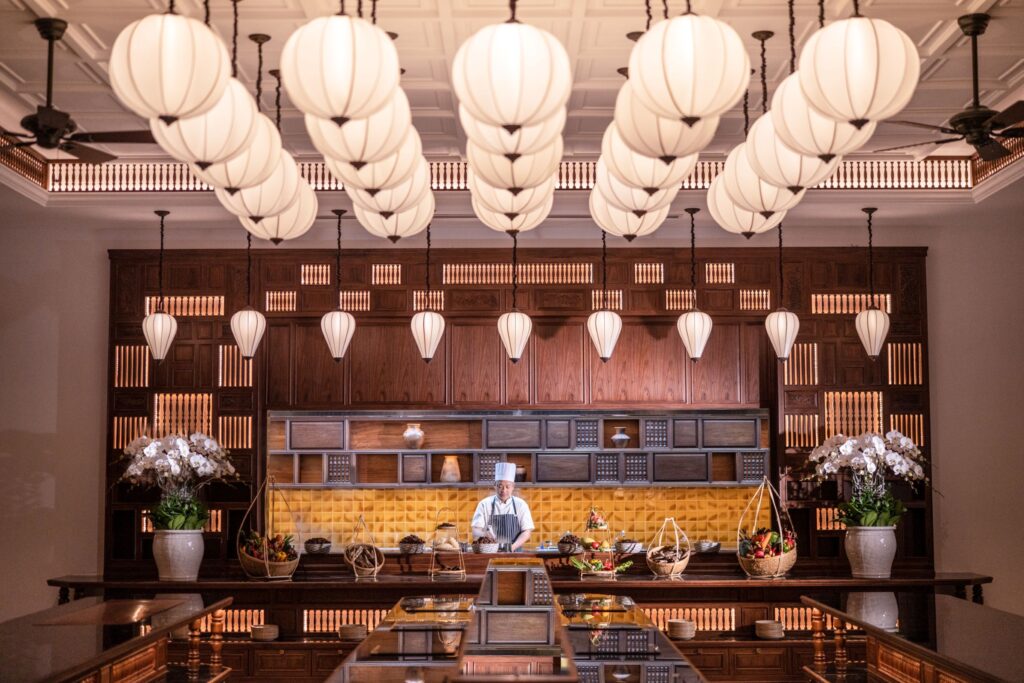
As part of their commitment to sustainability, the luxury hotels The Anam Cam Ranh and The Anam Mui Ne strive to bring Vietnamese history and culture to life. At The Colonial restaurant in Cam Ranh, for instance, classic French culinary art is combined with Vietnamese flavors and ingredients. Staple ingredients are sourced exclusively from local suppliers rather than being imported from France.
However, French dishes did not make their way into Vietnamese households exactly as they were.
“We don’t really cook authentic French dishes at home. They’re mainly served in upscale restaurants, hotels, and resorts,” Trung explains. “But entirely new dishes emerged.”
Vietnamese bakers and chefs adapted new ingredients to the tropical climate, regional products, and their own tastes. This gave rise to some of Vietnam’s most famous specialties.
Bánh mì – from baguette to Vietnam’s most famous sandwich
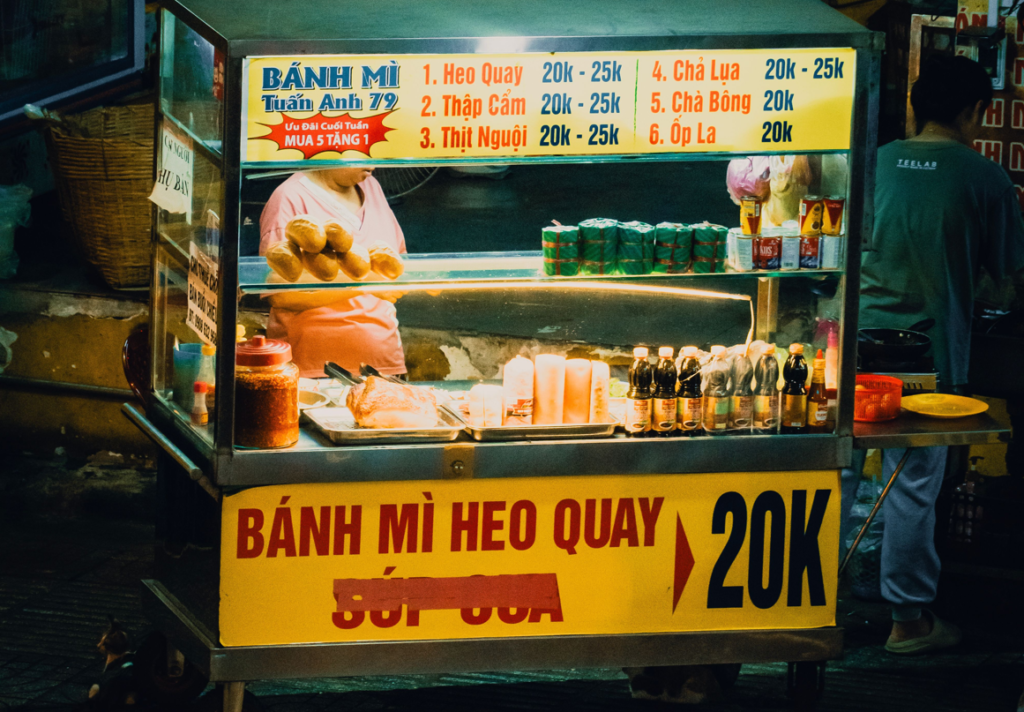
The French baguette was introduced to Vietnam in the late 19th century and was initially consumed primarily by French colonial officials and wealthy Vietnamese individuals. Over time, however, Vietnamese bakers developed their own version. The bread became lighter and airier with a particularly crispy exterior. This made it easier to slice and fill.
Trung explains that bánh mì is served at street food stands with a variety of ingredients, including pâté, Vietnamese sausage, grilled meat, pickled vegetables, cucumber, fresh herbs, chili peppers, and different sauces.
Did you know?
Many Vietnamese baguettes contain a small amount of rice flour. This makes them especially light and airy and gives them their characteristic thin, crispy crust.
Coffee – why Vietnam is one of the world’s leading coffee-producing nations today
Coffee was also introduced to Vietnam during the French colonial period. In the mid-19th century, the French established large coffee plantations, primarily in the Central Highlands. Today, Vietnam is the world’s second-largest coffee exporter after Brazil and the largest producer of Robusta coffee.
Fun fact: The GDR also cultivated coffee in Vietnam during the 1980s as part of a large-scale project. However, coffee grows slowly. By the time the plants were ready to be harvested in 1991, the GDR had ceased to exist.
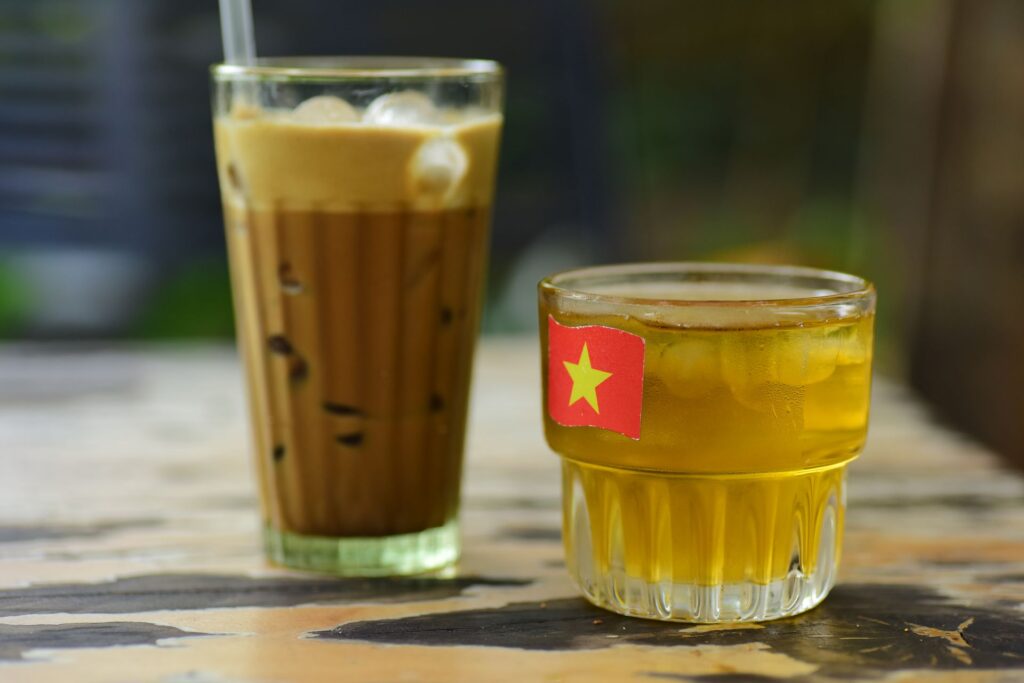
But Vietnam has also developed its own unique style here. Rather than using a filter machine, coffee is brewed directly into a cup with a Phin, a small metal filter. The result is a strong, aromatic coffee.
Since fresh milk was rarely available in the tropical climate, sweetened condensed milk became the standard alternative. This is how the now-famous cà phê sữa đá (iced coffee with condensed milk) came to be.
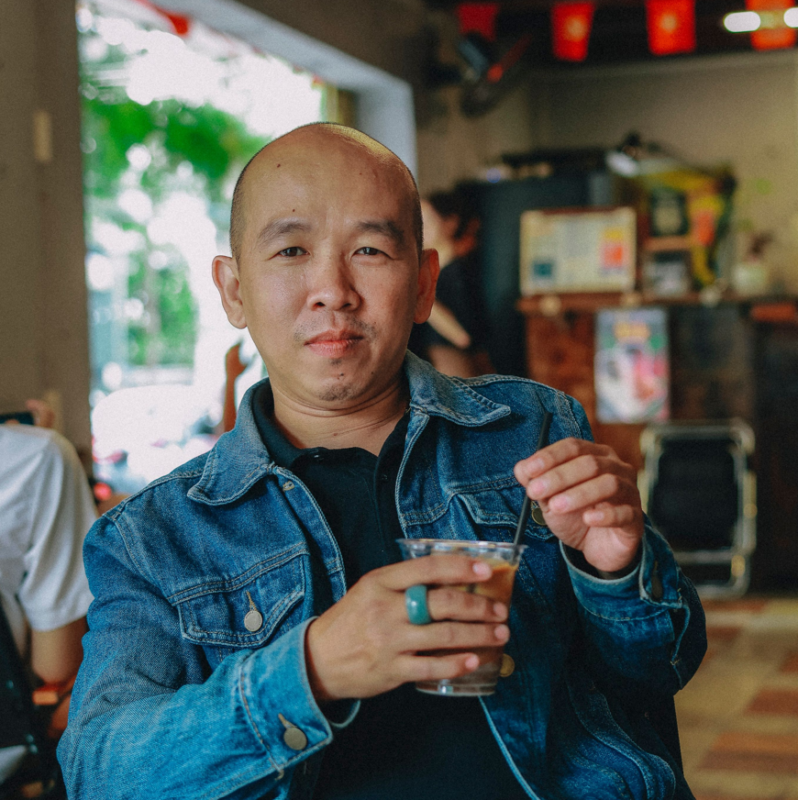
Coffee Culture in Vietnam
Trung also raves about his country’s coffee culture. Particularly well-known are Egg Coffee (Cà phê trứng) from Hanoi, in which a creamy egg foam tops the coffee; Coconut Coffee with coconut cream; and the relatively new Salt Coffee (Cà phê muối) from Huế, whose slightly salty note balances the sweetness of the coffee.
Croissants, flan, and pâté chaud
In addition to bread and coffee, the French introduced many baked goods and desserts to Vietnam. Examples include croissants, cream puffs, sponge cakes, crème caramel (flan), and pâté chaud, a savory puff pastry.
Over time, these recipes have also been adapted to Vietnamese tastes. According to Trung, many bakeries use less butter and sugar than their French counterparts do.
Good to know: Croissants and baguettes aren’t just for hotel breakfasts. If you take a morning stroll through a Vietnamese city, you’ll find many bakeries offering these classic French pastries.
Typical Vietnamese dishes and products—definitely worth trying!
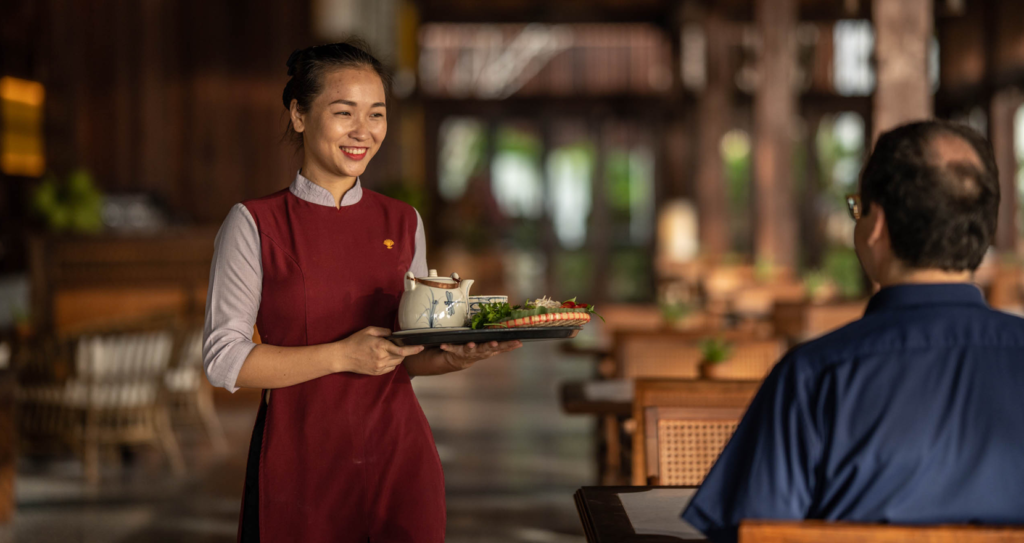
Fish sauce—Vietnam’s secret main ingredient
If there’s one ingredient that ties Vietnamese cuisine together, it’s fish sauce, or nước mắm. Found in dips, marinades, soups, and stir-fries, it gives many dishes their characteristic umami flavor.
On YouTube, blogger Linh from “What the Pho” says: “We Vietnamese people eat fish sauce with everything. If we had to, it would even go well with cornflakes.”
Traditionally, fish sauce is made from small fish, usually anchovies, that are fermented with salt for many months. The result is an amber-colored seasoning sauce with an intense aroma.
Linh visited the Fish Sauce Museum in Phú Quốc, which is also on the list of recommended attractions from the Green Pearls® hotels The Anam Mui Ne and The Anam Cam Ranh.
Did you know? Fish sauce is now also available in a vegan version—usually made from soy, mushrooms, or seaweed. Linh discovered one such version in the museum shop and was very impressed by the taste.
Pho – Vietnam’s most famous noodle soup
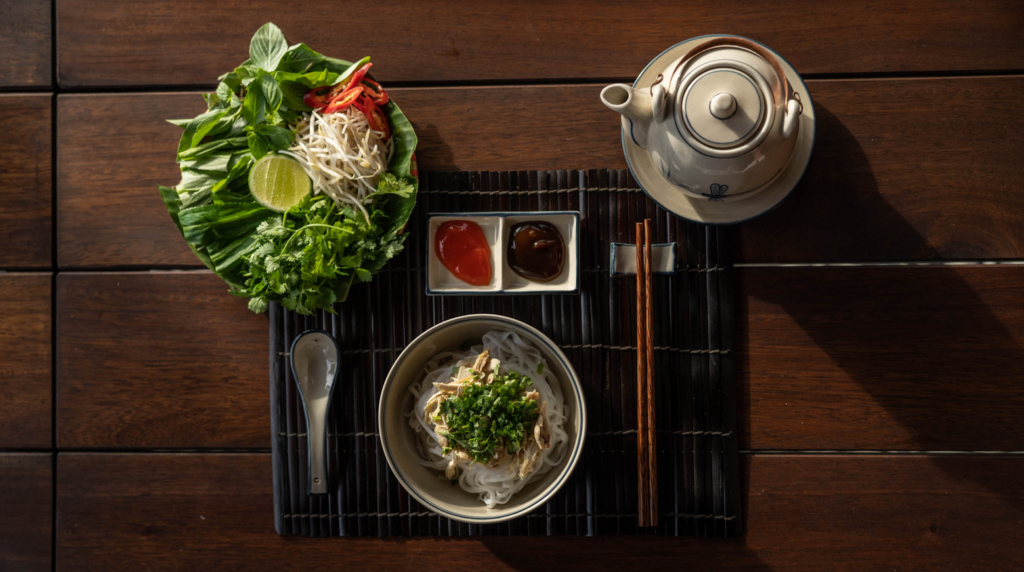
Pho, a hearty noodle soup, is considered the national dish. Traditionally, it is even eaten for breakfast.
Travel blogger Anne Haffner describes pho as a dish that unites all of Vietnam. It consists of an aromatic broth with rice noodles and is usually served with a choice of beef (phở bò) or chicken (phở gà). Customers can add fresh herbs, lime, bean sprouts, and chili to their liking.
A tip for vegans: The broth is often made with meat. It’s best to ask about it here if it’s not specified.
Summer rolls and spring rolls — similar, but not the same
Outside of Vietnam, these two dishes are often confused with each other. Yet, they are quite different.
Summer rolls (gỏi cuốn) are served cold. They consist of shrimp or meat, rice noodles, lettuce, and plenty of fresh herbs rolled up in paper-thin rice paper, which is then dipped in peanut, soy, or fish sauce.
Spring rolls (chả giò) also have a filling of vegetables, meat, or shrimp, but they are deep-fried, which gives them a crispy shell.
Bún Chả – a Hanoi classic
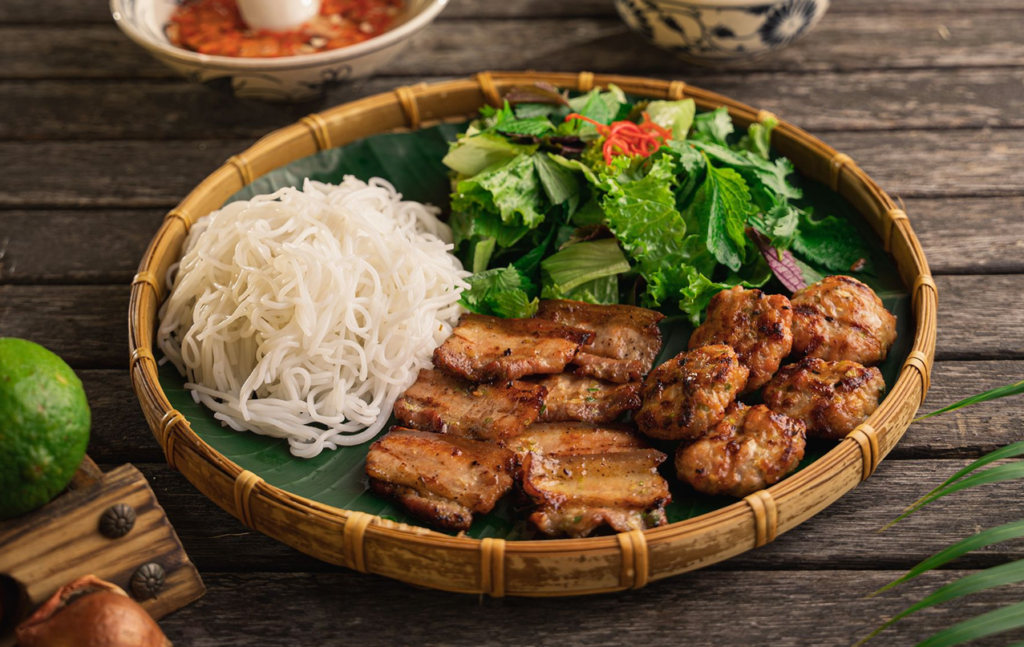
Bún chả is especially popular in northern Vietnam. It consists of grilled pork patties, rice noodles, fresh herbs, and a slightly sweet and sour sauce.
Anne says that bún chả is one of her favorite dishes from her trip to Vietnam. According to her, it’s the interplay between the smoky, roasted flavors of the meat and the fresh herbs that makes the dish so special.
Fun fact: Bún chả gained international recognition in 2016 when Barack Obama and Anthony Bourdain visited Hanoi to enjoy this dish together.
Tropical fruits—the taste of Vietnam
The hot dishes are not the only things that make Vietnamese cuisine special. Thanks to the tropical climate, fruits like mangoes, papayas, dragon fruit, and pineapples practically grow right on people’s doorsteps. Coconuts are a particular highlight. Picking them straight from the tree and drinking their fresh water is one of the guaranteed highlights of a trip to Vietnam! One important note, especially if you’re buying fresh fruit at the market: Peel it before eating to avoid spending the rest of your vacation in the bathroom 😉
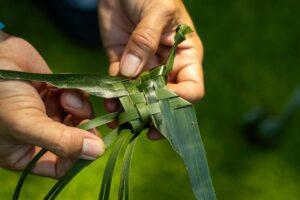
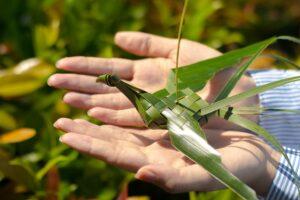
Tip: The Anam Cam Ranh is surrounded by coconut palms. It offers guests a weekly “Coconut Harvesting Tour,” as well as workshops where you can make your own souvenir out of coconut leaves.
Eating fish in Vietnam – what to keep in mind
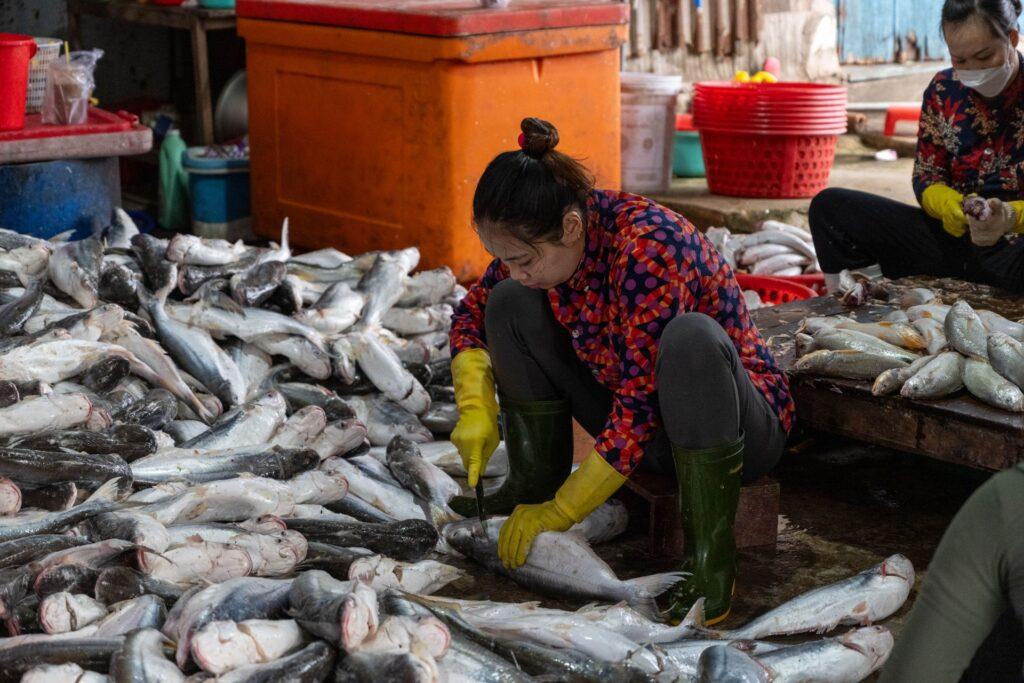
With its long coastline and fertile Mekong Delta, Vietnam is a paradise for fish and seafood. On average, people here consume about 37 kilograms of fish and seafood per year. (For comparison, the annual per capita consumption in landlocked Ethiopia is less than one kilogram.) As a result, the selection at markets and on menus is correspondingly diverse.
Among the most important edible fish are pangasius (Tra/Basa), which is primarily farmed in the Mekong Delta; snakehead fish (Cá lóc), which is traditionally grilled or braised in a clay pot; and tilapia, which is often served deep-fried whole.
Seafood is dominated by shrimp, squid, and the famous Vietnamese Ốc culture, featuring countless varieties of clams and snails. Along the coast, many seafood items are still sold alive and are freshly prepared only after an order is placed.
Enjoy seafood and fish feasts in a more sustainable way
Those who travel consciously may wonder which seafood dishes are the better choice from an environmental perspective. Unfortunately, there is no simple answer.
Shrimp from Vietnam are rated green in the WWF Seafood Traffic Light Guide. White Tiger shrimp and Tiger shrimp from Vietnamese aquaculture and organic aquaculture are particularly recommended. However, the WWF points out that wastewater from pond farms releases feed residues, chemicals, and medications into the environment.
One positive factor for the population is that shrimp reproduce very quickly. Wild-caught shrimp are often harvested using bottom trawl nets, which damage sensitive seabeds and result in large amounts of bycatch.
Additional takeaways from the WWF Seafood Guide on fish in Vietnam
- Pangasius (up to 150 cm long and weighing up to 44 kg) is primarily farmed in ponds in the Mekong Delta. However, production has risen rapidly from tens of thousands of metric tons to millions of metric tons. “This rapid growth is leading to aquaculture practices that are unsustainable in various respects,” reports the WWF. Rating: yellow.
- Oysters have only been farmed in Vietnam since 2007, and annual production totals 15,000 metric tons of oysters per year. The WWF classifies farmed oysters as green.
- Sharks (all species) are classified as “red”! According to WWF, “Sharks play an important role as predators in the food web of the world’s oceans. Overfishing them therefore also impacts the entire ecosystem. Removing sharks further harms populations and is not encouraged.”
- Squid (various species): They are typically caught off the coast of Vietnam using mechanized fishing lines or pelagic trawl nets. According to the WWF, “bycatch and the impact of this fishery on the seafloor are minimal.” However, assessing the stock is difficult because squid are highly vulnerable due to their dependence on their environment. They can be overfished quickly, yet they can also recover rapidly. Classification:
Eating together is part of their culture
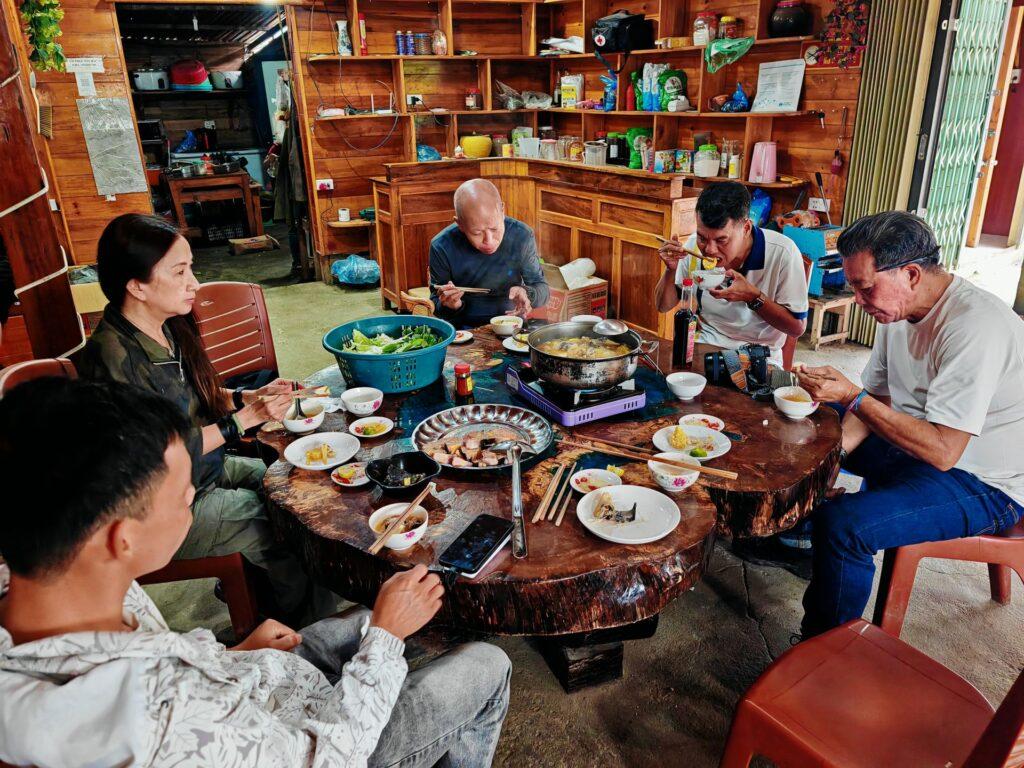
In Vietnam, people enjoy eating together. It’s common to order dishes to share, and everyone uses chopsticks to serve themselves from the plates in the center. Each person also receives a small bowl of rice.
Hospitality also plays a major role. When you’re invited to a meal, you’re often offered more food than you can possibly eat. Anne remembers this well—she never managed to finish her plate because she kept getting more food 🙂
Our conclusion: History you can taste
Whether it’s a steaming bowl of pho in the morning, a crispy bánh mì for a snack, or fresh summer rolls in the evening, you’ll discover Vietnam through your sense of taste.
Our tip: Don’t be afraid to try dishes you’re not familiar with from home. Ask about regional specialties, visit local markets, and have someone explain what’s on your plate.


The connection between French colonial influences—especially croissants and condensed-milk coffee—and modern Vietnamese food culture is fascinating. I also appreciate the article’s focus on making fish consumption more sustainable rather than treating culinary tradition and environmental responsibility as opposing ideas.