Thailand is out, Vietnam is in? “That impression is correct,” says Trung Bao Nguyen of The Anam Hotels in Vietnam. Thailand remains a beautiful and popular travel destination, but due to mass tourism, Western tourists are looking for a “fresh and authentic” travel experience. “Many are now looking a little further afield and choosing Vietnam as the ‘new it destination in Southeast Asia.”
Vietnam is one of the fastest-growing travel destinations in Southeast Asia. This makes it all the more important to consider the most considerate way to explore the country. Our Green Travel Guide is designed to help with that.
But first, let’s take a brief look at some facts and get an introduction to the “Land of the Rising Dragon.”
What makes Vietnam an attractive vacation destination?
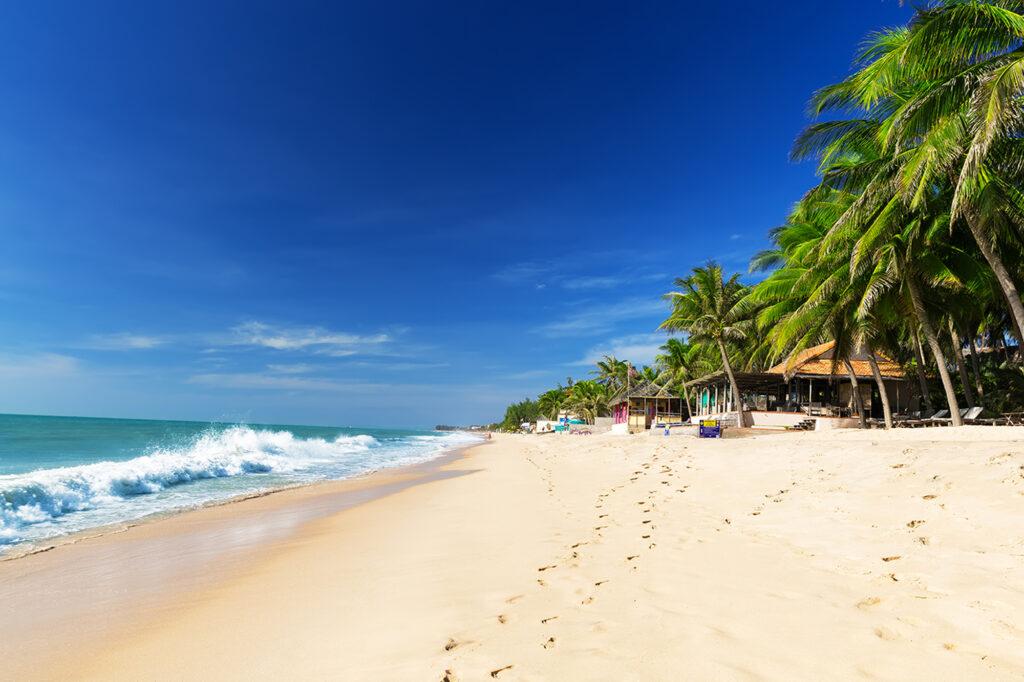
Vietnam is breathtaking. The country is shaped like a coastal strip and has a mainland coastline over 3,000 kilometers long. Additionally, it has over 4,000 islands, many of which are uninhabited. The country also features three tropical climate zones, where rainforests often begin right behind sandy beaches.
About 40 percent of Vietnam is covered by rainforest, much of which consists of biodiversity-rich national parks. (More on this below.)
However, many travelers are also drawn to the country’s history and people, in addition to its natural beauty.
A history of struggles for freedom

The red in the Vietnamese flag symbolizes blood—specifically, the vast amount shed by millions of Vietnamese in their struggle for freedom. They endured eighty years of French colonial rule, followed by Japanese occupation, war with the United States, Chinese occupation, and an American trade embargo. Both Western and Asian powers attempted to dominate Vietnam, but the country fought for freedom and independence. The people defeated superpowers. And they remain proud of that to this day.
Tip: One person you should learn about before your trip to Vietnam is Hồ Chí Minh (1890–1969), the revolutionary leader who founded the Vietnamese state. (We recommend this Lucasfilm documentary on YouTube, for example.) There is also a Ho Chi Minh Museum in Hanoi.
A “developing country” with high standards
The country’s current direction and development also align with the spirit of Vietnam. It is in the “Golden Era of Vietnam,” experiencing an economic boom, dramatic increases in educational attainment, and rapid development in all areas of life. Experts on Vietnam, such as Martin Koerner (Group Commercial Director of the Anam Group who has been based in Vietnam for 14 years), observe that the government is positioning itself as a premium option. “Dirty companies looking for cheap labor” are not permitted to enter the country. Instead, the government is trying to fill the market with reputable companies that comply with labor and environmental standards.
Luxury and Tourism in Vietnam
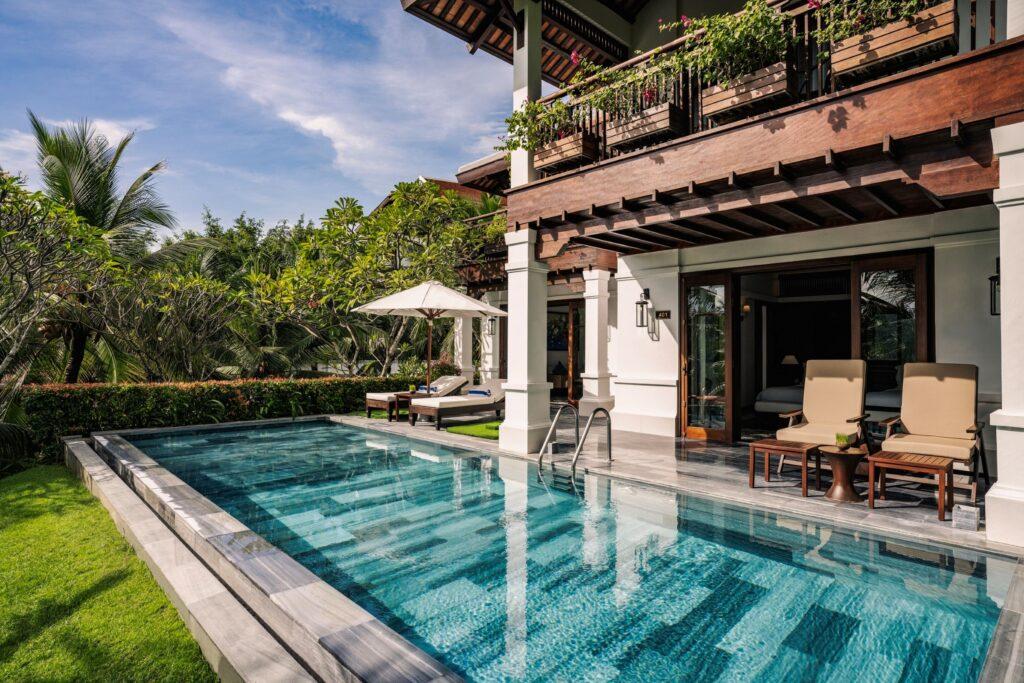
The shift toward the premium segment is also evident in the tourism sector. Vietnam is transforming from a hidden gem for backpackers into a luxury destination. There are many luxury resorts and hotels; low-budget backpackers are no longer part of the target demographic. This is not a coincidence, but rather the result of the government’s “Tourism Master Plan.”
In 2011, the prime minister at the time approved a national tourism strategy aimed at developing tourism into an “economic leader.” The focus was placed on a high-income target group. Interestingly, however, the strategy paper begins with a vision of developing “sustainable tourism” that benefits the population.
Over the past twenty years, numerous international luxury hotel brands have opened flagship hotels in Vietnam. Added to these are resorts on private islands that are accessible only by boat and cater to the “ultra-wealthy” demographic. You can imagine for yourself how this type of travel fits with a commitment to sustainability. But there are other options in the high-end market as well!
Luxury Through Cultural Identity
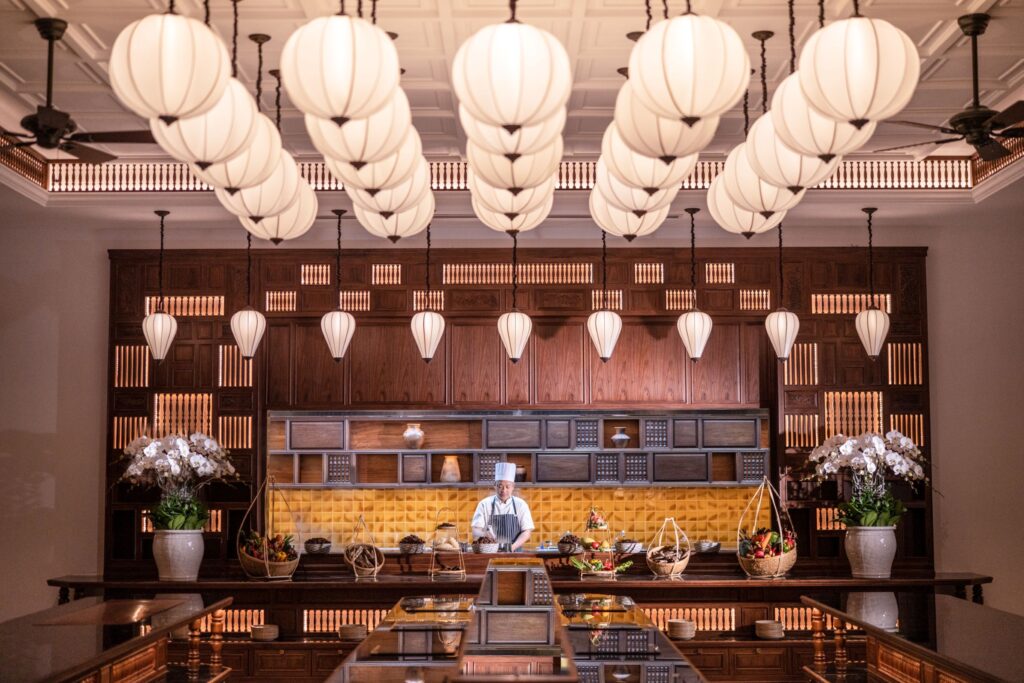
Pham Van Hien, founder of The Anam Hotel Group, which recently joined the Green PearlsⓇ network, takes an interesting approach. Hien, who holds a Ph.D. in physics, explains:
“My extensive travel gave me a global perspective. I stayed in properties that were impressive in terms of infrastructure but often lacked identity. That sparked a desire to create something that wasn’t a replica of a Western hotel transplanted into Asia, but rather something original—deeply rooted in Vietnamese culture and hospitality.” – Phan Van Hien in an interview with Traveling for Business
Cam Ranh Peninsula: Experience Vietnam’s Relaxing Coastline
Phan Van Hien opened his first hotel, The Anam Cam Ranh, in 2017. In 2012, he discovered the 12-hectare property on Long Beach in the northern part of the peninsula. “I was overwhelmed by the tranquility and beauty of this place,” he says. The virgin forest was transformed into a tropical garden with approximately 3,000 coconut palms, which now surround the hotel. What’s more, the hotel is located directly on Long Beach, with a 300-meter stretch of beach reserved for guests.
Local Architecture and Craftsmanship
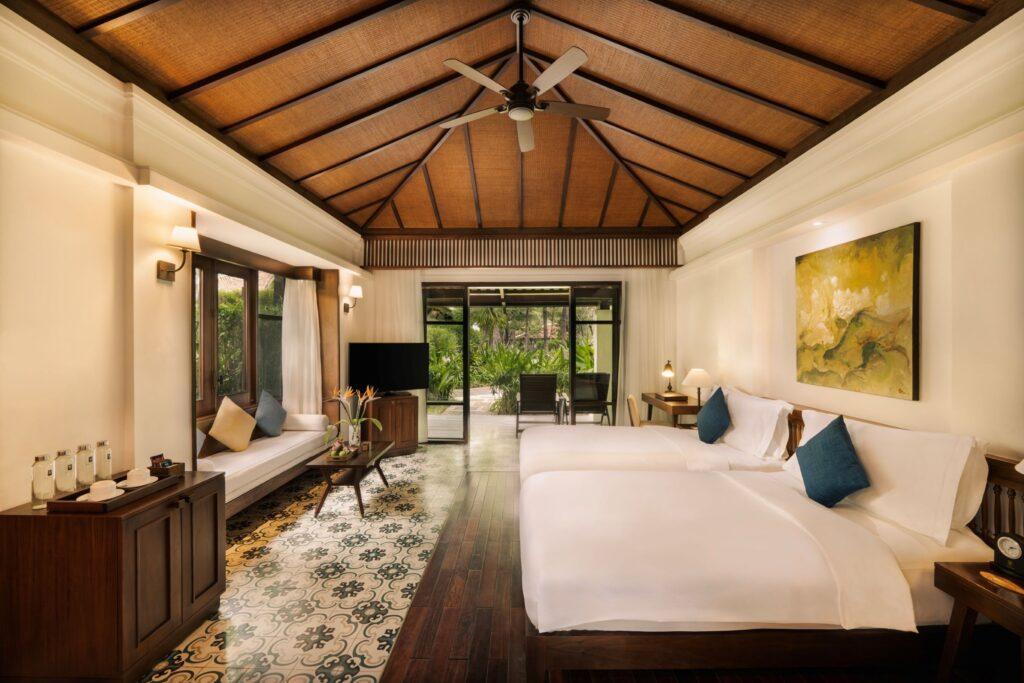
The resort was built as a tribute to the Indochinese heritage of the coast and features the region’s traditional architectural style. Indochinese architecture is a blend of French colonial and Vietnamese styles.
- French architects introduced symmetrical floor plans that featured a central main entrance and round arches
- The architecture was adapted to the region and tropical climate with features such as high ceilings, wide roofs, the use of local materials (e.g., bamboo and rattan), and ornaments and decorations with Vietnamese symbolism (e.g., dragons and lotus flowers).
At The Anam Cam Ranh, you’ll see this style reflected in many details, such as the roof shapes, traditional lanterns, and the patterned tiles, of course. Local artisans from across the country crafted these, along with the mosaic floor tiles, in a traditional manner. The hotel also collaborated closely with Vietnamese artisans on other elements of the building and interior design, taking great care to ensure that the materials were produced or sourced responsibly.
The Cam Ranh Peninsula
If you’re looking for a peaceful trip with long sandy beaches and cultural excursions, the Cam Ranh Peninsula is a great place to start. Unlike the densely populated, touristy city of Nha Trang, which has been one of the country’s most famous beach resorts for many years, Cam Ranh feels even more laid-back. Development is less dense, and the beaches—especially the famous kilometer-long Long Beach (Bai Dai Beach)—are spectacular, with fine sand and pristine waters. Fishing boats and traditional round wicker boats are scattered throughout the bay, serving as a reminder that fishing remains an integral part of daily life in the region.
From Cam Ranh, you can visit the Po Nagar Cham temples, the Ba Ho waterfalls, and the hot springs, or go on a boat tour to the offshore islands.
Mui Ne: A Blend of Fishing Villages, Sand Dunes, and Champa Culture
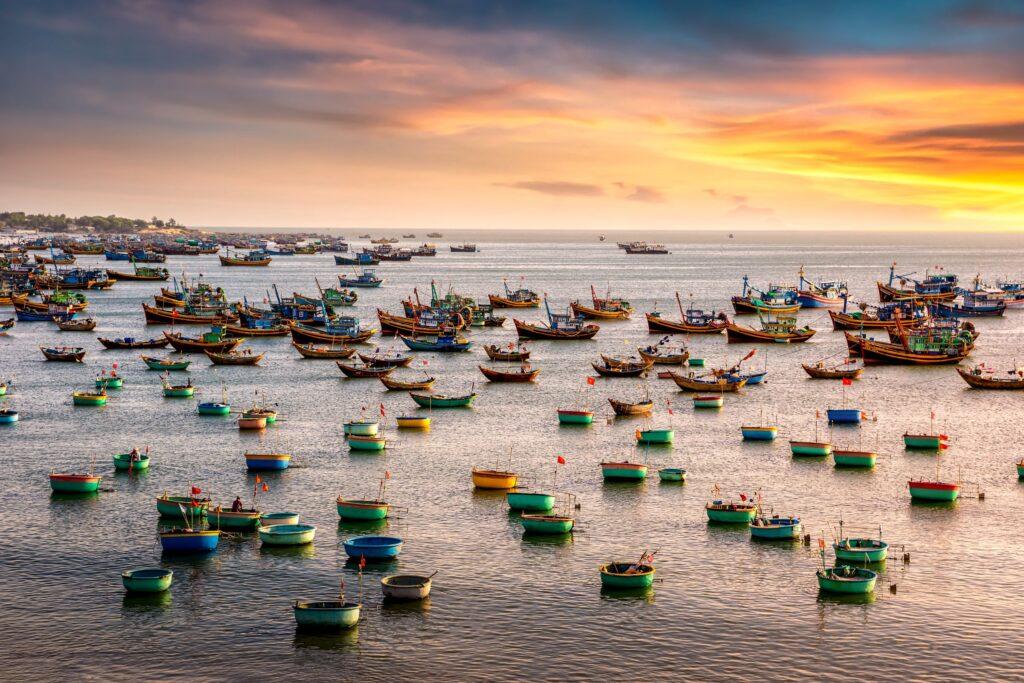
Mui Ne is an old fishing village located in southern Vietnam. It is particularly known for its sand dunes and surfable waves. Kiteboarders and windsurfers of all skill levels will find plenty to enjoy here. Despite its popularity with tourists however, the region remains closely tied to its maritime heritage to this day. Every day, traditional wicker boats dock at the fishing harbor where the day’s catch is sold at the markets. For generations, fishing has played an important role in the lives of most families in the surrounding villages.
Tip: Visit the Fish Sauce Museum in Phan Thiet. Learn about one of Vietnam’s most famous foods and gain insight into everyday culture.
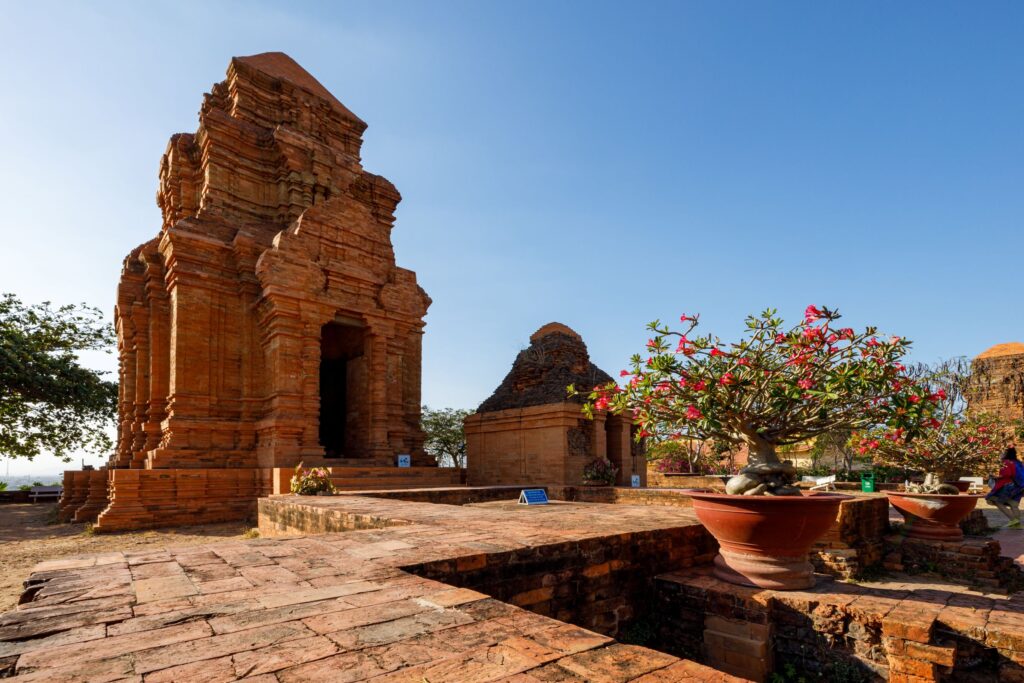
Incidentally, Mui Ne was once part of the maritime kingdom of Champa, which existed from approximately the 2nd to 17th centuries. The Champa period was heavily influenced by Hinduism, as evidenced by the Po San Inu Cham Towers, which are part of a former temple complex.
The Anam Mui Ne resort embraces this regional identity. Here, Vietnamese architecture, local materials, and cuisine also shape the concept.
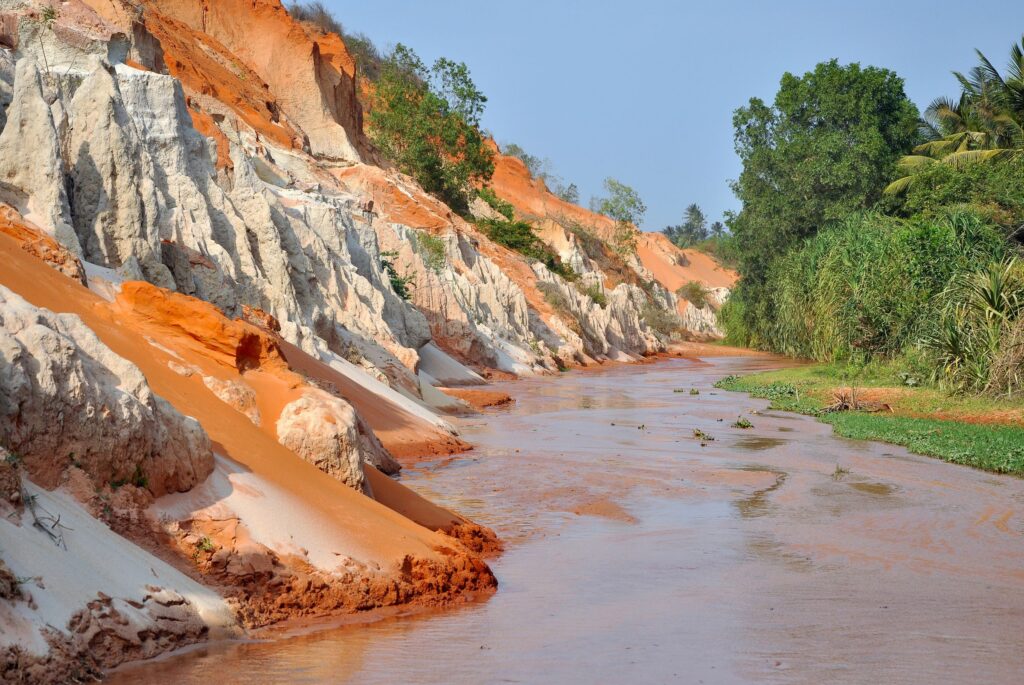
Among the most notable attractions in proximity to the 5-star resort are the Po Sah Inu Cham Towers, the red and white sand dunes, the Fairy Stream, and Mount Ta-Cu with its monumental Buddha statue.
More Than Just a Hotel: The Anam Foundation
A fundamental aspect of The Anam Hotels’ identity is its commitment to social responsibility, which extends beyond hotel operations. Through the Anam Foundation, the company allocates a portion of its annual profits to social and economic projects in surrounding communities (e.g., tree-planting initiatives and constructing safe homes for disadvantaged families).
The company’s dedication to sustainability is also evident in its initiatives, such as installing solar power systems, implementing a strict ban on single-use plastics (even behind the scenes), using reusable glass bottles, providing biodegradable toiletries, and operating a kitchen that primarily uses regional ingredients. The latter is reflected, for example, in the policy of not importing staple foods.
Vietnam: A Country Threatened by Climate Change
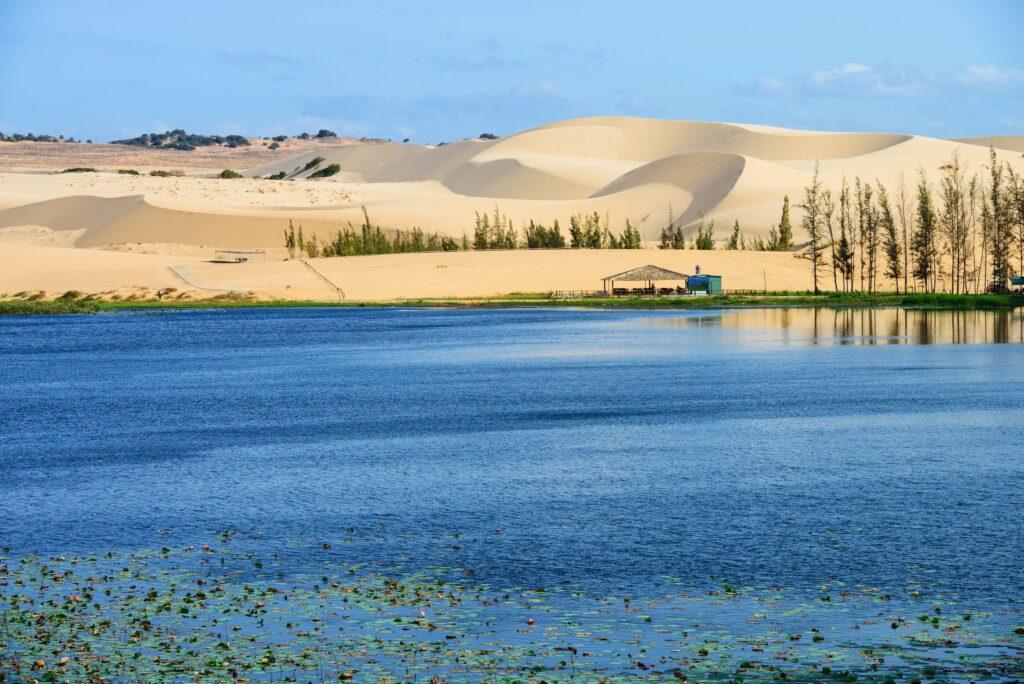
According to Martin Koerner, attitudes toward sustainability are mixed. The government is certainly aware of the situation posed by climate change. For this reason, sustainability is considered in the tourism strategy and when seeking investors in the business sector, for example. The people are expected to benefit (one senses the communist spirit here), and the natural beauty is not to be destroyed.
Furthermore, Vietnam also has an interest in ensuring that the climate crisis does not worsen any further on a global scale.
Vietnam is one of the countries most severely impacted by climate change.
There are geographical reasons for this. Vietnam has a long coastline along the South China Sea (part of the Pacific Ocean). If the sea level rises, two major river deltas are at risk of saltwater flooding. According to GIZ, the Mekong Delta, where 20% of Vietnam’s population lives, is particularly vulnerable. Salinized soils threaten rice cultivation, the water supply, and the livelihoods of many people there. GIZ estimates that up to 70% of Vietnam’s population could be affected by natural disasters.
However, despite this awareness and the direct threat, Vietnam is not known for its climate activism. “We mustn’t forget that the country is still classified as a ‘developing country,'” says Martin. Issues like flood protection are considered important. Bans on plastic bags and waste separation, on the other hand, are not. For example, you’ll hardly find any recycling options during your visit.
What are some ways I can travel more sustainably in Vietnam?
If you’re traveling to Vietnam from a far-off country, the trip obviously can’t be considered “sustainable” in the sense of being low-emission, simply because of the great distance involved. Unfortunately, flying negates any ecological gains. However, emissions aren’t the only pillar of sustainability. As a tourist, there are many ways you can have a positive impact, even—or especially—if you’re traveling by plane.
#1 Travel and transportation in Vietnam

Air travel is not environmentally friendly. There’s no sugarcoating that. However, we can reduce its environmental impact a little by booking direct flights whenever possible — takeoff and landing consume the most jet fuel — and by opting for trains and buses instead of additional domestic flights once we’re in the country.
Is it possible to travel around Vietnam without taking any domestic flights?
Since the country is very long and most of us don’t have unlimited vacation time, it makes sense to cover long distances by domestic flight. For example, the trip from Hanoi in the north to Ho Chi Minh City in the south takes about 30 hours by train but only two hours by plane. So we can certainly understand the temptation!
However, the train routes in Vietnam are definitely worth recommending, as noted by American magazines such as Travel & Leisure and Travel Tour & World. The articles mention beautiful coastal routes as well as overnight trains.
Taking the train can transform your trip to Vietnam into a slow-travel experience.
#2 Accommodations
We’ve already recommended the two sister resorts, The Anam Cam Ranh and The Anam Mui Ne, as places to stay that are part of the Green PearlsⓇ network and openly communicate their commitment.
But of course, there are also other dedicated hotels and accommodations. Our recommendation:
When selecting accommodations, prioritize the following:
- Vietnamese-owned businesses (so your money stays in the country)
- Environmentally committed (e.g., solar energy, zero-waste strategy)
- Use local ingredients
- Treat employees fairly (this could be highlighted on the website)
#3 Animals and animal welfare
Home to elephants, monkeys, and king cobras, Vietnam is one of the most biodiverse countries in Southeast Asia. Its diverse ecosystems include jungles, mangrove forests, mountains, and freshwater and saltwater habitats. However, some wild animals, such as the “Vietnamese unicorn” saola, are threatened with extinction.
Unfortunately, there are quite a few objectionable “animal attractions” in Vietnam that you should avoid.
Commercial animal exploitation in Vietnam — and how to avoid it
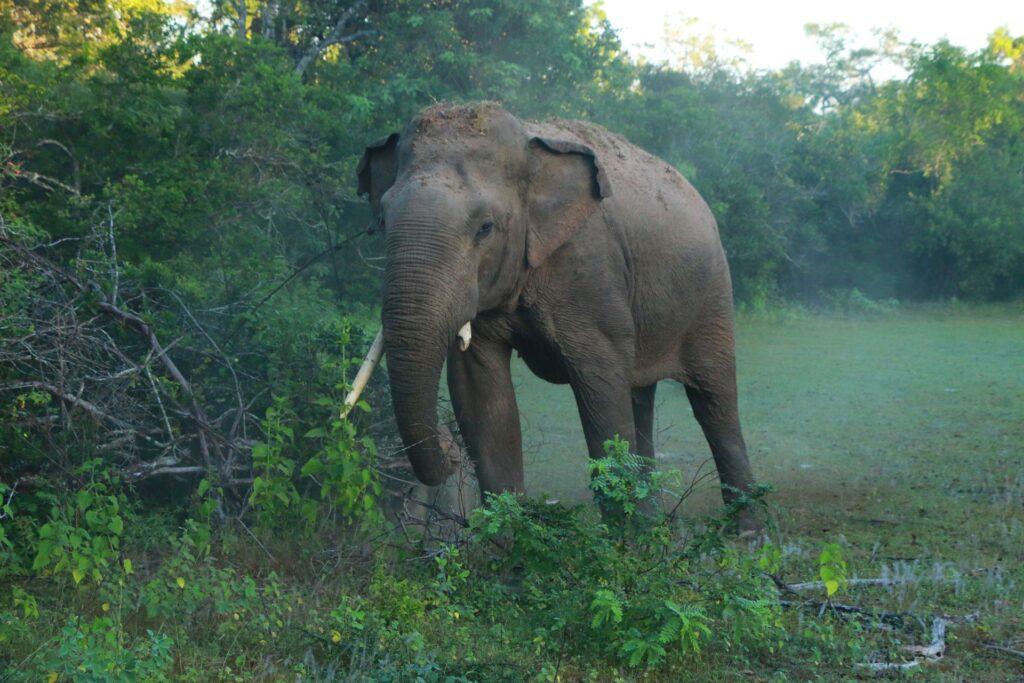
NO to elephant rides
To train elephants to carry tourists, their “will is broken” while they are still young using short chains and sharp hooks. Although elephant rides were very popular about ten years ago, they have increasingly been banned in recent years. However, these bans are not federal laws but rather regulations imposed by individual provincial governments or national parks.
In the Dak Lak region, particularly popular for elephant rides, a shift was made in 2022 to an “Elephant-Friendly Tourist Model,” completing its transition phase in 2026. However, in our opinion, this is not a truly animal-welfare-friendly or ethical solution since the “strategy” still enables tourists to “interact” with the elephants, such as by feeding them, even though they are no longer allowed to ride them.
According to Viet Nam News, there are 35 domesticated elephants in the region.
YES to watching elephants in the national park
However, just because elephants are “domesticated” does not mean they should be used for tourist interactions. For instance, Yok Don National Park in Vietnam kept elephants on chains until 2018 and forced them to carry tourists. In 2018, however, the park made the decision to set the elephants free. Since then, the elephants have been able to roam freely within the park, and tourists can observe them on guided tours on foot from a distance. No feeding, no shared bathing, and no photo shoots.
The park is now called an “elephant sanctuary.” But don’t let that term fool you. Not all “sanctuaries” are transparent and honest about their animals’ pasts like Yok Don is. Nevertheless, a shift in thinking is taking place in the country, offering hope for future generations of elephants.
Note: Elephants do not need to interact with humans. They do not need to be fed or petted. They should also not be used as props for selfies. According to behavioral biologists, “forced proximity” significantly stresses elephants. As a visitor to their habitat, observe them only from a distance.
NO to photos WITH wild animals
Unfortunately, there are also numerous “shows” in Vietnam where trained monkeys or bears in costumes ride bicycles and perform other tricks. Furthermore, you’ll find the “opportunity” to have a monkey or other wild animal sit on your lap for a vacation photo at markets, for example. According to Pro Wildlife, big cats and other dangerous animals are drugged for this purpose to prevent them from hurting people.
Behavioral researchers have observed that monkeys that frequently interact with humans exhibit “aggressive behavior.”
Good to know: Don’t take pictures just to complain, either. Scientists have found that photos of human-wildlife interactions accompanied by explicit warnings in the caption can also harm the animals. This is because images intended to express disapproval still increase the relevance of such content in online algorithms.
YES to photos OF wild animals
When observing animals in their natural habitat, such as while birdwatching, and doing so without disturbing them—ideally, they shouldn’t even notice your presence—nothing stands in the way of capturing great photos to remember the moment. To accomplish this, turn off the flash, be careful not to disturb the habitat, and, of course, keep your distance. Wildlife photography is a wonderful experience, and we wish you the best of luck with it!
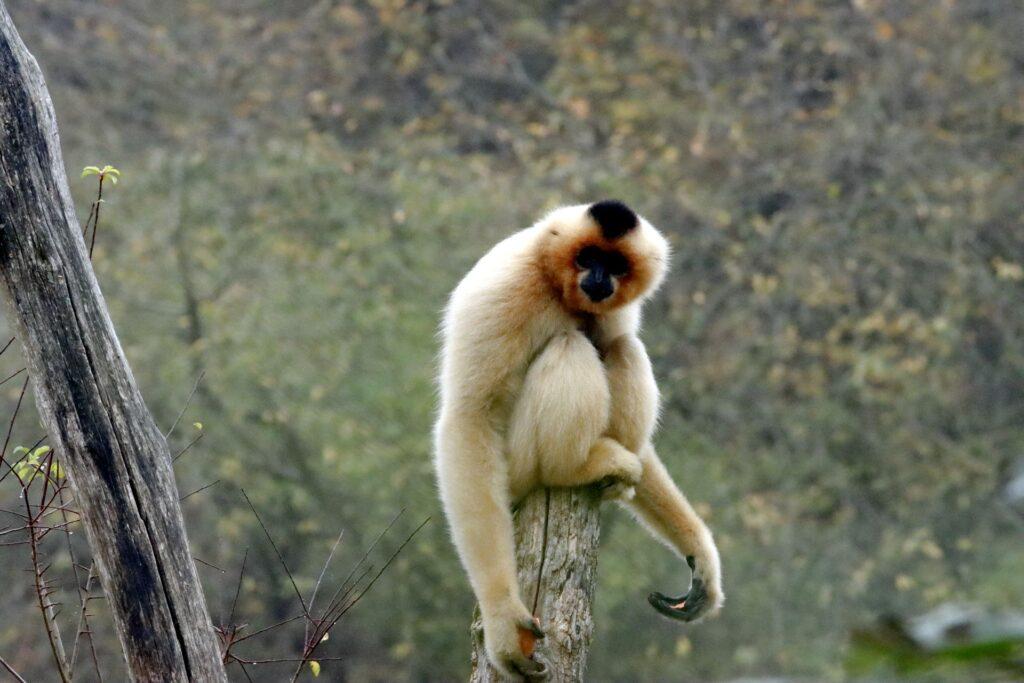
The best places in Vietnam for respectful wildlife viewing
If you want to see animals in their natural habitat without disturbing them, these three national parks are the best places in the country to visit:
- Cuc Phuong National Park (Northern Vietnam): This is Vietnam’s oldest national park and a paradise for birdwatchers and butterfly enthusiasts. It is also home to the Endangered Primate Rescue Centre, which rehabilitates injured and rescued monkeys before releasing them back into the wild.
- Cát Tiên National Park (Southern Vietnam): This vast protected area is easily accessible from Ho Chi Minh City. Guided night safaris and early-morning hikes offer the chance to spot gibbons, rare birds, deer and, with a bit of luck, even wild elephants and gaurs (giant wild cattle) from a distance.
- Phong Nha-Kẻ Bàng National Park (Central Vietnam): This UNESCO World Heritage Site is known for its gigantic caves and the dense jungle is home to a vast variety of wildlife. On jungle treks, you may catch a glimpse of the elusive red-shanked leaf monkeys high up in the treetops.
#4 Respect for the locals
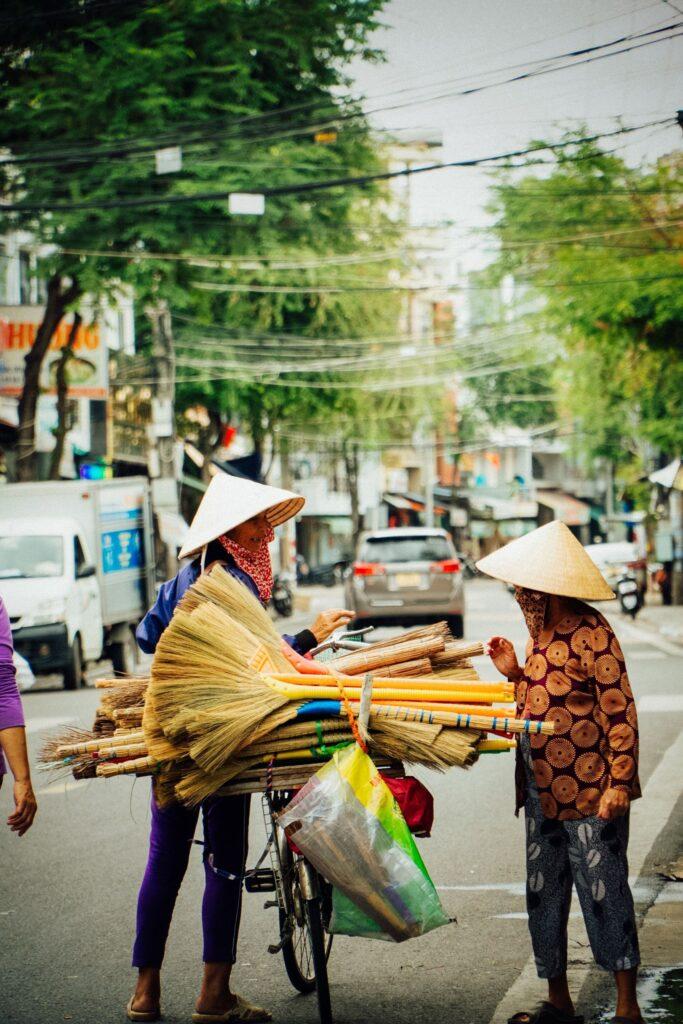
Finally, a few words about the population. Of course, you can’t categorize over 100 million people, but we can offer a few general tips for respectful behavior. Because of communism, Vietnam is officially an atheist state. However, Confucian values and ancestor worship are often deeply rooted, as in China. There is a strong sense of shame, and Vietnamese people feel a strong need to “save face” in public.
In general, Vietnamese people are very tolerant of tourists. Even if you’re “acting out,” they usually won’t tell you. That’s why you should familiarize yourself with their customs ahead of time and try to follow them as much as possible.
The most important etiquette rules for a respectful stay in Vietnam
- Hand over items (e.g., a hotel room key card) with both hands. Handing something over with one hand is considered rude.
- Do not point your finger at someone or something. Instead, use your entire open hand.
- Greet people with a smile. Men may shake hands with other men (in this case, the left hand is placed on the right wrist for emphasis). When greeting women, however, men should refrain from shaking hands.
- Casual gestures, such as patting someone on the shoulder, are inappropriate.
- Do not ruffle children’s (or anyone’s) hair or touch their heads. In Buddhism and ancestor worship, the head is considered the holiest part of the body where the soul resides. Therefore, touching someone’s head is a serious breach of boundaries.
- In contrast, the soles of the feet are considered the least pure part of the body. It is disrespectful to point your feet at anything, such as resting your legs with your feet pointing toward a Buddha statue or other people.
Conclusion: Experience Vietnam with Respect
We hope we’ve helped you discover the allure of Vietnam, and that you’ve learned a few practical ways to travel there more sustainably — ways that support the country’s development, contribute to the well-being of its people, and protect wildlife rather than exploit it.
Save this article on Pinterest.


Really enjoyed this article! I especially liked the advice about planning sleeping arrangements before focusing on the pool or other luxury features. Giving each generation enough personal space while still creating opportunities to spend quality time together can make a huge difference. The tips about flexible itineraries and extra help are also very practical. Great insights for anyone planning a multi-generational villa holiday. For more useful travel ideas and inspiration, visit https://yourwebsite.com
Great article! I really enjoyed the practical travel tips and destination recommendations. The information is very helpful for travelers planning their next trip. Thanks for sharing!
A thoughtful approach to luxury travel. I really like the focus on sustainability without losing the cultural and experiential side of a Vietnam journey. Supporting local communities, choosing responsible stays, and experiencing nature more mindfully can make a trip feel much more meaningful. Vietnam seems especially well suited to this kind of conscious travel.
WOW!!!