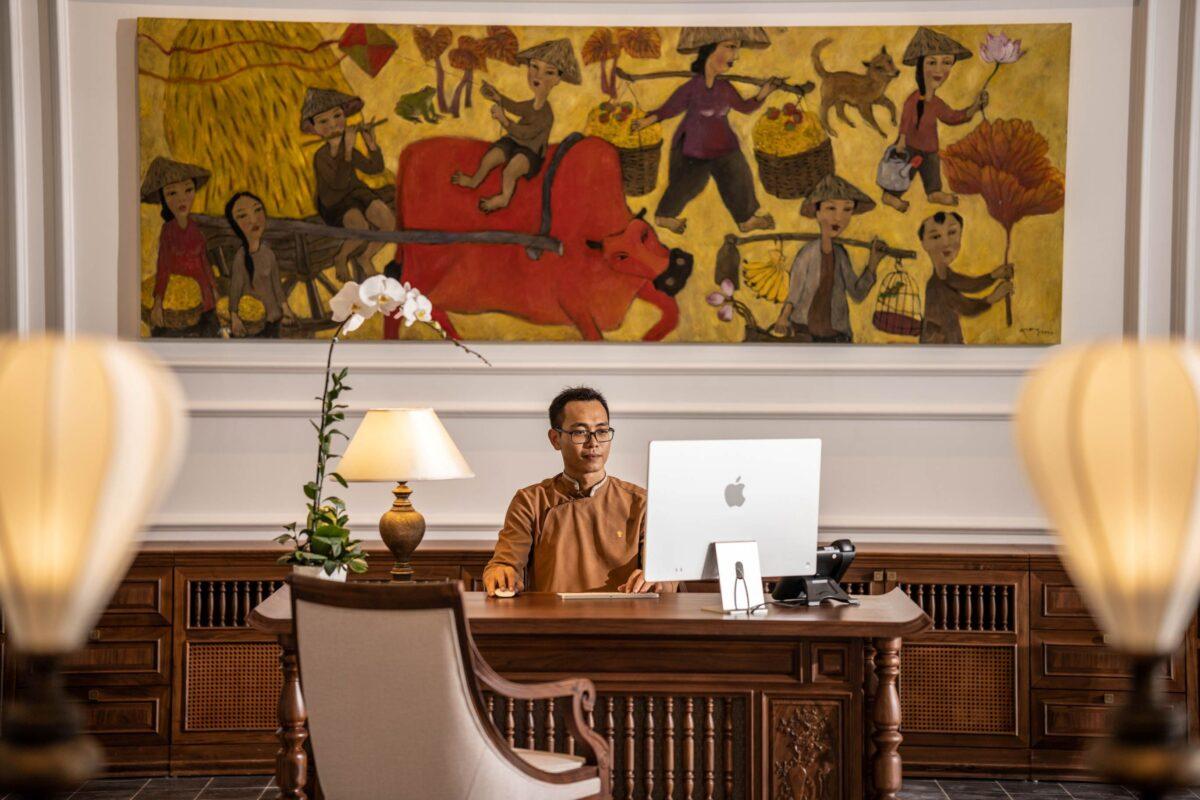
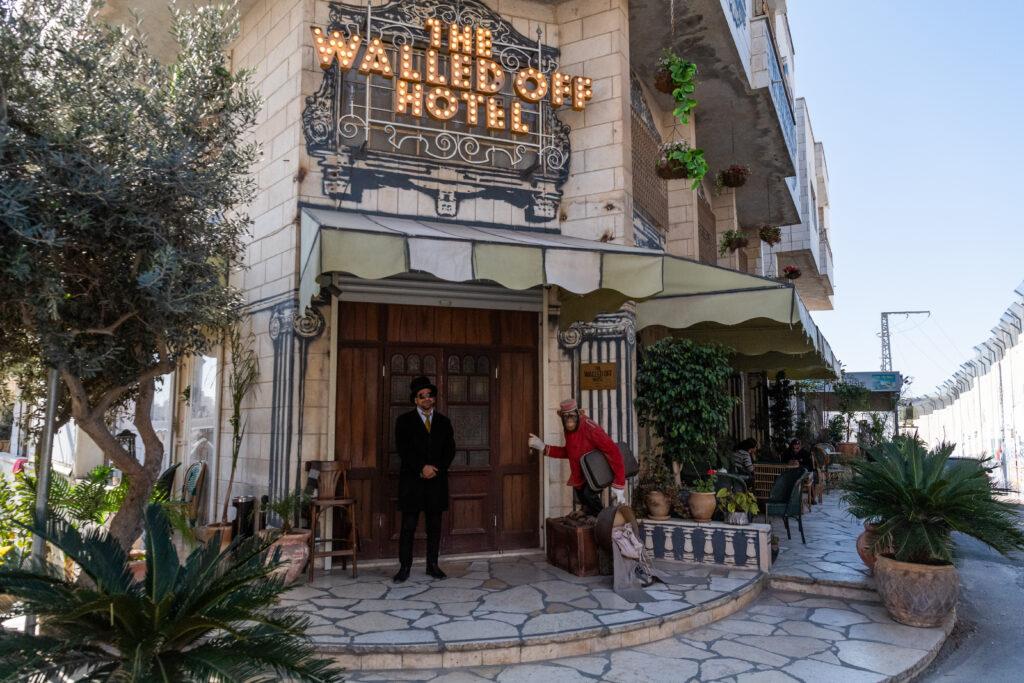
Imagine lying in your hotel bed and gazing at an original Pablo Picasso painting. Or maybe you’re standing in front of a medicine cabinet by Damien Hirst — why not take a moment to reflect on the struggle against death? Or perhaps you are spending the night beneath Banksy’s “Pillow Fight” at his conceptual Walled Off Hotel, which is an artistic and political protest in and of itself.
Luxury hotels around the world have private art collections that rival those of museums. Some own pieces worth millions. Art becomes an exclusive experience, and sometimes even the deciding factor in choosing a hotel.
But must it always be Picasso, Warhol, or Banksy?
“Who are you sleeping with?”
That was once the title of a column in the art magazine Monopol. In it, celebrities revealed which works of art hang in their bedrooms or studies. For example, Green Party politician Claudia Roth has Warhol’s “Warhol for the greens” hanging in her bedroom. The poster was created in 1979 by Joseph Beuys, who will be discussed later in this article.
As a hotel guest, you have the opportunity to experience this level of luxury. After all, we’re spending the night surrounded by works of art that we’d likely never be able to afford at home.
Art outside of museums
The special appeal of art in a hotel is experiencing it outside of a museum. You don’t need a ticket, nor any particular interest in art. You might come across it at breakfast, on your way to the pool, or even right above your bed.
For many hosts in the Green Pearls® network, it’s an opportunity to showcase regional artists. Some regularly purchase artwork, while others make their spaces available for exhibitions. And some even become artists themselves.
Join us on a journey from Vietnam to Bavaria and discover the stories behind the artworks and why it doesn’t always have to be the big names whose works you fall asleep under.
The Anam Vietnam: Resorts full of authentic Vietnamese originals
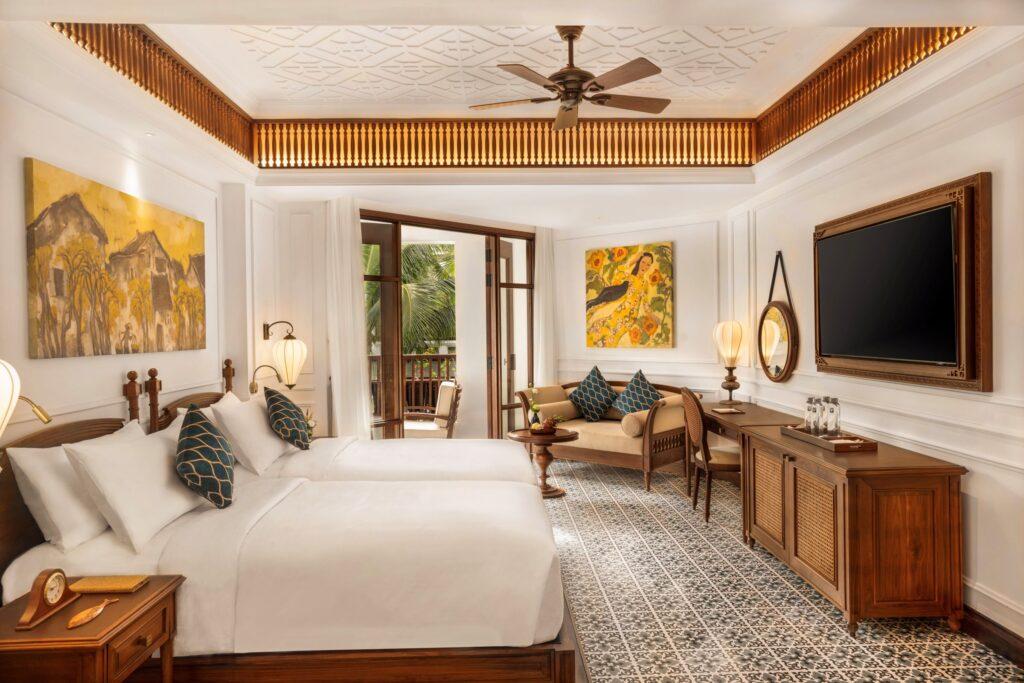
Guests staying at either of The Anam’s two luxury resorts in Vietnam will encounter Vietnamese culture through the architecture alone. Traditional roof shapes, Vietnamese lanterns, and carefully selected design elements define the resorts’ appearance.
From the beginning, Pham Van Hien, the Vietnamese owner, wanted his resorts to reflect the country’s cultural identity.
This includes the art.
The Anam Cam Ranh and The Anam Mui Ne display hundreds of original works by Vietnamese artists throughout their rooms, villas, suites, and public areas.
According to Nguyen Bao Trung of The Anam, the hotel collaborates with artists such as Bui Van Quang and Vu Trong Anh. Bui Van Quang’s vibrant oil paintings capture everyday life in Vietnam, from fishing villages to rural work scenes. Vu Trong Anh, on the other hand, draws inspiration from landscapes and historic cityscapes. His luminous paintings depict the alleys and rooftops of Hoi An’s Old Town, among other things.
Art from the Alps: Between tradition and the present
The Alps have a long history of craftsmanship. Woodcarving, glasswork, and ceramics are closely tied to their respective regions.
However, the hotels we spoke with are just as interested in contemporary art as they are in these traditional crafts.
Schloss Lerchenhof: When guests visit the studio afterwards
At Schloss Lerchenhof in Carinthia, guests are greeted by art right at the front door. Glass art adorns the windows and doors, as well as the large sundial on the castle’s façade. In a sense, the historic building is an exhibit in itself.
The host family provides a platform for various local artisans. Handcrafted glassware is on display and available for purchase in a showcase. The collection includes pottery, garden art, and sewing and felting projects.
We especially love the story behind the restaurant’s tableware. Much of it was crafted by a potter from Hermagor. Guests who like the ceramics sometimes visit her studio afterward.
Contemporary art also has its place. Gerold Ölz, an artist and regular visitor to Schloss Lerchenhof for over 35 years, presented his artwork there in the summer of 2026. For the exhibition, the castle, including its so-called “power spot,” was transformed into an exhibition space.
Some of his pieces remained in the house afterwards.
My Arbor: A new work of art every year
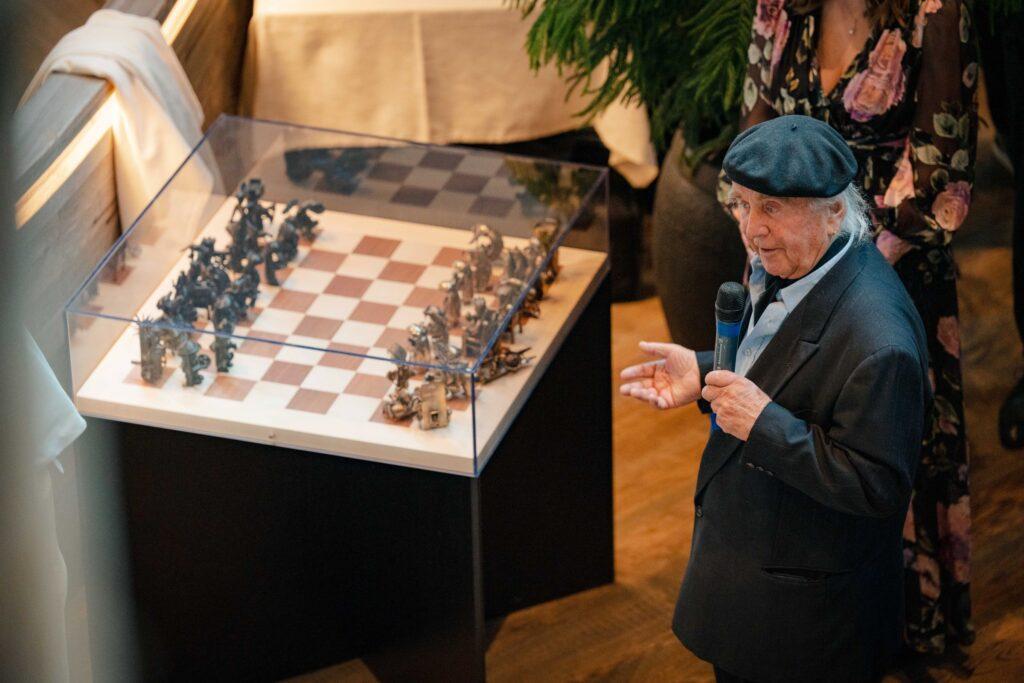
Supporting regional art has become a tradition at the My Arbor in South Tyrol. Each year, the hotel purchases at least one piece by a local artist and sponsors several cultural events in the area.
Over time, a steadily growing collection has emerged.
Among the artists whose work the hotel has acquired are Franz Kehrer from the Gadertal region and Harald Kastlunger.
Kehrer’s human figures have unusual proportions. They appear simultaneously formed and reduced. Some art critics argue that viewing the human body in this way can encourage a different perspective.
Paradiso Pure.Living: Artists live and work at the hotel
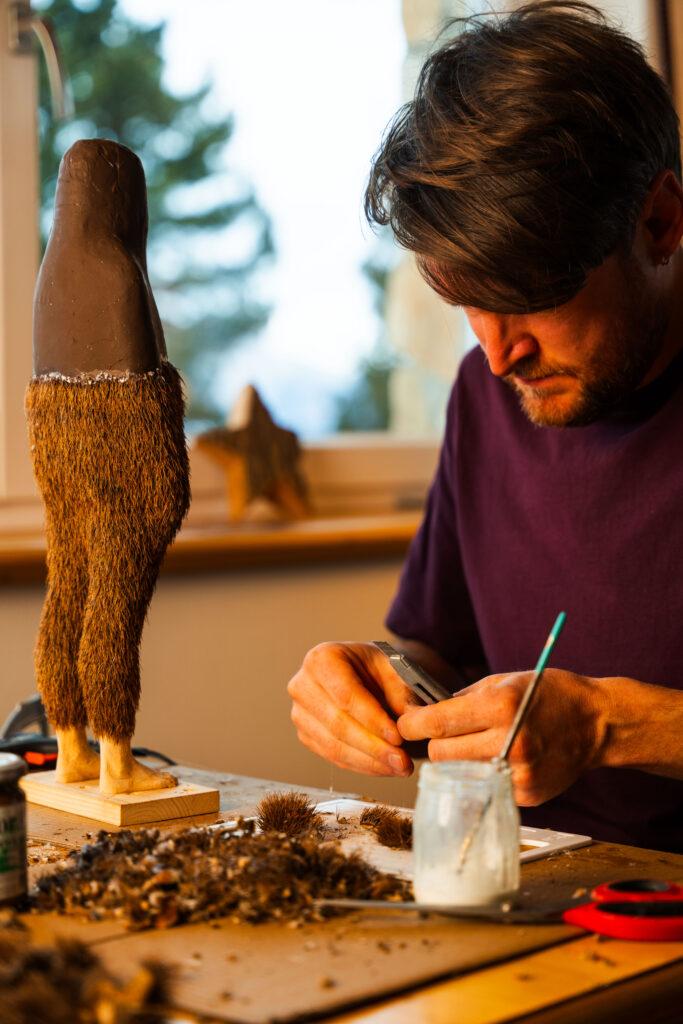


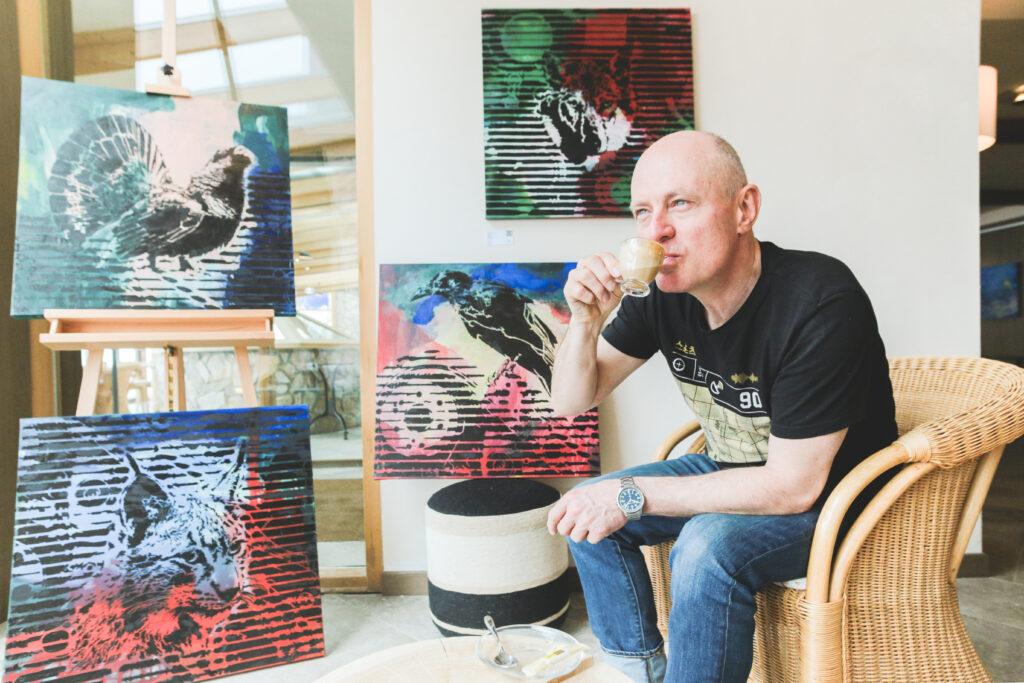
The Paradiso Pure.Living Vegan Hotel on the Seiser Alm gives art a particularly prominent role.
Many of our readers know the hotel for its vegan cuisine. However, long before the hotel transitioned to a vegan concept, contemporary art played an important role here.
The hotel even has its own art project, the Pure.Art Circle. It includes rotating exhibitions, an art shop, events, and artist residencies.
Several times per season, international artists stay and work at the hotel. This allows guests to experience the creative process firsthand, engage in conversations with the artists, and sometimes even participate in it.
Past guests have included Dutch artist DOES, artist Stefania Vinchi, and South Tyrolean sculptor Matthias Sieff.
In his installation, “TOTEM,” artist Dorothy Bhawl explored the lives of wild wolves in the Dolomites. The piece illustrates how art can address themes directly connected to the hotel’s surroundings.
And the art isn’t limited to Seiser Alm: The LA VIMEA hotel in Naturns, which is also vegan, displays a selection of works from the Pure.Art Circle. Guests can learn more about the artists and purchase artwork.
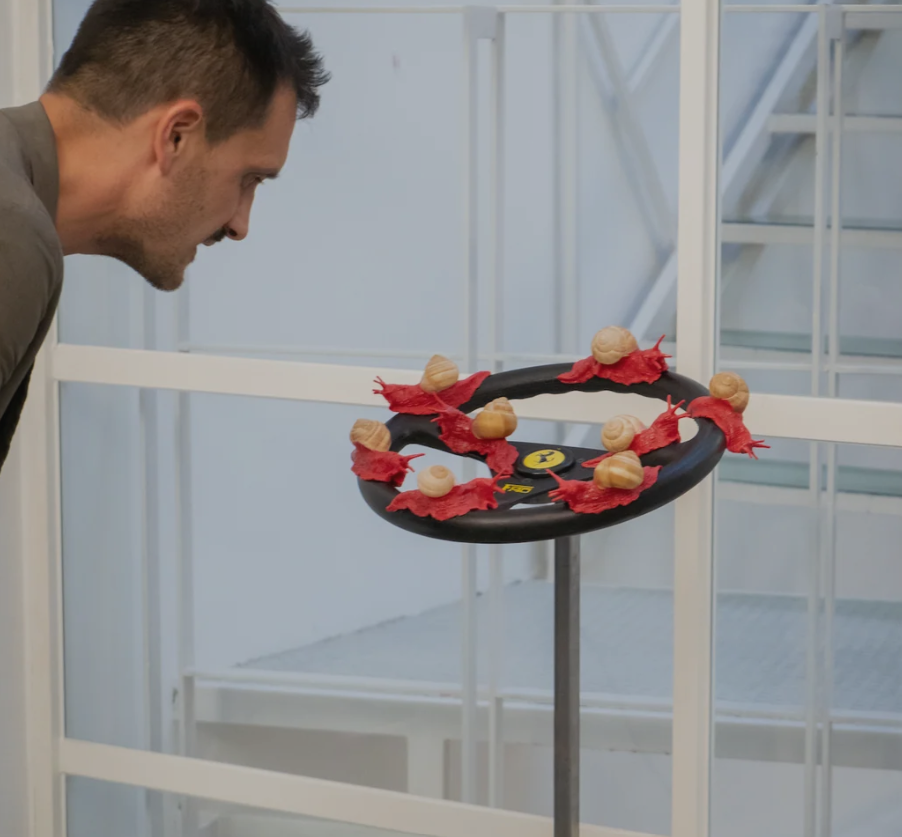
Stanglwirt: Mountains as witnesses to climate change
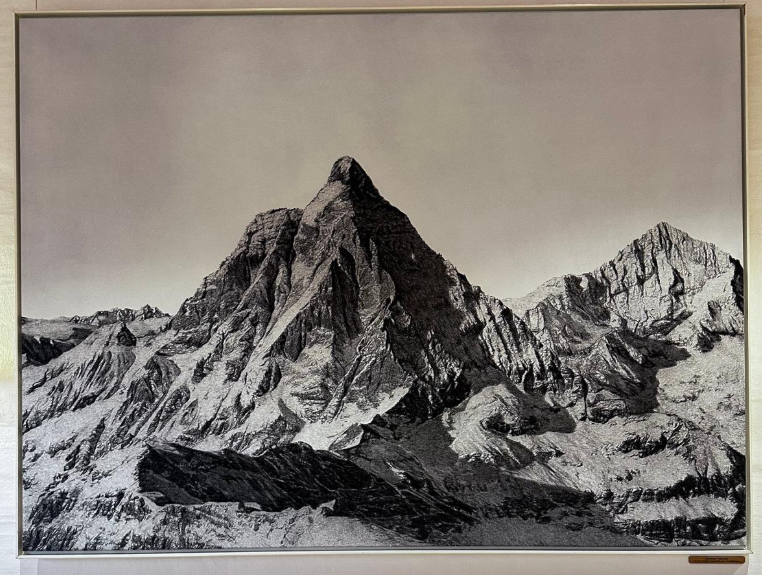
The Green Wellness Resort Stanglwirt in Going am Wilden Kaiser is best known for its close ties to Tyrolean folk music. However, the Hauser family, who runs the resort, also promotes visual arts. One of the artists whose work is on display at the hotel is Christoph Palaschke.
In his series Mountains, the Austrian artist portrays well-known mountain ranges, including the Matterhorn, the Großglockner, and the Wilder Kaiser. Using acrylic and charcoal on canvas, Palaschke captures their rugged rock formations in striking black-and-white images.
However, there is more to these mountain portraits than a mere fascination with alpine landscapes. Palaschke describes mountains as “indicators of climate change.”Melting glaciers and thawing permafrost are altering the high mountains and contributing to rockfalls and landslides. Consequently, his works also draw attention to the vulnerability of seemingly unchanging landscapes.
Art in German Hotels: From spas to in-house studios
Art has the power to transform spaces. This is particularly evident in places where people go for a different purpose, such as a spa.
Klosterhof: The rainbow path above the pool

While swimming in the indoor pool at Klosterhof – Alpine Hideaway & Spa in Bayerisch Gmain, be sure to look up.
The so-called rainbow path, created by artist Wolfgang Gerner, is suspended in the air there.
The 16-meter-long, wave-shaped installation is made of painted jute fabric. Installed as part of the Artemacur Spa redesign, it symbolizes the various phases and colors of life.
Gerner has left his mark on the Klosterhof in many other ways. Each hotel room features custom-designed art steles. He also designed the hotel’s logo, a Celtic triskelion.
The connection between the artist and the hotel is also personal: Wolfgang Gerner is the stepfather of the hotel’s owner, Dr. Andreas Färber.
Here, art is part of the family history.
This brings us to another question: What happens when the hosts themselves are artists?
Hotel Luise: When the hotel manager wants to turn coffee grounds into art
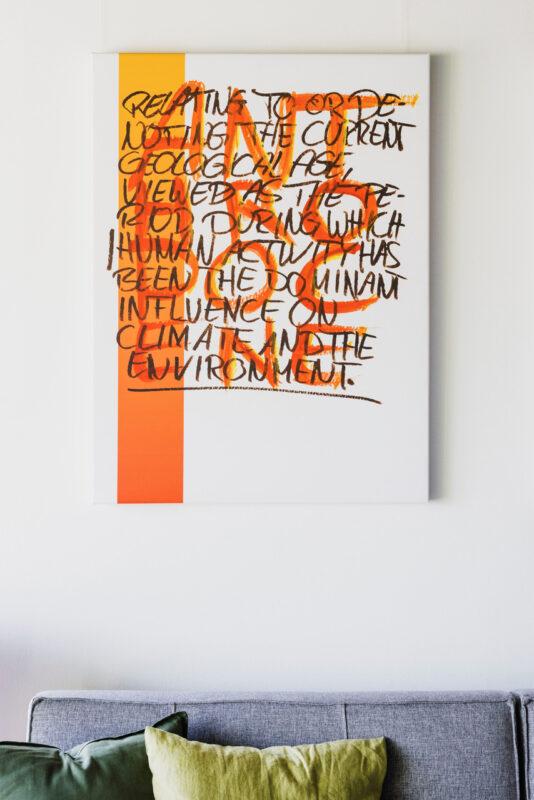
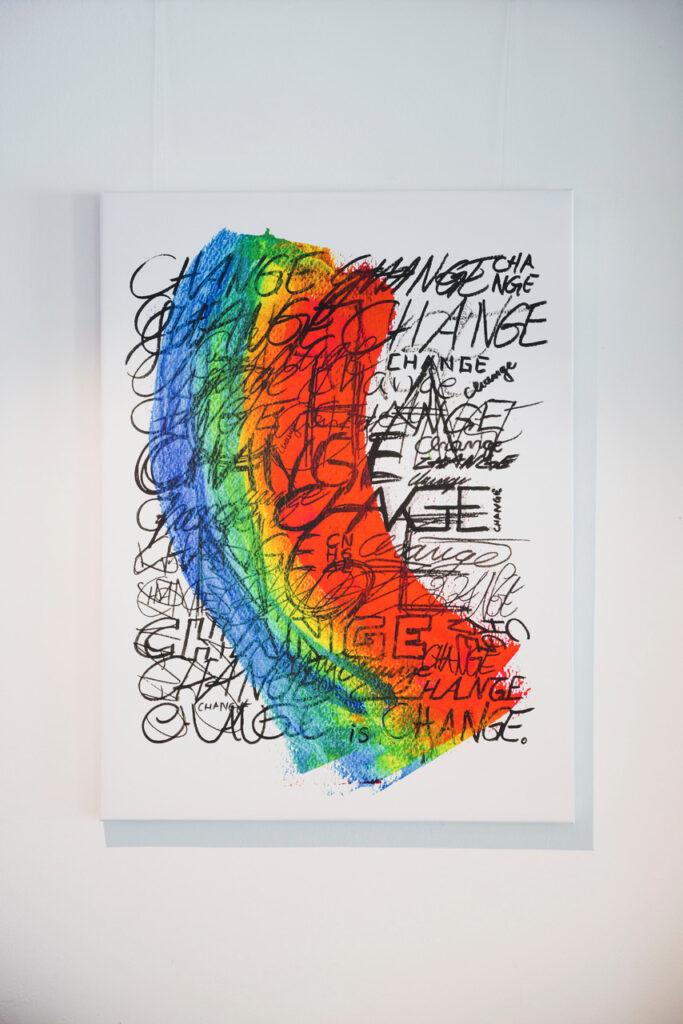
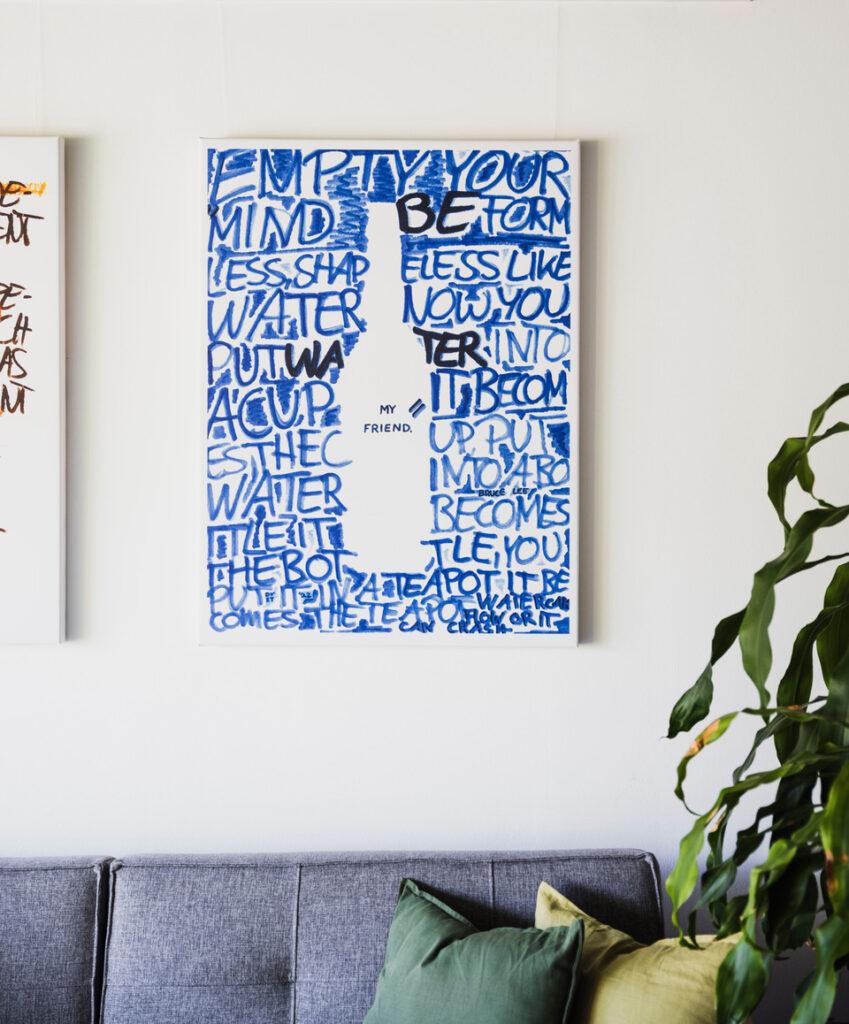
At the Hotel Luise in Erlangen, Benjamin Förtsch’s creative flair is evident throughout. Photographs, installations, and self-designed motifs all bear his signature style.
When we asked Benjamin what kind of art he creates, he replied, “I do a little bit of everything.”
Indeed, the range of his work is astonishing. He is a photographer and works with typography, oil painting, and metal casting. He experiments with behind-glass gilding and has created installations, such as the Trashtunnel.
Currently, he is working with cyanotype, a historical photographic process that uses sunlight for exposure. He is also trying to make plaster tiles from the hotel’s coffee grounds for a wall in the breakfast room. Will it work? That remains to be seen. But these are exactly the kinds of experiments that take place here.
So far, he hardly sells any of his art. He works primarily under a registered artist name and for himself or the hotel.
However, the Hotel Luise also offers space to other creative individuals. The glass-enclosed hallway features rotating exhibitions by the Erlangen Amateur Photographers. Alongside these, there are displays of ceramics and works by other artists.
As you can see, the line between hotel operations, workshop, and gallery blurs at the Hotel Luise.
STURM: Art from the Rhön
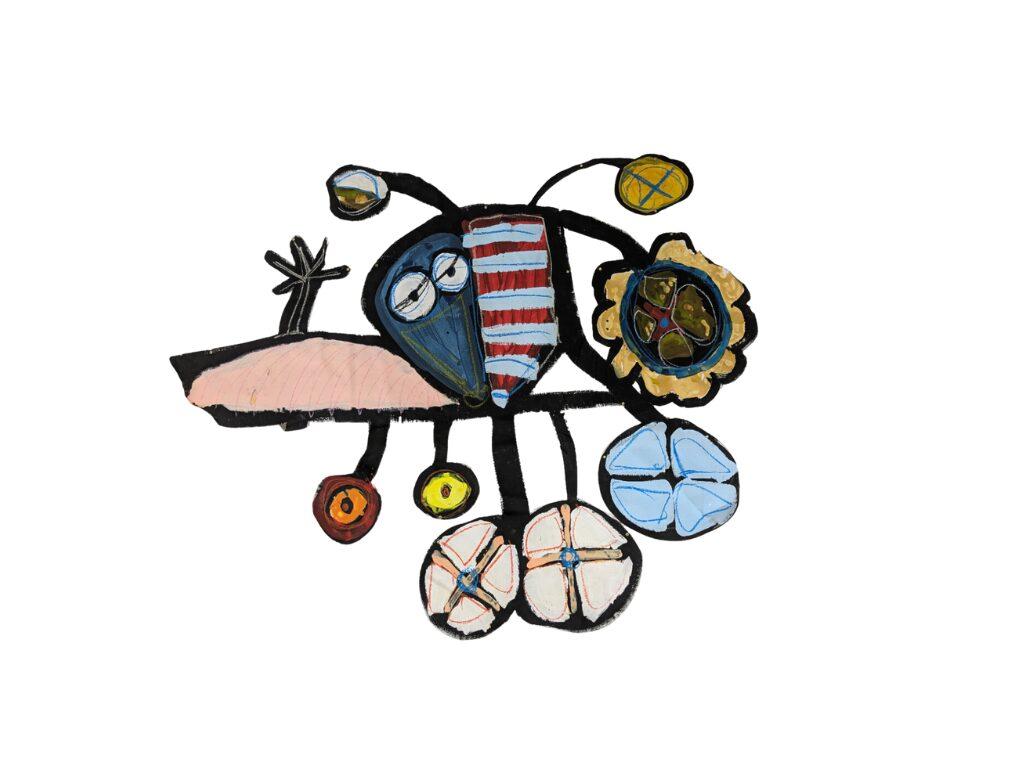
At the STURM in Mellrichstadt, art is an integral part of the hotel’s concept. The Schulze Dieckhoff family, the hotel’s owners, have long been interested in art and architecture. One striking example is the Loebermann façade, a wooden design in the entrance area that is certainly a work of art in its own right. The hotel also regularly exhibits works by regional artists.
The featured artists at the hotel in October 2026 were Sabine Bach, Marco Wagner, and Klaus Metz.
Sabine Bach is known for her colorful, abstract-figurative works. She runs her studio in the Rhön region, where she creates pieces like her COMIX/FRIENDLY DEMONS series.
For artists, a hotel can be an interesting exhibition venue. Unlike a traditional gallery, it allows people who may never have heard of the artists before to encounter their work.
Das Rübezahl: Art opening at the hotel
At the Hotel Das Rübezahl near Füssen, you’ll find art throughout the hotel, including in the AlpenGlühen Design Junior Suite. Original works by regional artist Rose Lamparter have been incorporated into the suite’s interior design.
The hotel also collaborates with the painter and sculptor Oliver Klam.
Several times a year, the hotel hosts art openings for guests, focusing on the exhibited works and providing an opportunity to speak with the artist in person.
Klam’s art focuses particularly on people and interpersonal relationships. His sculptures are made from reclaimed wood and other materials.
And for those who want to experience even more culture after their stay at the hotel, the surrounding area is home to the royal castles of Neuschwanstein and Hohenschwangau, as well as the Museum of the Bavarian Kings.
Must regional artists be unknown?
Until now, you might have got the impression that hotels have to choose between famous names and regional art. However, this would be a false dichotomy.
After all, even internationally renowned artists can have strong ties to a region.
A striking example of this is Gut Sonnenhausen in Glonn, Upper Bavaria.
HA Schult: What is left of our consumer society?
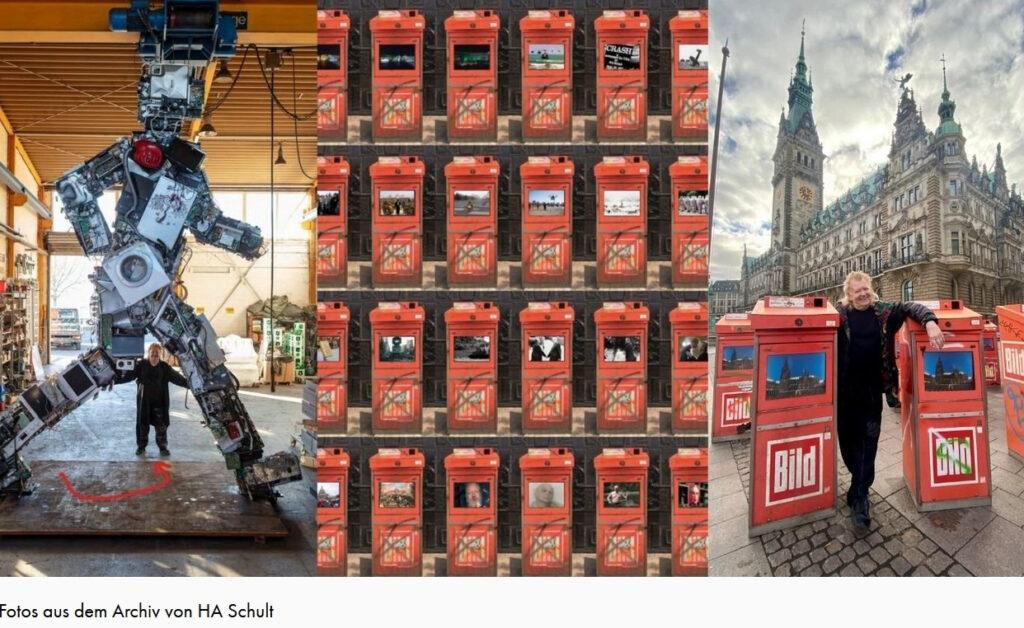
In August 2025, internationally renowned performance artist HA Schult was a guest at Gut Sonnenhausen in Glonn, Upper Bavaria. There, he unveiled his “Monument to Print Media,” exploring the significance of printed information in an increasingly digital society.
HA Schult is particularly well-known for his ‘Trash People‘: life-size figures made of rubbish that he has installed in various locations around the world (e.g. the Great Wall of China, the Matterhorn, Barcelona and Gorleben). For decades, the artist has used these installations to explore consumerism, the throwaway society, and our use of resources.
At Gut Sonnenhausen, this art form has found a home in a place whose history is closely tied to a change in societal attitudes. Karl Ludwig Schweisfurth, the father of the current host, Georg Schweisfurth, was once a meat processor before becoming a pioneer of organic farming.
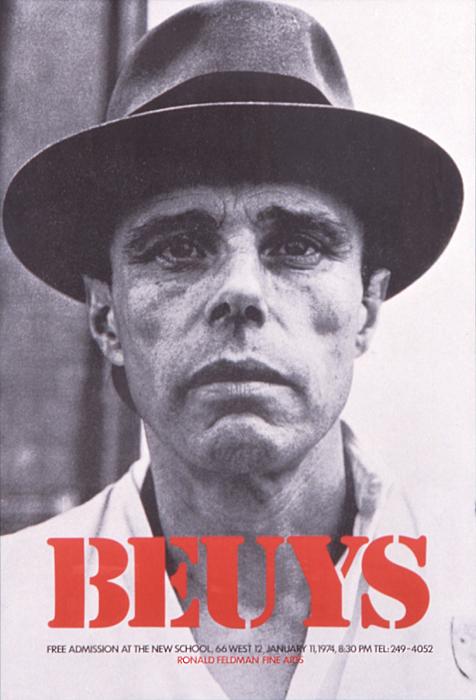
Karl Ludwig Schweisfurth was also acquainted with Joseph Beuys, who promoted social and ecological change through his broadened definition of art and the 7,000 Oaks project. In fact, he was a co-founder of the Green Party in Germany, which resulted in the creation of the aforementioned Andy Warhol promotional poster.
Meanwhile, the art scene at Gut Sonnenhausen continues to evolve. As part of an artists-in-residence programme, contemporary artists live and work on the premises for set periods. During ‘Kunst August 2025’, seven young artists from the Munich Academy of Fine Arts were in residence. In 2026, three more artists followed — one from Vienna and two from Japan.
Art doesn’t have to be beautiful
For host Georg Schweisfurth, art plays an important role in his life and in the hotel. However, his goal is not simply to fill the rooms with works that are as aesthetically pleasing as possible. ‘It should inspire our guests and staff, encourage reflection and evoke emotion. It doesn’t have to be “beautiful” at all, but rather unique or different,’ explains Alexandra Baeten from Gut Sonnenhausen.
Conclusion: Art that lasts
A Picasso can certainly impress. However, if you keep an open mind, an artist you visit after your hotel stay, even if they are unknown, can be just as impressive.
Art can spark reflection. For example, when HA Schult sculpts human figures out of trash, he highlights our throwaway society in an unusual way. We’ve known for a long time that we produce too much waste. However, seeing an army of life-size trash people in front of you is quite different from reading about it. Hotels can facilitate these types of encounters with art and artists, not just for guests who are already interested in art, but for all guests.


