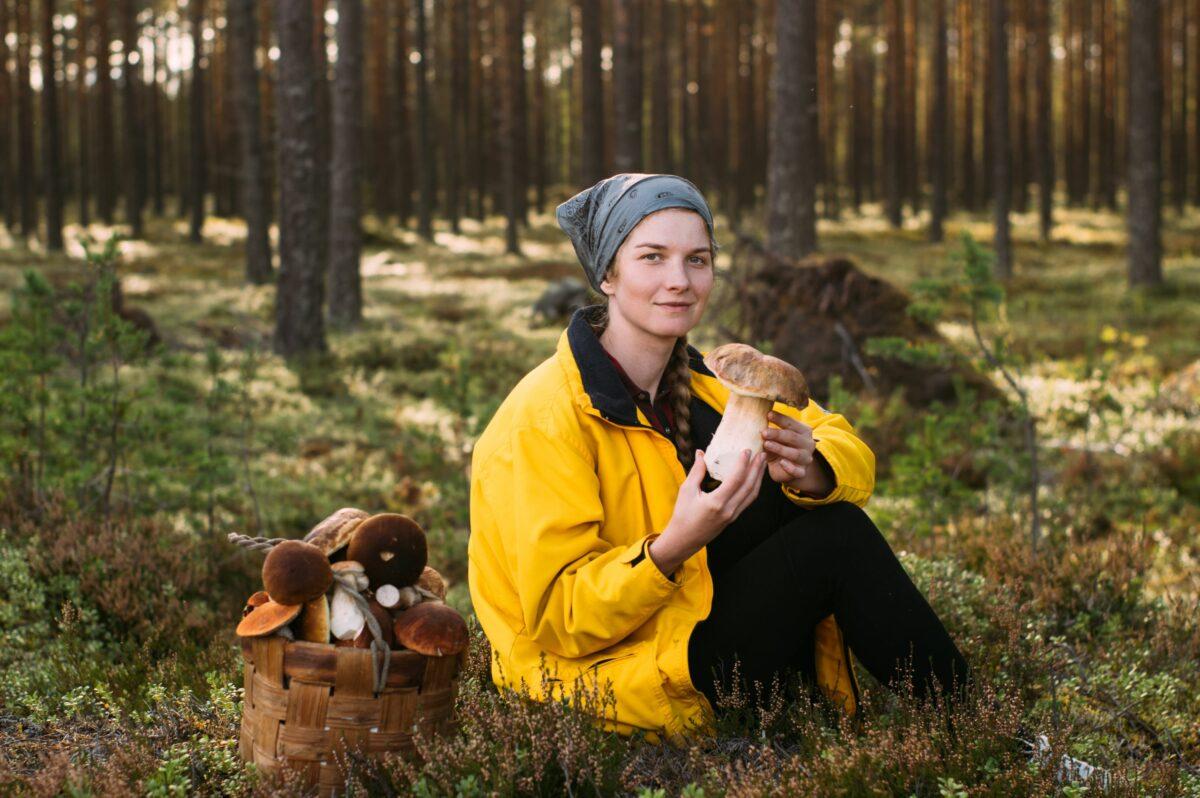
Mushrooms have long been at the forefront of the search for sustainable alternatives to meat. Not only are they rich in protein, but their texture and savory flavor make them a great meat substitute. Or do they? We take a look at the whole thing and tell you where to try this trendy dish at sustainable hotels (depending on the season)!
Mushrooms vs. meat – These are the advantages

According to the Food and Agriculture Organization of the United Nations, the conventional meat industry is responsible for about 14.5 percent of global greenhouse gas emissions. Mushroom cultivation is a good alternative and has many other benefits:
- Carbon neutral food source: Although mushrooms emit methane, they increase the carbon uptake of trees and are therefore considered CO2 neutral.
- Little space required: Mainly due to the fact that mushrooms grow in vertical spaces and in some cases even underground.
- Rapid growth: Under optimal conditions, mushrooms grow in just a few weeks. You can harvest them all year round.
- Organic waste: Mushrooms can use organic waste as a growing medium and do not require fertilizers. This conserves resources and reduces waste.
- Low water consumption: Although mushrooms like a humid and warm climate, they require less water than most crops and much less than meat production.
- Versatile: Mushrooms grow in different climates and are all over the world.
- High in protein: Mushrooms are a nonfat source of protein. However, they are not equivalent to meat in this regard. However, if you include legumes in your diet, you will definitely get enough protein.
Are fungi plants?
Did you know: Science distinguishes between plants and fungi. Although they are generally assigned to botany (the plant world), according to the Max Planck Institute, they form a separate kingdom alongside animals and plants. The reason is that plants get their energy from light and carbon dioxide, while fungi get their energy from organic compounds.
Edible mushrooms therefore do not store CO2 in the same way as trees, but increase the CO2 reduction for our planet through their root symbiosis with trees. In 2023, a group of researchers argued that the production of edible mushrooms should be encouraged to sequester more carbon.
Thai oyster mushrooms as a meat substitute

The oyster mushroom, with its shell-like appearance, is native to Southeast Asia and loves tropical climates with high humidity. They grow in colonies on tree trunks.
Thai people have been eating oyster mushrooms for a long time and use it as an ingredient in many dishes. Its function as a meat substitute originally came from the fact that the population often could not afford meat. As mushroom cultivation is cheap and easy, there are many farmers who make a living from it, as the Franco-German TV channel ARTE recently reported in a documentary.
Mushroom cultivation at Keemala
Our Green PearlsⓇ partner Keemala is located on the beautiful island of Phuket. The 38 villas (each with its own pool) are surrounded by a large forest and garden area where a variety of ingredients are grown for the resort’s cooking classes. In addition to herbs and vegetables, Keemala grows its own oyster mushrooms! If you are taking a cooking class, you can visit the mushroom farm, pick your own mushrooms and cook them fresh.
Chao Na Bowl with oyster mushrooms – Recipe from Keemala
Keemala also gave us their recipe for the popular “Chao Na Bowl”. It’s a Thai rice dish with vegetables, oyster mushrooms, anchovies and fish sauce (so it’s meat-free, but not vegan or vegetarian).
You can find the recipe here:
How sustainable chefs in Europe are using seasonal and regional mushrooms
The most popular mushroom in Europe is the porcini mushroom, which is especially common in spruce and mixed forests. It is one of the most protein-rich mushrooms (ahead of oyster mushrooms and button mushrooms) and therefore a good substitute for meat.
The Paradiso Pure.Living Vegan Hotel on the Seiser Alm uses porcini mushrooms in four ways
In July 2024, the Paradiso Pure.Living Vegan Hotel took the step from a purely vegetarian hotel to a 100% vegan hotel. No meat was ever served at the mountain hotel on the Seiser Alm in South Tyrol, but now all other animal products are banned as well. Both for reasons of animal kindness and sustainability.

The new kitchen concept developed by Greek vegan chef Aggeliki Charami in March 2024 has contributed significantly to this development. (We suggest you take a look at her Instagram account, which has over 13,400 followers and provides an interesting insight into the vegan gastrohype).
You can get mushrooms here in the form of porcini mushroom soup, for example. The trick is that they use porcini mushrooms, in four different forms in this dish: Roasted, ground, powdered, and broth. With chickpeas as an additional ingredient, the soup has another source of protein and is also very filling.
Click here for the Porcini Soup recipe
Naturhotel Outside: Handmade porcini tortelloni with home-picked mushrooms from East Tyrol
Nature surrounds the Naturehotel Outside, located in the Hohe Tauern National Park, South Tyrol. The sustainable hotel makes sure its food is sourced as locally as possible, and many of the mushrooms served in the restaurant are foraged by the hotel itself. “We mainly collect chanterelles and porcini mushrooms in the fall. We cook them right in our kitchen – fresh. Some of them we preserve for the winter,” says owner Daniel Ganzer.
One popular recipe is porcini tortelloni, for which you can find the recipe (including video instructions) in this blog post.
You are currently viewing a placeholder content from Default. To access the actual content, click the button below. Please note that doing so will share data with third-party providers.
“Porcini mushrooms are everyone’s favorite” at Gut Guntrams
About an hour’s drive from Vienna, Gut Guntrams is another Green PearlsⓇ partner offering special accommodations in nature. Fruits play an important role here, even more so than mushrooms. The stylish buildings made of local wood “float” above the fruit trees. The “Guntrams Ark” is dedicated to the preservation of old fruit varieties.
Mushrooms are on the menu, too. The owners like to go foraging themselves and also buy mushrooms that hunters bring in from the woods. Porcini mushrooms are a favorite of the owners and their guests.
Mushrooms au gratin as an appetizer
Tip from Gut Guntrams: Gratinate the mushrooms with Grana cheese, lemon and olive oil and serve as a starter.
OLM Nature Escape: “Our culinary chef knows all the mushroom places”

The chef of the newly opened OLM Nature Escape, Berni Aichner, forages for mushrooms himself and is known for finding the best “mushroom spots”. The circular aparthotel is located in Sand in Taufers, South Tyrol, and was built from the ground up as a sustainable, energy self-sufficient building.
There is a special culinary concept where you can book all meals (except the included breakfast) in a kind of modular system. OLM Nature Escape also organizes fine dining events with Berni Aichner and star chef Theodor Falser.
Berni Aichner’s porcini carpaccio with organic olive oil and coarse salt is particularly popular.
Eco-Hotel Okelmann’s uses cultivated organic mushrooms
Picking wild mushrooms is not enough to feed the world’s growing population – they also need to be cultivated. Brinkers Pilzdiele in Asendorf, Germany, shows how this can be done according to the guidelines of organic farming. Located just a few miles from the family-run Hotel Okelmann’s, it has long been a trusted supplier of organic mushrooms.
Info: Mushrooms may only be collected for “personal use”. (In some countries this is specified in kilograms (e.g. Austria 2 kg), in others (e.g. Germany) it is less precise. In any case, hotels are not legally allowed to simply pick mushrooms from the forest for their own use, but must obtain a permit or buy the mushrooms.
Hotel Restaurant Heimatliebe is also perfect for celebrations! The two sisters Maren and Kristin will lovingly and professionally take care of the right setting for your event, which can of course be completely meat-free.
Inspired? Save the article on Pinterest!


