Barbecue season is in full swing, and the smell of grilled food and charcoal wafts through the air almost every day. And since there’s always a way to be more environmentally conscious and sustainable, we asked the experts at our Green Pearls® partner hotels about this year’s must-try trends and what to keep in mind when grilling.
Table of Contents
Barbecue season is finally here again!
Frequently asked questions about grilling and sustainability
Which grill is the best choice?
What type of charcoal is best?
What are some alternatives to charcoal for barbecuing?
Test results: Which charcoal alternative is best for grilling?
Where are you actually allowed to have a barbecue?
And what should you do with barbecue ashes?
The greatest leverage is on the grate
Tip #1: Be mindful of what you put on the grill
Tip 2: Grilling without aluminum foil
Conclusion: A more mindful barbecue evening starts long before you light the fire
Barbecue season is finally here again!
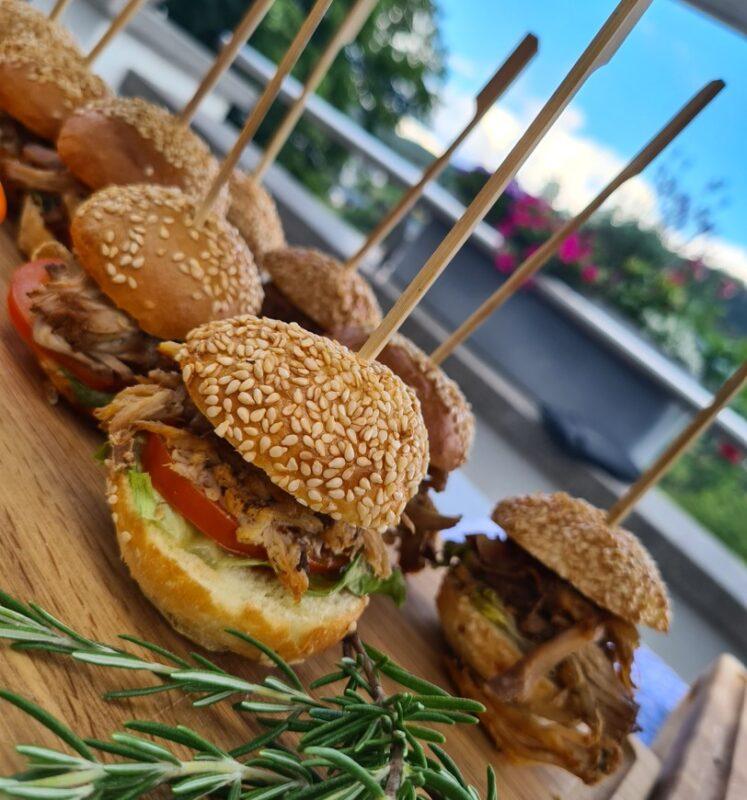
For many, barbecuing is as much a part of summer as ice cream or swimming in a lake. People gather outdoors in the evening, take their time eating, and enjoy each other’s company.
However, barbecuing has its drawbacks. Smoke pollutes the air, disposable items create trash, and leftover food can attract animals. In dry summers, the risk of fire increases significantly when barbecuing outdoors rather than in your own backyard.
But we don’t want to spoil your fun! With a few conscious choices, you can easily avoid many of these negative effects.
Frequently asked questions about grilling and sustainability
Which grill is the best choice?
When looking to buy a new grill, many people ask themselves: gas, charcoal, or electric? What surprised us during our research was that the differences in emissions are smaller than many people assume.
A study by TÜV Rheinland concluded that CO₂ emissions from various grill types vary minimally. Depending on the model, values ranged from approximately 17.5 to 18 kilograms of CO₂ equivalents per usage scenario. According to a general market analysis, gas and charcoal grills are considered equivalent in terms of production and transportation. Since burning charcoal releases carbon monoxide, particulate matter, and CO₂, many people consider charcoal grills to be more harmful to the environment. However, the TÜV Rheinland study does not confirm this.
Here, we’d like to categorize the different types of grills once again:
- Disposable barbecue: By far the worst choice. If there’s one type of barbecue you should avoid, it’s this one. The aluminum trays are used only once, consume unnecessary resources, and ultimately leave behind trash that, in many cases, isn’t even properly sorted and recycled (after all, disposable barbecues end up in the nearest general waste bin, if at all).
- Kettle Grill: Thanks to its closed lid, it is more efficient than many open grills. If you don’t want to give up the flavor of charcoal, this is a good option.
- Gas Grill: Gas grills start up quickly and allow for precise temperature control. This ensures that only the necessary amount of energy is used. However, the liquid gas they require is usually derived from fossil fuels, such as propane or butane.
- Electric Grill: An electric grill produces neither smoke nor open flames. If powered by renewable energy, it can be an attractive option, especially for balconies or densely populated residential areas. (Note: Be sure to check whether grilling is allowed on your balcony!)
- Infrared Grill: Infrared grills reach high temperatures quickly and produce minimal smoke. However, they are relatively expensive and are best suited for patios or gardens.
- Solar Grills: They use concentrated solar energy, so they don’t require electricity or fuel. In practice, however, these models are still primarily popular among tech enthusiasts. There is a limited selection, and there are few user reviews so far.
What type of charcoal is best?
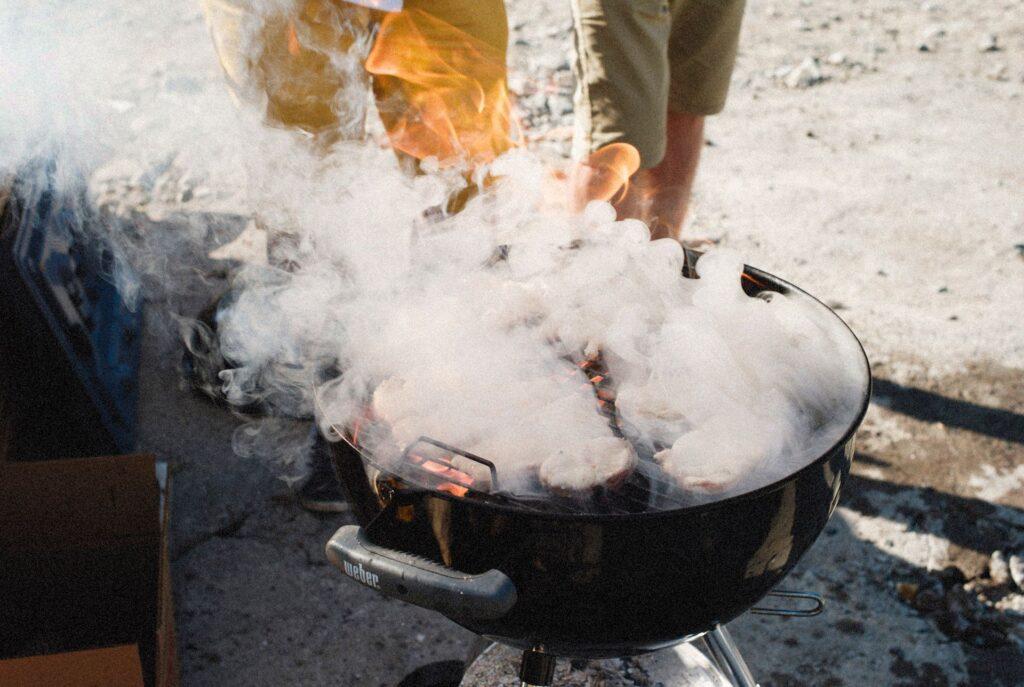
If you’re planning to use a charcoal grill, take a closer look at the packaging. A study by the WWF and the Thünen Institute revealed that many charcoal products contain wood from tropical or subtropical regions. Often, consumers can’t immediately tell where the wood comes from.
Therefore, the WWF recommends buying organic charcoal with FSC or Naturland certification. You can also look for the DIN EN 1860-2 certification mark. While this certification does not guarantee sustainable sourcing, it ensures that the product does not contain problematic additives, such as plastics or petroleum.
Are there alternatives to charcoal for barbecuing?
Yes, there are now quite a few alternatives to charcoal, some of which perform surprisingly well. In a practical test conducted by the TV station Kabel Eins, traditional charcoal was compared to coconut, olive, and grapevine briquettes. These briquettes are made from waste products, such as olive pits left over from olive oil production.
The test, which can be viewed here on YouTube, involved firing up four identical grills and using them to grill sausages and pork neck steaks.
Test results: Which charcoal alternative is best for grilling?

The result: Traditional charcoal heated up the fastest, in 13 minutes. However, the heat output from the coconut and olive briquettes was perceived as more consistent. The coconut briquettes won the test because they provide “long-lasting and consistent heat” and are inexpensive. The grapevines produced the most smoke by far and had to be replenished frequently. Consequently, they were not a good choice.
Hotels that own forests, like the Natureresort Gerbehof on Lake Constance, primarily burn their own wood scraps. “We only grill with our own wood—no charcoal or anything else,” says hostess Ursula Wagner. She adds that at this organic hotel, “everything is organic, of course, including the Sonnentor spices,” even when grilling.
Where are you actually allowed to have a barbecue?
Barbecue rules vary around the world and often from region to region. To make things easy, only barbecue in designated areas! Sensitive natural areas and open fires near forests during dry seasons are strictly off-limits. If you want to barbecue at home, be sure to follow the local rules, especially if you rent. Barbecues aren’t always allowed, or are only permitted in moderation, especially in densely populated residential areas and on balconies.

Respect animals and nature
Leaving food scraps in nature? Please don’t. Meat and fish can attract rats and pests, and the abundance of spices makes them a health risk to wildlife in any case. Bones (especially poultry bones) are dangerous because they splinter easily. So don’t give your pets any bones from the barbecue, either!
It’s best to wrap the leftovers in newspaper and throw them away. You should also dispose of your other trash. The best thing for nature is to not leave anything behind. See also our Insight: “Can I throw fruit peels into nature?”
Listening to music in nature?
We don’t want to be killjoys, but we’ve already addressed this question. Is it okay to listen to music in the woods? Spoiler: Yes, it’s allowed, but it’s better not to (you’ll find out why in the linked article).
And what should you do with the barbecue ashes?
One more very important point: the barbecue ashes. They need to sit overnight—ideally, 24 hours—to cool completely. Stir them up every now and then to prevent pockets of embers from forming. Once cooled, dispose of them in the general waste. Public barbecue areas should have a designated spot for ashes.
The greatest leverage is on the grate
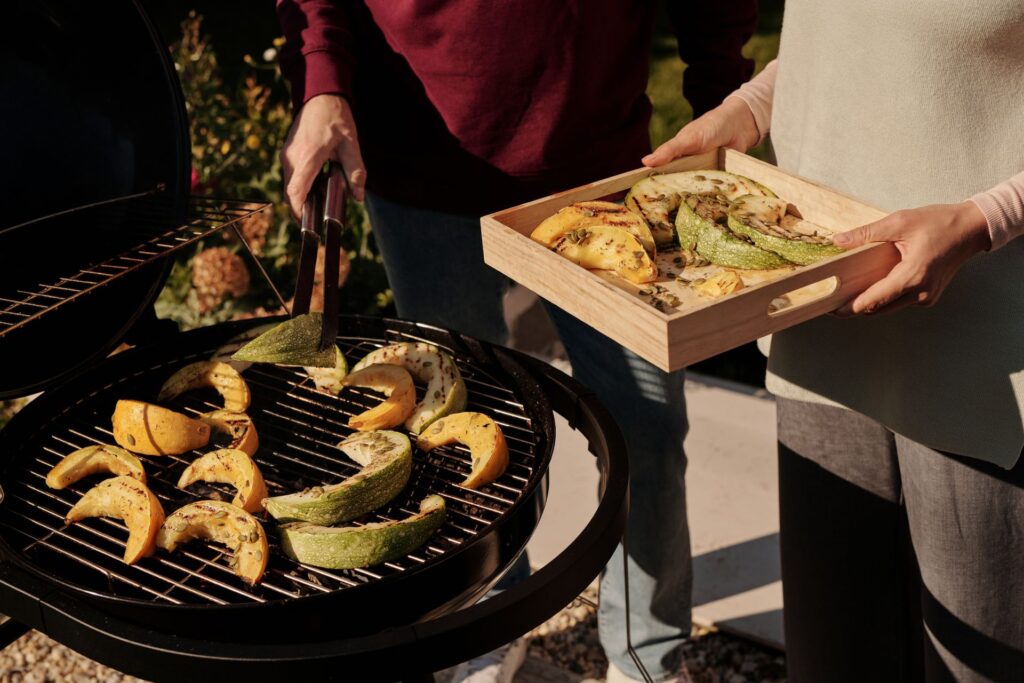
However, if you want to grill in a resource-efficient way, the type of food you grill matters more than the grilling technique.
Studies (e.g., those by TÜV Rheinland) show that most of the climate-related emissions from a barbecue are caused by the food itself.
Tip #1: Be mindful of what you put on the grill
The following foods are particularly high in emissions:
- Beef
- Grilled cheese
- and other highly processed animal products.
Plant-based barbecue alternatives are more affordable. Examples include:
- Vegetables
- Tofu
- Or plant-based sausages
Fish and poultry have a lower environmental impact than meat, especially beef. However, you should pay close attention to their origin, how the animals were raised, and the fishing methods used.
If you’re still including meat in your barbecues, remember: the less, the better. Make sure it’s organic, too. Maybe you could also skip the animal products in your side dishes?
Also: Give meat alternatives a try! The Slow Food Hotel Schloss Lerchenhof in Carinthia has its own farm with pigs and vegetable gardens. However, there’s also tofu on the grill. “Our homemade tofu is really famous,” says host Johann Steinwender. “It develops its own unique aroma over the wood fire.”
Tip 2: Grilling without aluminum foil
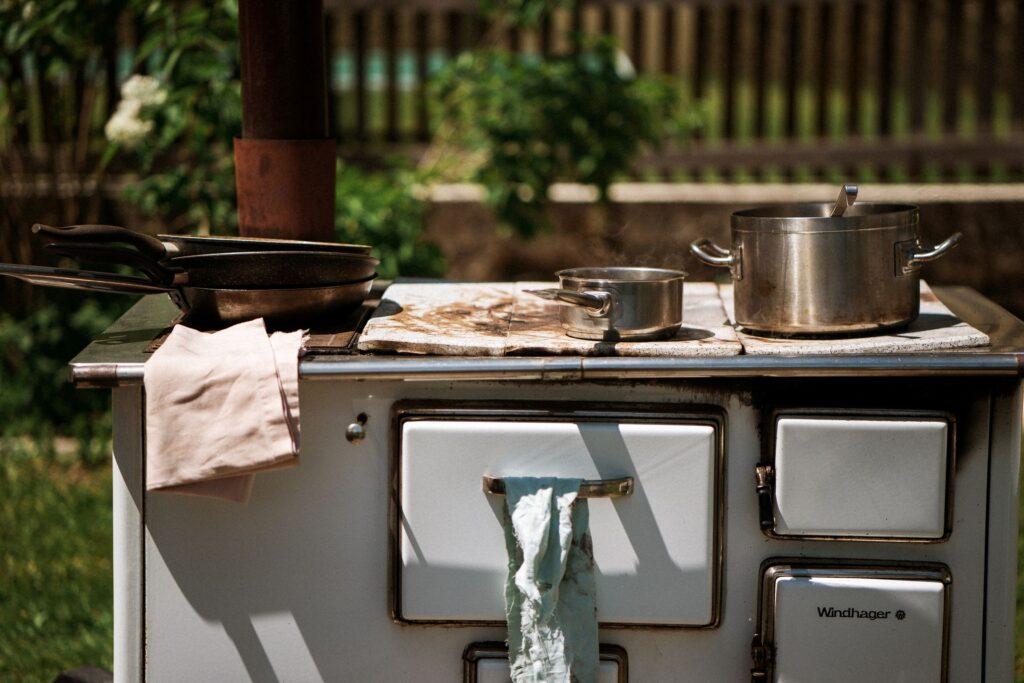
Another “standard” item that many people take for granted when barbecuing is aluminum foil. However, aluminum is too valuable to be used as a disposable product and thrown away immediately. Fortunately, there are now numerous good, practical alternatives:
- Reusable grill baskets
- Grill grids (I use these all the time! They’re lockable and have a handle for flipping—simply brilliant!)
- Cast-iron grill plates
- Stainless steel bowls
- Grill pans
- Vegetable leaves for natural packaging
Tip: When grilling corn on the cob (either pre-cook it in a pressure cooker or buy it pre-cooked), you can use the corn husks to wrap fish, vegetables, or mushrooms with herbs and spices, then place the wrapped items directly on the grill. In my opinion, a grill basket is more practical. However, if you want to add a cool, eye-catching touch to your party, this is definitely an original idea.
Barbecue like you’re on vacation: Inspiration from hotels with barbecue evenings and sustainable practices

After speaking with Green Pearls® Hotels about current barbecue trends and their grilling priorities, it’s clear that many hotels prioritize similar aspects:
- Less technology, more craftsmanship
- Conscious use of fuel
- Avoiding single-use products
- Creative vegetarian and vegan alternatives
You can enjoy regular barbecue evenings at places like Schloss Lerchenhof. Here, the hosts enjoy joining the guests for a “barbecue under the apple tree.” Most importantly, they want to keep things traditional, so they don’t use technology, thermometers, or digital tools.
My tip: Less technology, more craftsmanship. – Johann Steinwender, Schloss Lerchenhof
BBQ Thursday
Every Thursday evening throughout the summer, guests at the Klosterhof – Alpine Hideaway & Spa in Bayerisch Gmain are invited to a barbecue. The barbecue is held on the terrace, which often gets very lively.
Their tip: “Time and patience are key when grilling. You’ll definitely need both!”
BBQ Saturdays with the Smoker
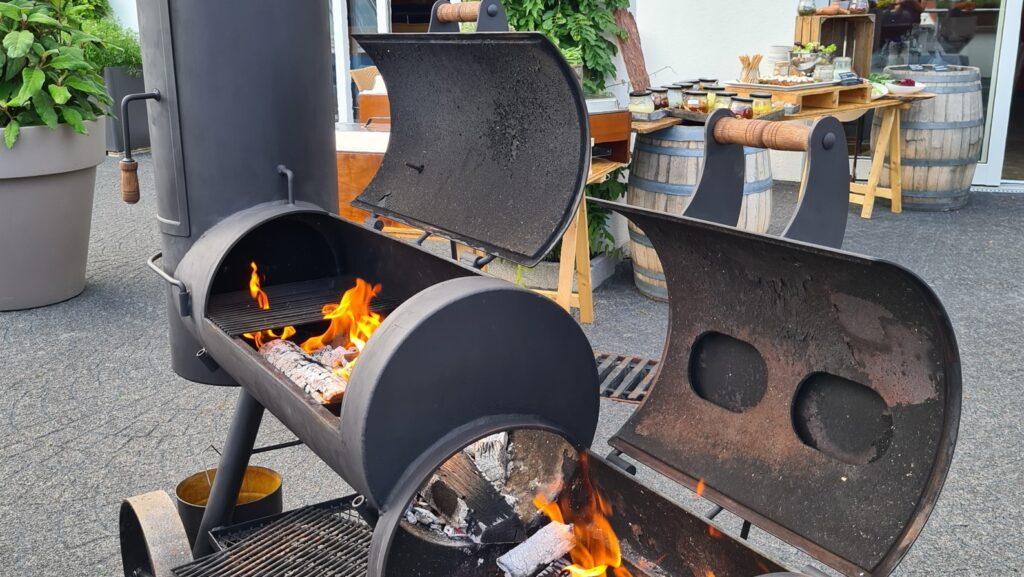
The SCHWARZWALD PANORAMA in Bad Herrenalb has also firmly established barbecue evenings as part of its summer dining and event schedule for guests. The smokers are fired up on the first and third Saturdays of the month.
In line with the hotel’s zero-waste strategy, all items at the barbecue buffet are served in reusable glass containers. The menu features classic barbecue favorites, such as meat, as well as vegetables, all of which are organic—a very important aspect for the Bioland GOLD-certified hotel.
“Our culinary experts love experimenting with traditional dishes and creating new versions – including vegetarian ones.” – SCHWARZWALD PANORAMA
Conclusion: A more mindful barbecue evening starts long before you light the fire
If you want to grill in a more sustainable way, you don’t have to give up on enjoyment. Even small decisions can make a big difference.
- High-quality charcoal instead of cheap products
- Reusable accessories instead of disposable products
- More vegetables and plant-based alternatives
- Treating nature and others with respect
And to wrap things up, here’s a bit of Slow Food wisdom: It’s not the quantity that makes the experience special, but the attention we pay to enjoying it.
Save this post on Pinterest for your next barbecue.