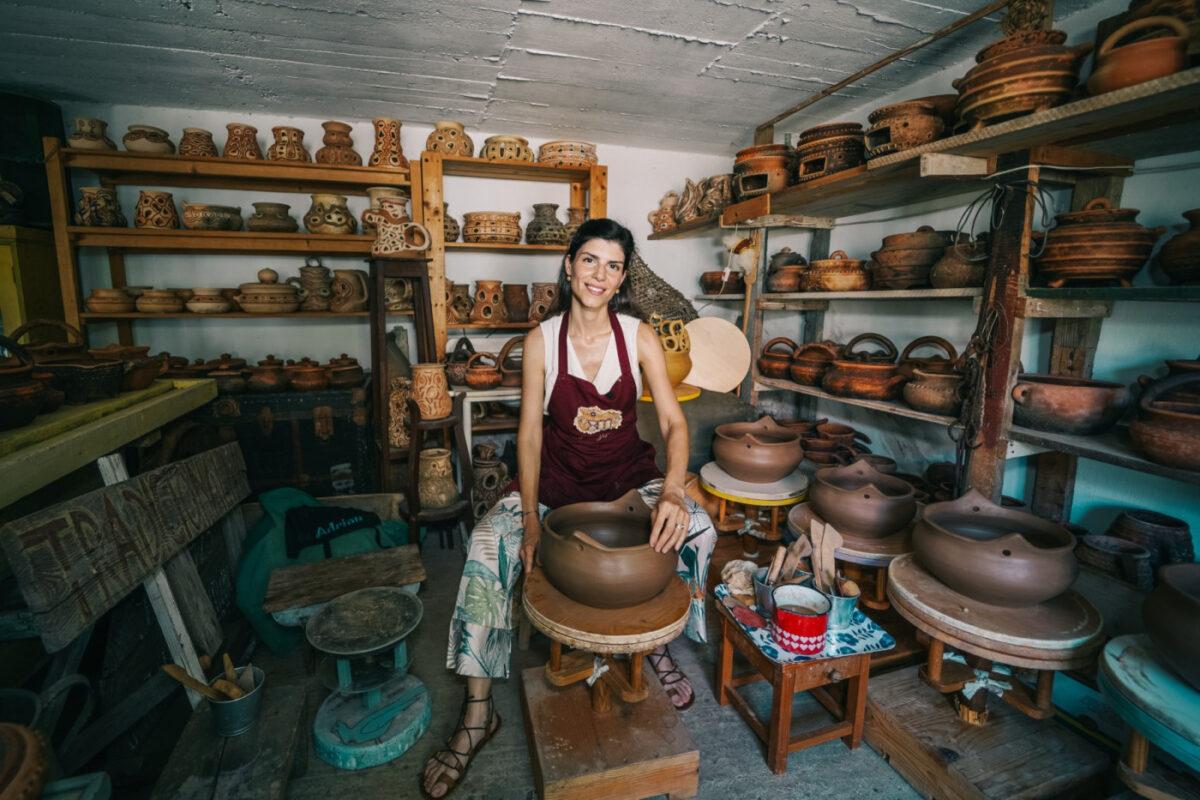
Buy everything, yet not be able to do it yourself? We might be able to imagine making a vase ourselves, but a cooking pot? In our industrial society, most people wouldn’t even consider it. After all, you can buy all these things ready-made, often quite cheaply. Yet, many of our everyday objects are made using centuries-old craft techniques that hardly anyone masters anymore. Some are even in danger of disappearing entirely. We’ll use a small Croatian island as an example to show you why this is a loss and how you can help keep this ancient knowledge alive on your next vacation.
Is pottery an endangered skill?
Pottery classes are popular, and handmade ceramics are now available at arts and crafts markets and small studios everywhere. Pottery certainly does not seem to be on the verge of extinction.
However, the techniques used worldwide to make pottery vary greatly. Some pieces are shaped on an electric potter’s wheel; others are shaped with simple tools or entirely by hand. The preparation of the clay, the firing methods used, and the intended use of the pieces also vary based on region.
Unfortunately, that knowledge can be lost.
This is why, when it comes to intangible cultural heritage, UNESCO distinguishes between the handcrafted object itself and the skills required to make it. Essential to preserving this heritage is ensuring that people continue to master these techniques and pass them on to future generations.
One example is traditional black pottery from Bisalhães, Portugal. Its production has been on UNESCO’s List of Intangible Cultural Heritage in Need of Urgent Safeguarding since 2016. Reasons for its inclusion on the list include a lack of young people to carry on the tradition and competition from industrially manufactured products.
A cooking pot can be more valuable than an ornate vase
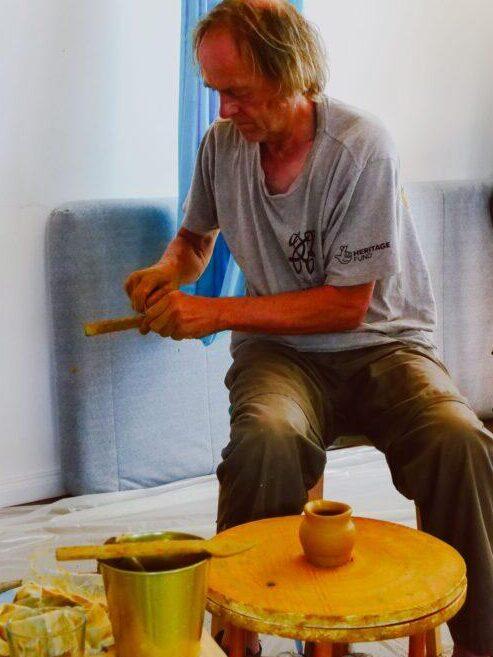
British archaeologist Richard Carlton has studied traditional pottery techniques in the Balkans for decades. During his research, he made an interesting observation:
Rough, unremarkable clay pots were sold in some parts of Bosnia for higher prices than finely crafted, decorated, or glazed ceramics.
Why?
Because these coarse vessels were ideal for cooking. They were made through careful preparation of the clay and a sophisticated firing process. The result was durable vessels that served their purpose exceptionally well.
While outsiders may have viewed them as simple, utilitarian pottery, the locals considered them to be high-quality products.
So, Carlton argues against judging ceramics solely by their appearance. To understand their value, we need to know how they were made, how they were used, and what they meant to people.
Richard Carlton’s example teaches us: Just because something looks simple doesn’t mean it’s easy to make.
Croatia: An ancient pottery tradition lives on in Iž
On the small Croatian island of Iž, located near Zadar, pottery was once a key industry. Islanders made clay pots for their own use or to trade for other goods.
A particularly good example is the Lopiž, a traditional cooking pot with two distinctive handles called “ears.” A wire can be threaded through them to hang the pot over an open fire.
Since 2009, the island’s unique hand-turned pottery technique has been listed in the Croatian Register of Intangible Cultural Heritage.
However, as lifestyles changed and industrially manufactured cookware became more prevalent, the economic foundation of this craft disappeared. Fewer and fewer people learned how to make lopižes.
One of the last traditional potters was Predrag “Pepi” Petrović, who passed away in 2015. Today, his daughter, Nika Petrović Grilc, continues the tradition while adding her own artistic touch.
How a hotel helps pass on knowledge

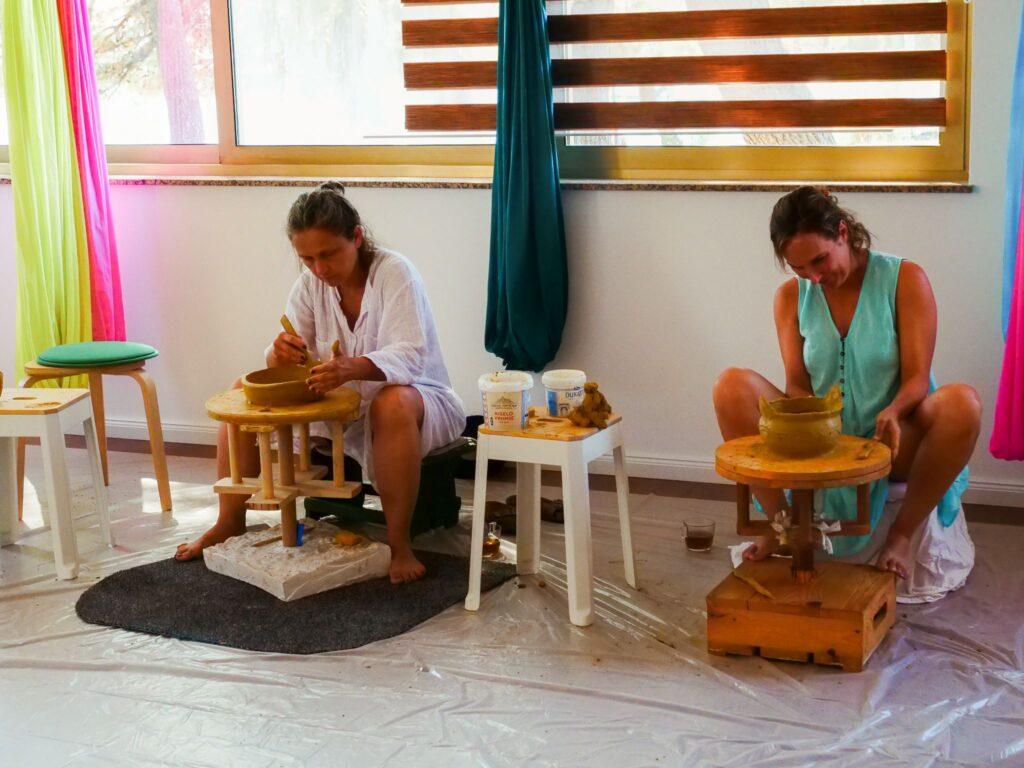
Nika Petrović Grilc was a guest at the Hotel Korinjak in August 2026. Together with the aforementioned archaeologist, Richard Carlton, she organized a special pottery workshop at the hotel. Carlton had previously documented the last traditional potters on the island in the late 1980s.
First, they showed historical film footage and discussed the history of the craft. Older islanders, hotel guests, and other visitors began to chat with each other. Then, 14 participants had the chance to try making a lopiž.
Mikela Vlahov, the granddaughter of the hotel’s founder Ratko Vlahov, organized the workshop. For her, the topic is a family affair—her great-grandfather, Ivan Vlahov, was a renowned potter on Iž. His work is documented in Richard Carlton’s historical records.
A scientific examination of ancient pottery
Mikela has also conducted academic research on this topic. For her Master’s thesis in Social and Cultural Anthropology, she examined how the production and use of traditional pottery on Iž has changed over the past century.
Today, she wants to make sure this knowledge isn’t confined to archives. Instead, she wants to use it to bring people together.
Save the Date: Pottery Workshop, May 2027
Mikela Vlahov and Richard Carlton are planning another pottery workshop at the hotel in May 2027. The details haven’t been finalized yet, but feel free to mark your calendar for the date.
From Romertopf to tagine: Tradition or mass-produced goods?
You’re probably familiar with the classic Romertopf clay pot. What about the Moroccan tagine, with its distinctive pointed lid? Both draw on centuries-old traditions of earthenware pot cooking. But how are these pots made today? Are they made by hand in a small pottery workshop, or industrially in large quantities? Both are possible. And from the outside, it isn’t always easy to tell the difference.
So, it’s worth taking a closer look the next time you buy ceramics. Or doing some research to find out what pottery traditions actually exist in your own region. Even today, there are artisans who use their knowledge and skills to create tableware and other everyday objects.
Schloss Lerchenhof: Why the hotel orders its tableware from a potter
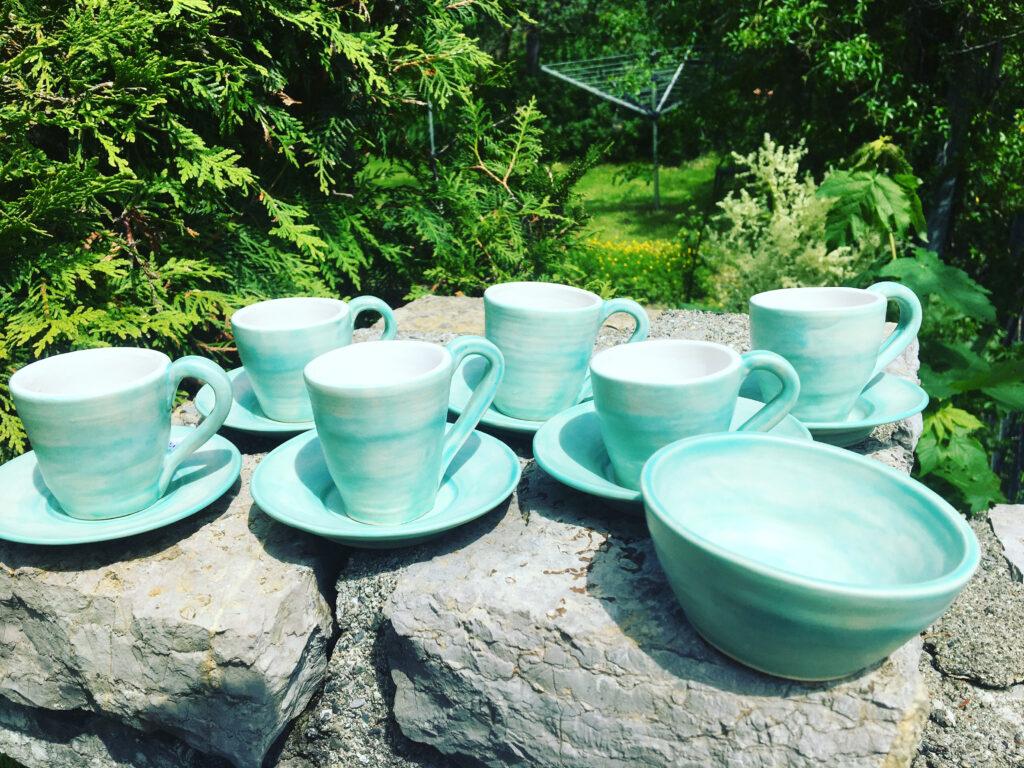
At Schloss Lerchenhof in Carinthia, host Johann Steinwender highlights regional craftsmanship. For instance, much of the restaurant’s tableware is crafted by Stefanie Vidal of Gitschtal Pottery in nearby Hermagor.
As a ceramic artist, she creates hand-thrown plates, bowls, and other everyday objects, as well as garden decorations and seasonal ceramics. Though her work has a contemporary design, the craft techniques she uses have a long tradition.
So, instead of ordering standardized tableware from a large supplier, Schloss Lerchenhof has some of its plates and bowls made right on site. This provides work for a local artisan and showcases her craft to hotel guests. Some guests even visit her studio or participate in one of her pottery workshops during their stay.
This aligns with the Slow Food philosophy championed by Johann Steinwender, the co-founder of the Slow Food Travel Region Alpe Adria in Carinthia. After all, the Slow Food movement is also about preserving regional traditions, artisanal skills, and cultural heritage.
LA VIMEA: When hotel guests become business partners

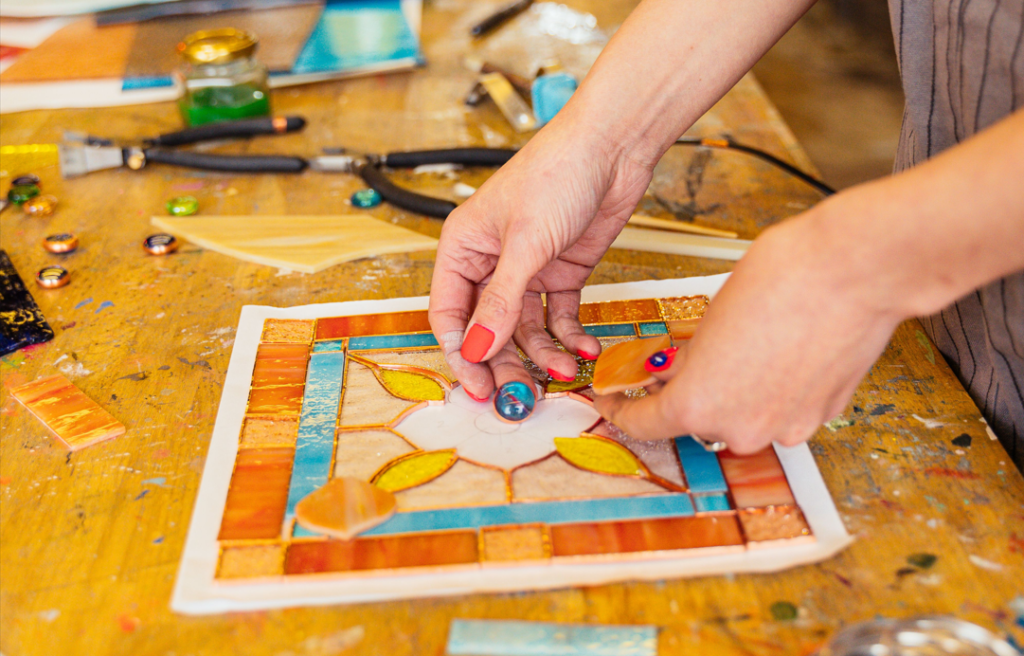
The LA VIMEA Vegan Hotel in South Tyrol also supports artisans; for instance, Annalisa from lisacreacose. She creates colorful mosaic jewelry and pictures made of glass. Her pieces are sold in the hotel shop and given as gifts to guests. (For instance, mother-daughter travelers receive the “Mamma & Me 2027” glass mosaics mounted on regional wood.)
Interestingly: Annalisa is a regular at LA VIMEA. The hotel has similar personal connections with other small-scale producers and artisans.
North Frisia: From sheep to duvet
Starting in the first quarter of 2027, SANDglow in Husum plans to offer a special duvet menu.
You’ll also find comforters from the company Friesenfaser in it. They are filled with virgin wool from North Frisian sheep, which are raised, in part, to protect the dikes. The wool is cleaned and carded, or combed into a loose fleece, and then sewn into a cotton cover. All of the comforters are manufactured in Görlitz.
According to the company, it works directly with shepherds from the region and pays them fair, fixed prices.
An example that also illustrates the many steps and skills involved in creating an everyday product is that it is difficult to learn how to make one yourself.
Traditional Indian textile craftsmanship
Along with SANDnature, SANDglow also aims to raise awareness of traditional Indian textile crafts. Starting in early 2027, deviDesign’s kanthas will be available in SANDcollection stores.
Kantha is a traditional South Asian textile craft in which layers of fabric are joined together with numerous stitches, most of which are sewn by hand. Among other things, the technique is used to make blankets and throws.
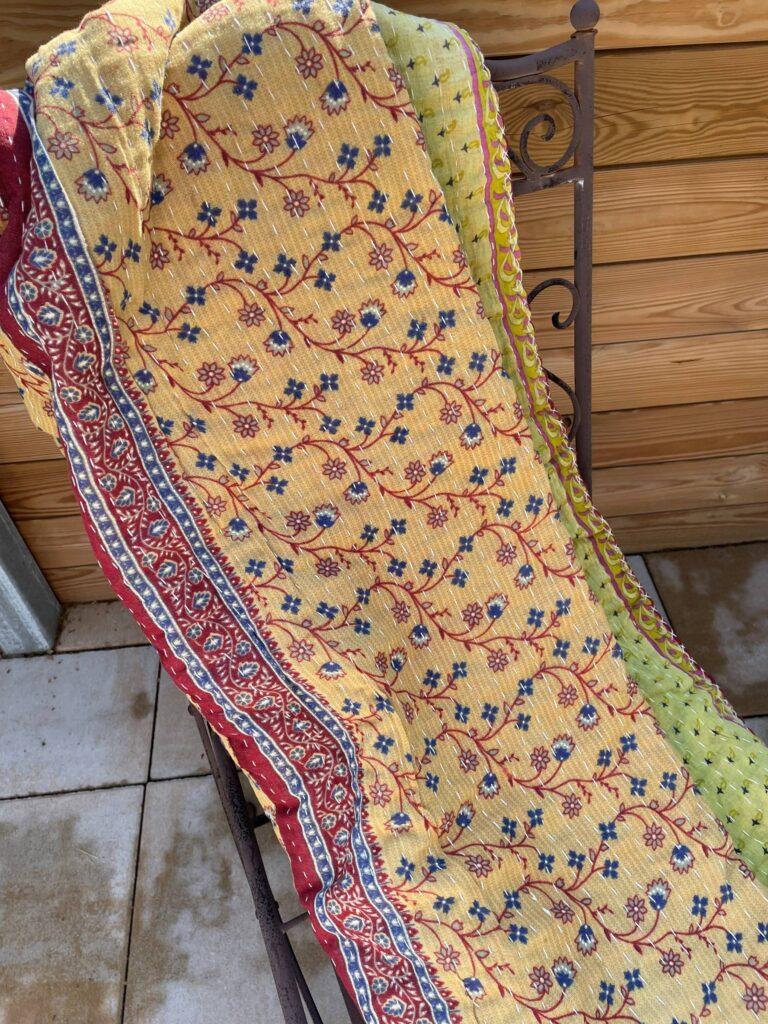
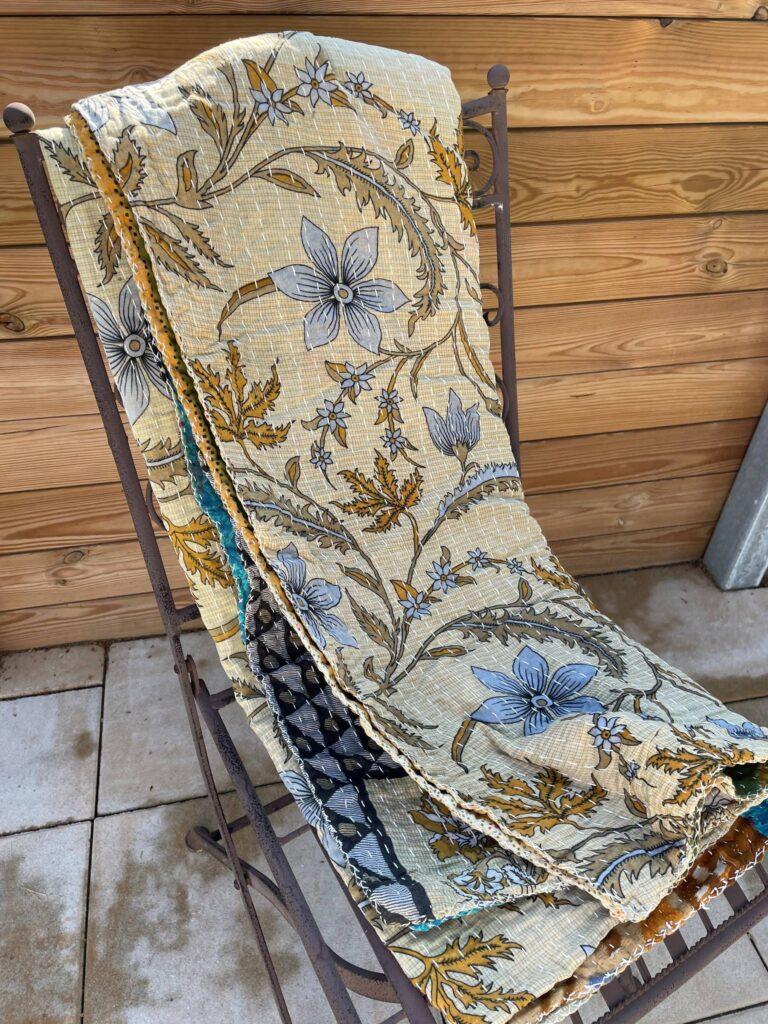
The SAND collection plans to offer these items as bedspreads, decorative pieces, or sofa throws.
Unlike the pottery workshop in Iž, the goal here isn’t to learn a craft yourself. However, offering handcrafted products and explaining their origins can help raise awareness of traditional skills.
Skillcation: Get hands-on during your vacation.
But let’s get back to the idea of doing things yourself. After all, few current travel trends fit so perfectly with traditional crafts as the so-called “skillcation.”
The term is a combination of “skill” and “vacation.” Rather than just relaxing or sightseeing on vacation, you’ll learn something new.
This could be a pottery class or a workshop in weaving, basket weaving, or woodworking. It becomes especially interesting when you meet people carrying on regional craft traditions. Your participation in these workshops helps keep these traditions alive and provides artisans with an additional source of income.
The alternative: Support local tradespeople
Of course, you don’t necessarily have to get your hands dirty yourself. By simply buying and using handcrafted products, you can support the people who have mastered these skills and preserve them.
Which traditional crafts would you like to preserve?
The British organization Heritage Crafts demonstrates that traditional crafts are indeed at risk of disappearing. Its 2025 Red List includes 165 endangered or critically endangered crafts in the United Kingdom. And some of these may surprise you, such as the traditional production of wooden rakes, handmade gloves, and certain types of thatched roofs. In fact, even the production of hand-sewn cricket balls is now considered extinct in the UK.
And, of course, one might ask whether we even need these skills nowadays. However, when they are replaced by industrial products, we lose much more than simple techniques. The experiences, regional characteristics, and cultural knowledge developed over generations disappear, too.
How to get involved yourself
Maybe you’d like to support a specific endangered craft tradition. If so, look for initiatives and workshops where experienced craftspeople share their knowledge.
Alternatively, you can simply let your interests guide you. Pottery, basket weaving, weaving, felting, and woodworking are just a few of the many skills you can try out in (vacation) courses offered in many places. Not all of these crafts are on the verge of disappearing. In the process, though, you may discover just how much skill goes into a handmade object and develop a new appreciation for it.


