With pleasure, I would like to take you to the southern part of Campania. It is more appealing to us than the Amalfi Coast because it is more authentic and quieter.
A Cràpa Mangia
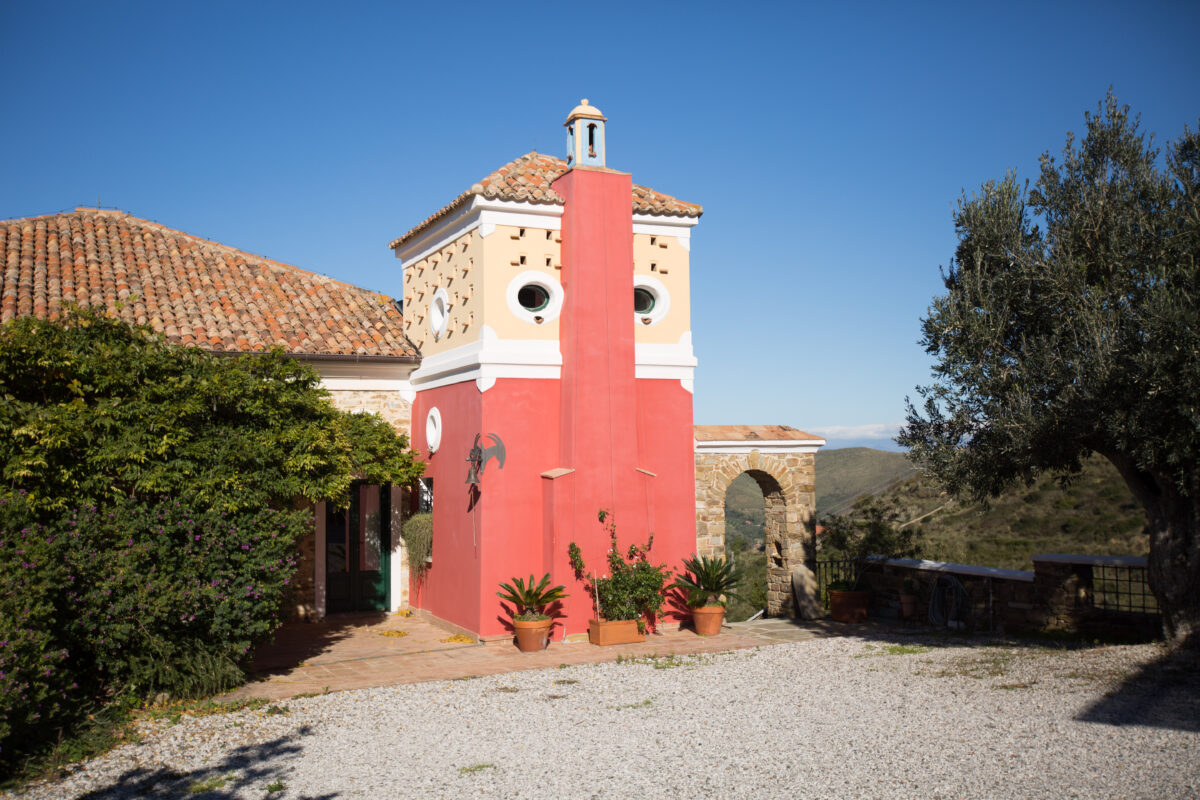
The Campania estate in A Cràpa Mangia in Castellabate is a perfect starting place. It is located on the Gulf of Salerno, among fruit and olive trees. The manor originates from the 17th century and has been renovated lovingly and sustainably by the current owners. You will find a total of nine apartments, each with a terrace and a spectacular view of the sea and an incredible sunset. Every sunset has been more beautiful than the other, and it was almost boring.

Castellabate – A small village with a long history in Campania
Castellabate is part of the province of Salerno and is part of the Cilento and Vallo di Diano National Park, which was designated a UNESCO World Heritage Site back in 1998. The history goes back to the 11th century. The small town was once an important port for trade and seafaring. High up above sea level on top of a hill is the castle Castello dell’Abate. The castle originates from the 13th century and offers a breathtaking view of the surrounding countryside and the Gulf of Salerno.
The city has a distinctive medieval atmosphere due to the picturesque old town with its narrowcobbled streets and colorful houses. Along the coast you will find numerous opportunities for water sports, snorkeling, diving and sailing. The latter is also possible in winter.

Punta Licosa – Sunken City
The small island is in the Salerno Gulf, which geographically ends right here and is the first nature reserve of Cilento. Its bizarre rock formations still bear witness to the severe sea quake that submerged the mainland in the sea, along with the Greek town of “Leucosia”. The ancient streets, masonry, columns, tombs, city walls and ruins of former dwellings can be seen with the naked eye in the water.
How to reach Punta Licosa
From Castellabate the road leads you to San Marco. From there is a splendid hiking trail, the” Val lone Alto ” along the coast to ” Punta Licosa.”
Or you can make the hike from Oglaistro Marina through pine forests and past huge olives. For us, this path was a little more enjoyable because it takes you more through nature.

The southern coast to Acciaroli
The road along the sea is a must! The view is so spectacular that we kept stopping on the way there. It is the vastness of the sea along with this incredibly authentic nature and the small picturesque towns that kept us amazed.
Acciaroli is a sleepy coastal town surrounded by green hills and a crystal clear sea. The main attraction is the harbor with a beautiful piazza, cafés, and bars. This part of Cilento has also been a UNESCO Natural Heritage Site since 1991. When we arrived, we had a coffee in a small café in the harbor with the sun shining brightly, and then walked on the harbor pier. The sculpted breakwaters are well worth seeing, each a piece of art in itself.

ACCIAROLI AND HEMINGWAY
Ernest Hemingway also stayed in this small town in the Cilento, Campania before his trip to Cuba. The heroic story of a fisherman he met while in Acciaroli inspired him to write his book “The Old Man and the Sea”. He loved the coast and was often a guest here.

Vatolla in the mountains
The mountain village of Vatolla is inland on a hill at 400 meters between Agropoli and Castellabate and seems like something out of a picture book. In the small village, almost everything revolves around the philosopher and writer Giambattista, who lived there as a student. If you feel like it, you can visit the museum dedicated to him.
Cipolla di Vatolla
The medieval mountain village is also renowned for its onions and the onion festival. Probably it was Basilian monks who brought the famous “Cipolla di Vatolla” from the Middle East to Cilento in the 7th century. The onion species is an Asian bulb of the lily family. The Mediterranean climate and location offer optimal conditions for this noble onion. It tastes sweet, and you can digest it extremely well. Moreover, it does not make your eyes water, and it is good for the cardiovascular system.
Vatolla is also a UNESCO World Heritage Site.
One thing that particularly fascinated us was the incredible view of the sea, even from the mountain villages. This has always captivated us throughout our trip.
Please contact me anytime for more information, if you plan to travel to this beautiful region.
Do you want to save the travel inspiration for later? Then just pin one of the pictures on Pinterest!


2 thoughts on “Traveling sustainably in Campania – Winter in Cilento Part 2”