Undiscovered Campania
We are excited to bring you four new destinations at once with our new green pearls. We start in today’s blog with a highlight in Italy.
Have you been to Campania before, or asked differently, were you able to relate it right away? Do you love history, then this destination must be your next one?
A short historical excursion
Campania in southwestern Italy is renowned for the spectacular coastline and the many sights like the Amalfi Coast, Capri, Ischia, Positano, Mount Vesuvius and of course Pompeii and the Greek temple in Paestum. There is probably no other region in Bella Italia as historically fascinating. It is characterized by the influence of the ancient Greeks (“Neapolis” is Greek and means the new city) and of the Romans, who built sumptuous villas on the coast and in Pompeii. After their fall, rulers changed. Starting from the 16th century until 1861, Campania became viceroyalty of Spain, and subsequently became an independent state under the rule of the Bourbons. Nowadays, this beautiful landscape and nature attracts people from all over the world.
Insider tip Cilento National Park
Mass tourism in Cilento? No way! This region with its closeness to nature is also considered an insider tip in Italy, as many people can’t even place it, respectively don’t know it. The land is sparsely populated, and the hinterland impresses with its nativeness with olive groves, the ancient pilgrimage routes and the coastline is little built on.
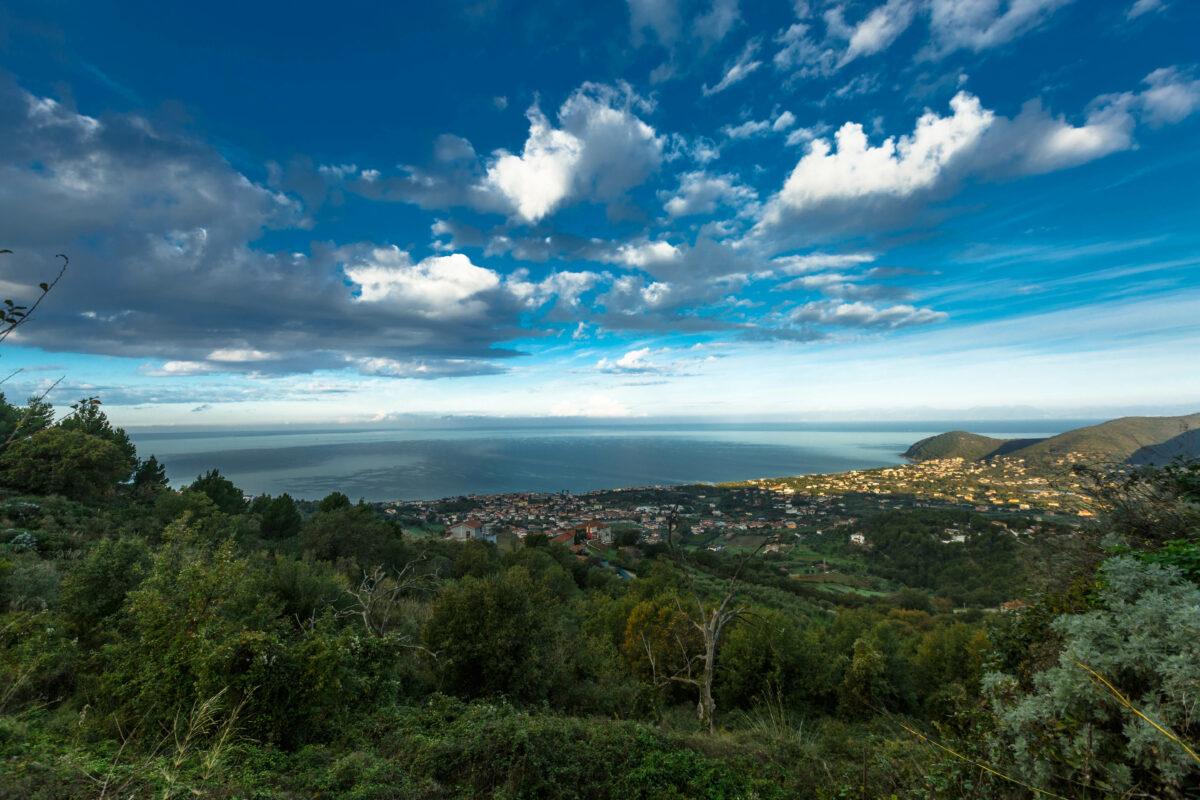
The Cilento is located in the southwest of Italy and geographically belongs to the province of Salerno, which in turn belongs to Campania. Vallo della Luciana is considered the capital of the region. The territory includes Paestum to the north, Sapri to the south and the Dianol Valley to the east. The west is characterized by the approximately 100 km long coastline on the Tyrrhenian Sea, with its large and small bays and fine sandy beaches.
In 1991, vast areas of the Cilento were declared a national park, making it the second-largest national park in Italy with a size of 181,048 hectares. 1998 it was included in the World Heritage List of the UNESCO and thus the nomination as a World Heritage Site.
Direction for your journey?
For climate reasons, you can travel by train, but of course, you can also fly or take your car. With the train, you go to Salerno and from there it goes on with bus or also cab or the rented car. With the car, your route leads over Rome to Salerno. The nearest airport is Naples.
New green pearl in the south of Italy: A’ Cràpa Mangia
A’ Cràpa Mangia is an old Cilentan greeting that literally means “the goat eats”. And when the goat ate, the people were also well. Surely, you will confirm this when you spend your vacation there.
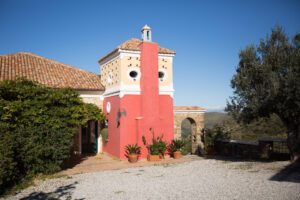
In the midst of the Cilento National Park, you can find the lovingly restored historic estate of A’ Cràpa Mangia. You can enjoy an unobstructed view of the Gulf of Salerno from here. The estate is situated on a hillside and has a long history dating back to the 17th century. It is composed of several buildings: the Casa Grande and four other natural stone buildings such as former stables, tool sheds, bakehouse and storerooms, which house nine vacation apartments for two to eight people. All accommodations have their terrace with sea view, where you will enjoy the sunset over the Gulf of Salerno with a glass of wine. The vast estate is surrounded by fruit and olive trees and invites you to take a walk and simply unwind.
How it all started
During a vacation in Italy, the current owners became enamored with the old mansion overlooking the Gulf of Salerno. It was love at first sight.
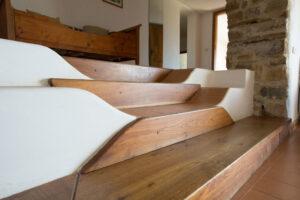
Constructed in the 17th century by the noble Perotti family, it changed tenants many times over the centuries. Since 1968, the building had been empty until a developer bought it in 1990 and sold it to the current owners in 1998. It was restored and rebuilt thanks to an Italian architect friend, Gianfranco di Mauro, sustainably and with respect for the traditional and regional farming heritage. The spaces received their very special charm through natural stone, wood, iron, and stucco.
Have we whetted your appetite for a vacation in the lesser-known part of Italy? Do you have any tips for us, which we will gladly include here!
Do you want to save this destination for later? Simply pin it to Pinterest!



1 thought on “News at the green pearls – brand-new destinations – new itineraries”