
Have you also seen the word “sustainable” far too often? Sustainable toothbrush. Hotel. Sauna. Buffet. It’s no wonder so many travelers have become skeptical. With so many things claiming to be “sustainable,” we’re all asking ourselves: What does the word even mean anymore? How can you tell if a place is actually taking responsibility for the environment and its people?
The EU has decided: Stronger protection against greenwashing
Soon, consumers in Europe are set to receive some help: The EU has adopted new “green claims” rules. Starting in September 2026, companies will no longer be allowed to make broad environmental and sustainability claims unless they can explain and prove them in a way that can be directly verified.
The goal is to provide consumers, including travelers, with greater transparency. It’s a welcome change after so much greenwashing, and it’s long overdue. Does this mean that every accommodation provider and tourism company will simply have to pay for the EU Eco-Label? Unfortunately, no. Just like with the topic of organic products, it’s not that simple.
Sustainable, climate-neutral, climate-positive—why can’t we call it that anymore?

As we discuss in the article “Planting Trees for the Climate?,” it doesn’t benefit anyone when a company has a few thousand saplings planted on the other side of the world and claims to be doing far more good for the environment than it’s causing in emissions. The terms “climate-neutral” and “climate-positive” have justifiably drawn a lot of criticism because they cast complex climate processes in a positive light by making unfair comparisons.
Does that mean sustainability was just a marketing buzzword? Quite the contrary.
Words lose their meaning. The measures do not.
The recent criticism, as well as the new EU regulations, are not directed against the goal of conducting business or traveling more responsibly. Rather, they target false or opaque promises and oversimplifications. However, critics argue that this could lead to “green hushing,” a situation in which sustainable measures are no longer discussed or highlighted due to uncertainty.
Just because we talk about the challenges we face less doesn’t mean they will go away.
Sustainability in Tourism
Tourism contributes to greenhouse gas emissions, consumes resources, and alters landscapes and habitats. At the same time, it can strengthen local economies, preserve cultural landscapes, and provide people with a livelihood.
That is why we are unequivocally IN FAVOR of travel. Travel connects people, broadens horizons, and fosters understanding of other cultures and ways of life. It also promotes your relaxation and well-being. But the question of HOW we travel is becoming increasingly important.
Politicians and the tourism industry have a responsibility to make travel sustainable for our planet. But we travelers also have an influence. With every booking, you support a certain type of business model and send a signal about what kinds of offerings you’d like to see in the future.
How can you tell if an accommodation provider is responsible?

We asked Green Pearls® network hosts how their guests perceive the environmental protection, resource conservation, and social responsibility measures they implement. Based on their responses, we’ve compiled the most important insights to help you assess a property’s true commitment and responsibility.
#1 Is transportation taken into account?
Often, a large portion of the emissions from a trip aren’t generated at the hotel itself, but rather on the way there (especially when traveling by air). This makes the following question all the more intriguing: Does a hotel help its guests use alternatives to cars or planes?
The Paradiso Pure.Living Vegan Hotel recently surprised us. When we tried to book a stay for a Canadian influencer, the South Tyrolean hosts were hesitant. While they welcome international guests, they do not wish to actively promote long-distance travel. Rather, they want to appeal to travelers who can arrive by train, for example.
As a guest at the hotel on the Seiser Alm, you will be informed before your arrival about the special traffic rules in the Dolomites, a UNESCO World Heritage Site. Cars may only be driven there on the day of arrival and departure.
The Naturhotel Outside in East Tyrol, Austria, supports public transportation by offering guests a free shuttle from the Lienz train station when they book their stay.
The APIPURA hotel rinner in Ritten, South Tyrol, Italy, also stands out in this regard. Karin Rinner reports:
„From the moment you first contact us, we will highlight how easy it is to get here by public transportation thanks to our own stop and the Südtirol GuestPass RittenCard.“
Investment in EV charging stations
Other hotels are setting up the necessary infrastructure on-site. The Relais del Maro in Liguria offers a charging station for electric cars, as do the sister hotels SANDglow on the North Sea and SANDnature on the Baltic Sea. Both hotels also provide their guests with rental bicycles, both electric and non-electric.
Green Pearls® believes: Hotels that consider mobility and support their guests in using trains, public transportation, or bicycles for travel to and around the destination have a holistic view of travel that extends beyond their own boundaries. It is a good sign of a responsible approach.
#2 Is waste being avoided?

“Sustainable hotels like this always seem to be missing shower caps,” my mom once told me. And, yes: sometimes you can tell which hotels are more eco-friendly by what’s missing.
No disposable shower caps. Or tiny plastic bottles in the bathroom. No individually wrapped butter at breakfast and no plastic bottles of drinks anywhere in the hotel.
At La Vimea in South Tyrol, guests are asked to bring their own slippers when making a reservation to help reduce the use of single-use items.
The OCEANO Health Spa Hotel in Tenerife has replaced single-use plastic bottles with water stations and glass bottles in the rooms. At breakfast, individually wrapped items are avoided whenever possible.
The Relais del Maro in Liguria uses refillable toiletries, separates waste (including in guest rooms), and minimizes plastic use.
Green Pearls® believes: Preventing emissions and waste from occurring in the first place is often the most effective approach. When hotels avoid single-use products and use refill systems, they demonstrate that conserving resources is part of their daily routine.
#3 Do you know what’s on your plate?

Exotic fruits at the breakfast buffet and little canapés with shark fin? With some products, it’s easy to tell if they were sourced responsibly. But what about everyday items like bread or jam?
At the My Arbor tree hotel in South Tyrol, Italy, “Farm to Table” symbols on the menu indicate which ingredients are locally sourced. A “100% Homemade” label identifies homemade products at the buffet. The menus also feature suppliers and the hotel’s own farm.
At Schloss Lerchenhof in Carinthia, Austria, the food and drink menus list the producers and the distances they traveled, such as the Gailtal trout from the nearby trout pond.
During dinner service, the Apipura hotel rinner explains which products are grown on-site and which local farms they partner with. The Rinner family and their team emphasize personal interaction..
To reduce food waste, the OCEANO Health Spa Hotel serves a set dinner menu instead of a buffet. So does LA VIMEA, which sources ingredients from its own herb garden.
Green Pearls® believes: If a hotel can specify exactly where its food comes from and is happy to do so, that’s a good sign. This becomes particularly clear when the hotel transparently mentions regional sourcing, organic quality, its own farms, or specific producers. Small signs at the buffet or notes on the menu are good ways to do this.
#4 What materials were used?

Natural materials like wood and natural fibers, as well as upcycled furniture, can hint at an eco-friendly interior design concept. However, it’s not always possible to tell just by looking at a piece of furniture whether the wood is locally sourced, FSC-certified, or comes from questionable sources.
Benjamin Förtsch of the Hotel Luise in Erlangen points this out. To many guests, his “circular hotel rooms” look just like ordinary hotel rooms, even though they were designed according to the principles of the circular economy. The SCHWARZWALD PANORAMA in Bad Herrenalb also offers circular rooms that resemble designer rooms. Both hotels prioritize transparent communication before guests arrive and are happy to explain the story behind each room and its materials.
Learn more about this concept and how to implement “Cradle to Cradle for the Home” in the linked article.
Over 90 percent of the materials used in the nature rooms at the Hotel Klosterbräu in Seefeld come from the local area, including clay, wood from the hotel’s own forest, and lampshades made from dried hay flowers. The LA VIMEA in South Tyrol uses local woods and natural materials. Its mattresses have a take-back system, and its textiles are made from plant-based or recycled fibers. The Stanglwirt Organic and Wellness Resort in Tyrol highlights its certified building biology. For example, instead of steel ceilings, the Stanglwirt features exclusively wooden beam ceilings made primarily of local Swiss stone pine.
Green Pearls® believes: Transparent communication is especially important when it comes to materials. After all, there’s a lot you can’t tell at first glance. Hotels that explain the origin, processing, lifespan, and recyclability of their materials make it easy for guests to understand their decisions. If you have any questions, please ask! Many hoteliers are proud of the thoughtful design and material choices in their rooms and appreciate your interest..
#5 Sustainability initiatives behind the scenes
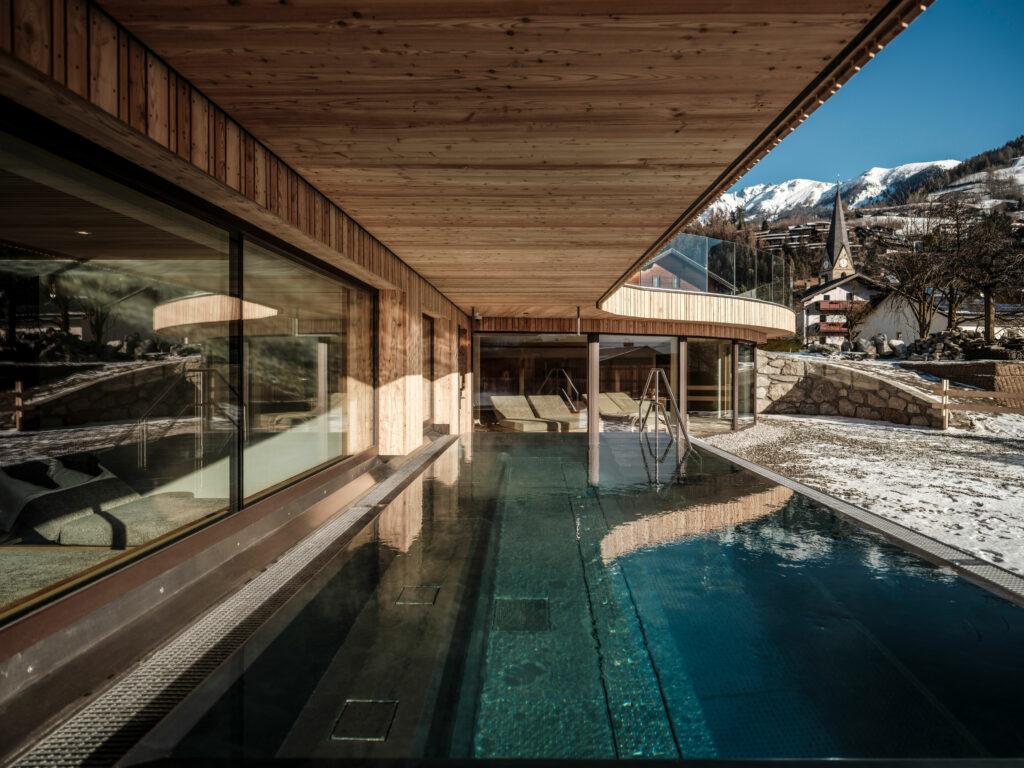
Many measures to reduce energy and resource consumption occur behind the scenes. Some of the most effective decisions are related to heating, cooling, electricity, and water.
For example, at the Naturhotel Outside, the warm water from the outdoor pool is stored in a tank when the spa is closed. LA VIMEA has made a conscious decision to avoid using mini-fridges and air conditioners in the rooms as much as possible. At Relais del Maro, the air conditioner turns off automatically when a window is opened.
Green Pearls® believes: Technical innovations can help the environment.
#6 And what about the people?
Fair working conditions, training, regional economic development, and social projects are also part of sustainability. (On the blog, we’ve discussed social sustainability and its applications in the tourism industry in more detail.)
As a guest, it can be difficult for you to spot this aspect. Clues may include staff being introduced respectfully or guests being involved in social projects.
For example, at My Arbor, there is the “My Water” campaign. When you purchase Plose spring water, 1 euro per bottle is donated to regional organizations. Last year, the campaign raised around 15,000 euros.
At the Klosterhof Alpine Hideaway & Spa, you will find a note in your room stating that if you opt out of daily housekeeping services, five euros will be donated to the Bad Reichenhall Mountain Rescue Service.
Charity Hotels

Some hotels were founded specifically to support the local community. The Pavilions Himalayas — The Farm in Nepal, for example, donates 70% of its net proceeds to Right4Children. Read more about it in our article on charity hotels.
By the way: Green Pearls® was founded precisely because many effective measures usually go unnoticed. From the beginning, founder Stefany Seipp has been dedicated to promoting the “green initiatives” of partner hotels and vacation homes, presenting them transparently on their microsites. Social responsibility, energy and water management, and regional cuisine are all part of this commitment.
#7 What kind of mindset do you feel?
Finally, it’s also worth getting to know the hosts and their beliefs.
Every Saturday, the Hotel Korinjak on the Croatian island of Iž gives guests an orientation on the hotel’s concept, island life, and the mindful use of resources. At the Hotel Weihrerhof in Ritten, the Pichler family shares their love of nature and engages in conversation with guests (in this small hotel with just 23 rooms, it’s easy to get in touch with the family directly.)
Green Pearls® believes: Large hotel chains can make a big difference through individual initiatives. At small, independently run accommodations, however, guests often have the opportunity to speak directly with the hosts, learn the reasoning behind specific decisions, and perhaps even get a behind-the-scenes glimpse.
Side Note: Is AI a help or a hindrance?
Do you still use search engines or travel platforms to search for hotels? Or do you ask ChatGPT, Google AI, or other AI systems for recommendations?
The way we search for travel information online is changing rapidly. AI systems are increasingly answering questions directly and providing personalized recommendations based on your interests.
This can be extremely helpful. However, those who don’t curate their online presence through trusted partners may fall behind. AI systems don’t rely solely on information from a specific hotel website; instead, they draw on information from various sources. These sources include travel platforms, media reports, certifications, and curated networks like Green Pearls®. (Disclaimer: self-promotion 🙂 )

At Green Travel Blog and Green Pearls®, we believe the best approach is to explain resource conservation, environmental protection, and social responsibility measures in a concrete, transparent way (exactly what the Green Claims Directive calls for). That’s why we’ve always shown you exactly what accommodations do and why.
For over a decade, this approach has led to the development of our community of travelers who take a closer look, make informed decisions, and select trips that align with our values.
Are you in? Here’s another overview/quick check for your next trip.
Kurzcheck: Woran erkennst du eine Unterkunft, die Verantwortung übernimmt?
✓ Is travel to the accommodation taken into account? (For example, is there information on train travel, shuttle services, or bike rentals?)
✓Are single-use products avoided?
✓Do you learn where the food comes from and who produces it?
✓Are materials and their origins explained?
✓Is there transparent information about energy, water, and other behind-the-scenes measures?
✓Are social projects, regional economic impact, and employee relations highlighted?
✓Do the hosts discuss their decisions and initiatives?
The more questions you can answer “yes” to, the better you can understand how an accommodation takes responsibility for the environment and its people.
Save this article on Pinterest.



Sustainable travel now encompasses a broader concept than sustainable practices. It encourages travelers to make responsible decisions that minimize environmental impact, support local economies, and promote cultural understanding. From choosing greener transportation options to staying in locally owned accommodations, every travel choice can contribute to a more positive experience for destinations and communities. As awareness grows, sustainable travel continues to adapt, helping people enjoy meaningful journeys while preserving natural and cultural resources for the future.