„Once upon a time…“ Are you as big a fairy tale fan as we are? Then we have two special treats for you this week. We are taking a look at the myths and legends that exist around our partners.
No laundering between the years
All kinds of superstitions surround the nights between December 31 and January 1 and January 5 and 6. In some places, these nights were considered so dangerous that special rules had to be observed. The house was not allowed to be untidy under any circumstances. It was forbidden to wash and hang laundry. Especially white laundry was dangerous at that time. It could be stolen on the line by wild horsemen and used as burial shrouds, they feared.
Now that we know, we shouldn’t do laundry on New Year’s Eve the next year, we stay in the mountains a bit longer. More precisely, in Berchtesgaden. Here you will not only find the Berghotel Rehlegg, but also a legendary mountain range: the Watzmann and his family.
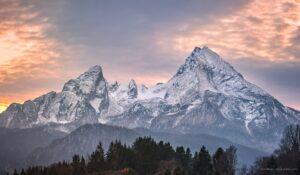
The Watzmann-Mountains
If you think that there is a sweet story hidden here, we have to disappoint you. In fact, the story of King Watz is quite bloodthirsty. We give you the short version of it:
Once upon a time, in ancient times, there lived and ruled a rough and wild king, whose name was Watzmann. Love and human mercy were foreign to him, only hunting was his pleasure. With his wild hunt he roamed the land day in and day out and his people trembled with fear. God’s forebearance, however, allowed the king to do his evil deeds.
One day, the king’s troop came across a shepherd’s family. The shepherdess sat calmly in front of her hut on fresh hay and held her slumbering child in her arms. Beside her lay her faithful dog, and in the hut rested her husband, the shepherd. The dog tried to protect the shepherdess and her child, but all three were attacked by the king’s hunting dogs. Meanwhile, the king came close, saw the disaster and laughed. Even the awakened shepherd could not save the family.
The bloody ending
With his last breath, the shepherd cursed the king, and God’s forebearance came to an end.
The spirit of vengeance entered the king’s dogs, and they attacked him, his queen and his seven children. Their blood flowed down to the valley and formed the King’s Lake. The dogs threw themselves from the mountain, which was henceforth known as Dog’s Death. From the bodies of the royal family grew giant mountains, and so he still stands, the king Watzmann, and next to him, a rigid prong, his wife, and around both the seven prongs, their children.
The next legend from the Dolomites is somewhat less bloodthirsty. Here you can find the Paradiso Pure.Living in the middle of the UNESCO mountain park Schlern-Rosengarten.
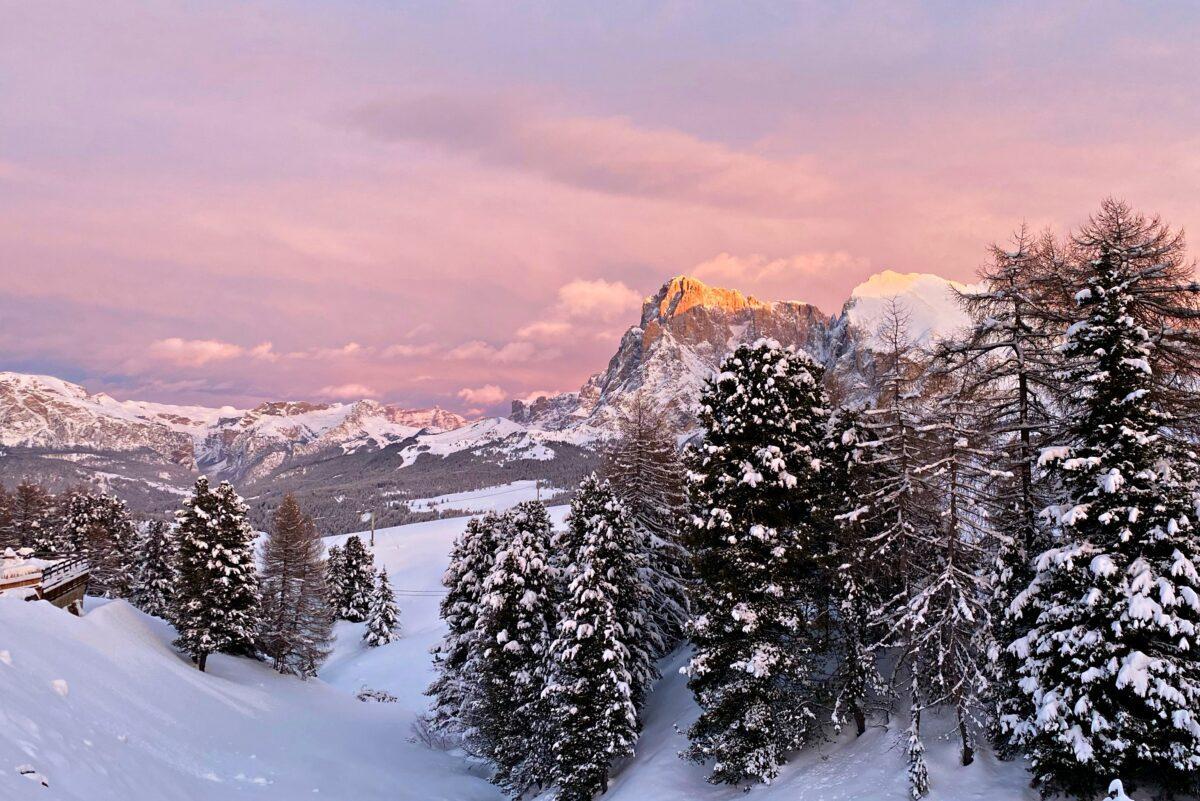
This rare color of the mountains and sky during sunset, called alpenglow or Enrosadira has its very own legend: The dwarf king Laurin lived in these mountains many centuries ago. His special pride was the rose garden, the most beautiful one you can imagine. The only thing he lacked in his kingdom and garden was a wife.
The legend of the Alpenglow
One day, the king of a neighboring kingdom decided to marry his beautiful daughter Similde. The only one who did not receive an invitation was the dwarf King Laurin. King Laurin was furious and decided to use magic to see the beautiful princess. He put on the magic cloak of invisibility and sneaked into the party.
As soon as he saw Similde, he immediately fell in love with her beauty and took her to his kingdom. The knights of the Adige pursued the princess to free her. The battle took place in his beautiful rose garden. But although the king was invisible, the knights recognized him by the movements of the roses around him and were able to defeat him.
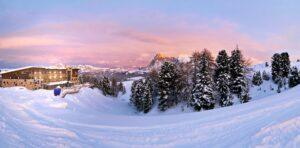
Magical Glow in the Alps
King Laurin decided that his roses had betrayed him and cursed his rose garden. He said that no one would ever see the beauty of his rose garden again, neither by day nor by night. But Laurin forgot to mention sunrise and sunset in his curse. Legend has it that the beauty of the magical rose garden can be seen today in the incredible phenomenon of alpenglow, when the sky glows pink and the mountains appear purple and orange at sunrise and sunset.
With this, comparatively peaceful, saga, we’ll call it a day. Don’t you find it fascinating that such stories have led to today’s beloved fairy tales with their “…and they lived happily ever after”?
How does sustainable travel actually work? 5 ON-SITE TIPS FOR SUSTAINABLE TRAVEL
DO YOU LIKE THIS ARTICLE? SHARE IT!