
Chocolate: so delicious and yet so controversial. Almost three quarters of the world’s raw cocoa comes from West Africa. And the cultivation conditions there are often the exact opposite of sustainable.
Time and again, children are forced to perform hard labor. Farmers are exploited and entire areas of land are destroyed to create more space for plantations. Between 1 and 1.5 million children have to work on the cocoa plantations instead of going to school. For the families, it is mostly a matter of survival. Only about 5 percent of the cocoa sold worldwide comes from organic farming.
Sustainable farming is important
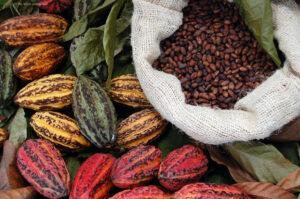
Cocoa beans are the seeds of the cocoa tree. After blooming, it takes about six months for the fruit to ripen. Although the tree bears fruit all year round, only a fraction of the flowers actually open. Researchers have shown that flies and, above all, ants play an important role in the pollination of cocoa flowers on cocoa trees in Indonesia. This makes biodiversity on the plantations and a biodiverse environment all the more significant.
So, what does this mean for you? No more chocolate? While this may also be a solution, there are also some other approaches to make the cultivation of cocoa more sustainable. Our Green Pearls® partners also have to address this when they use cocoa in their hotels.
Where does the cocoa come from?
CERVO Mountain Resort asks the following questions when purchasing chocolate: Where does the cocoa bean come from? How is it grown, and how is the bean processed? Is there fair payment for the producer? What is made from the cocoa bean residue?
Only when they are satisfied with the answers, they buy the chocolate. Organic products and Fairtrade certifications are a good guide here. However, as always, you have to make sure that the seals are meaningful. An UTZ seal, for example, is not.

Fairtrade and organic farming
The Berghotel Rehlegg buys their chocolate from the Zotter manufacture. They produce their chocolate in Austria. The manufacture is certified organic and Fair Trade verified. Zotter is a member of WFTO (World Fair Trade), which monitors compliance with the 10 principles of fair trade such as fair payment, no child labor, transparency, concern for the environment and much more. The Austrian company is also one of the top 25 chocolatieres in the world.
“Fair trade and processing from the cocoa bean to the finished chocolate are essential to us,” emphasizes Katharina Lichtmannegger from Rehlegg.
Okelmann’s in Lower Saxony therefore uses as little chocolate as possible. The chocolate used comes from fair trade and organic farming to be as sustainable as possible. “In our café, we also sell sailed chocolate, which is transported across the Atlantic by sailing ship in a completely CO2-neutral way,” Kristin Okelmann tells us.
So as you can see, there are a few solutions for how you can continue to enjoy chocolate. Have fun snacking responsibly!
Cocoa with guarana is also great to wake up! If you want to know what else, then take a look here: PLANT BASED PICK-ME-UPS
DO YOU LIKE THIS ARTICLE? SHARE IT!


3 thoughts on “Chocolate: how to snack sustainably”