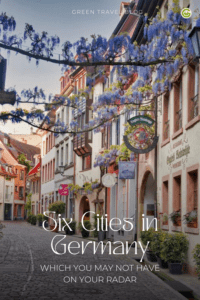
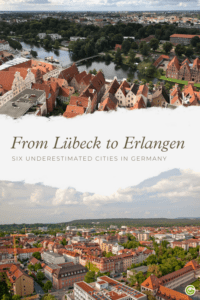
There is more to Germany than Berlin and Munich! We present 6 lesser known cities in Germany that are definitely worth a visit! Best of all, with short travel distances and the option to get there by train (or even e-bike), such a city trip is ideal for a sustainable getaway – combined with green accommodation, of course 🙂
FÜSSEN – A city of romance and history
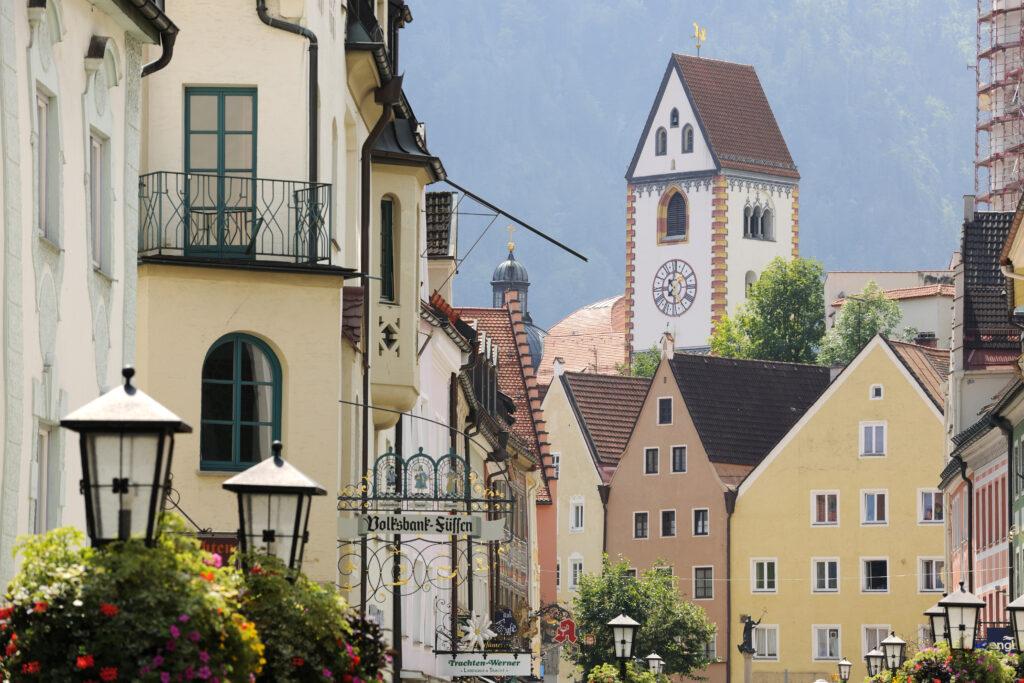
Romanticism refers to a period of intellectual life in Germany (18th and 19th century). In contrast to other epochs, such as the Enlightenment, Romanticism emphasized emotions, fairy tales, and a turn to folk traditions. A symbol of Romanticism is Neuschwanstein Castle – a residence that Ludwig II had built (or rebuilt) entirely according to idealized, medieval ideas. The recurring motif is the swan – the heraldic animal of the Counts of Schwangau.
The town of Füssen is located in the immediate vicinity of Neuschwanstein Castle and the royal castle of Hohenschwangau. The medieval town has a particularly charming old town with many fountains and a well-preserved city wall. If you are interested in traditional costume fashion, the pedestrian zone (Reichenstraße) has several traditional costume shops. Fashion here is more expensive than fast fashion, but much more durable and ecological.
For sustainable accommodation, we recommend Hotel Das Rübezahl Romantic Hideaway & Boutique Spa. You’ll have a direct view of the castle from the hotel’s outdoor pool and newly landscaped spa garden. There are also special romantic suites for couples – with castle views, of course. The Thurm family, which runs the hotel, is committed not only to tradition but also to environmental and climate protection.
BAD HERRENALB – A climatic spa with healing waters

Are you planning a city trip with a cultural program, but foremost you want to relax? Then you should travel to Bad Herrenalb in the Black Forest. The spa town has been awarded the title of “climatic health resort”. So you are automatically doing yourself good as you stroll through the town and the spa gardens. You can tap healing water from a fountain, and thermal water also comes out of the ground. This is mineralized groundwater that bubbles up at over 20°C.
If you would like to bathe in this water, the eco-friendly wellness hotel SCHWARZWALD PANORAMA has its own indoor thermal swimming pool integrated into its spa area. There is also a Selfness Center with meditation, yoga, forest bathing, fasting and TCM therapy. In Bad Herrenalb itself, you can visit the Brick Museum or shop for fair trade products at the World Store.
ERLANGEN – Bavaria’s “smallest big city”

One of the oldest buildings in Erlangen is the Huguenot Church, which was built in 1686 for the Huguenots – French Protestants who were persecuted at the time and fled to Germany in their thousands. From the tower of the Huguenot Church you have a wonderful view of the city, reveals Creativhotel Luise. The sustainable hotel is one of the pioneers of eco-tourism. The hotel rooms are made of renewable materials, and the astronaut showers use very little water.
In the old town of Erlangen, you can stroll through the narrow streets and find unique shops like the paper shop or small restaurants. For an outing, visit the city’s parks, such as the Schlosspark, the Botanical Garden, or the Aroma Garden.
LÜBECK – The Port City is a UNESCO World Heritage Site

The northern German Hanseatic city of Lübeck was founded in 1143 and has been a UNESCO World Heritage Site since 1987. There are many brick buildings in the old town, as well as a wide range of museums, theaters and cultural events. Lübeck’s famous marzipan is now available in a vegan version (“Niederegger goes VEGAN“).
The nearby Lifestylehotel SAND in Timmendorfer Strand on the Baltic Sea recommends a visit to the Hanseatic Museum in Lübeck. In the evening you can end the day with a walk on the beach or on the roof terrace of the lifestyle hotel. By the way: From Timmendorfer Strand you can easily reach Lübeck by bike in about an hour! It’s good for you, the environment and your wallet. 😉
WERDER (Havel) – The Old Town of the city lies on an Island
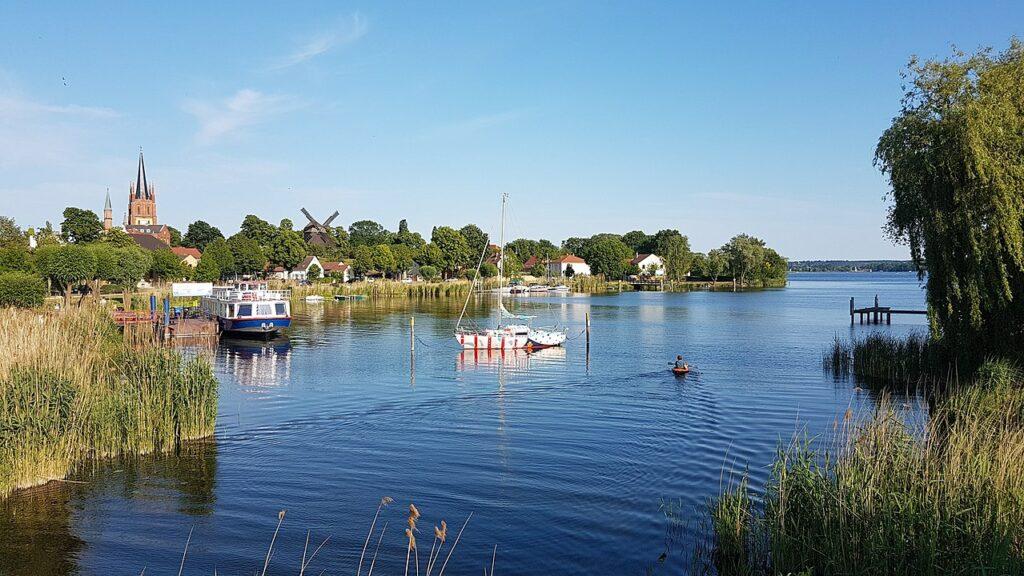
The city of Werder is a town of about 27,000 inhabitants located southwest of Berlin in the water-rich Havelland region. In the middle of the Havel River, the old town is located on an island and features cobblestone streets and lovingly decorated houses. The Havel itself is a river that flows through numerous lakes around Werder and Potsdam, each of which is worth a visit. Because of Werder’s location on the Havel, there are many opportunities for water sports. For example, there are rowing clubs, sailing boats, windsurfing and regattas. Excursion boats are also available. Werder is also known for the Blossom Festival, a popular folk festival that will take place next year from April 27 to May 5.
Also in the Havelland region is the Landgut Stober on Lake Groß Behnitz, one of the many lakes in the Havelland region. The hotel is CO2 positive and certified organic. Its idyllic location makes it a popular venue for meetings, private parties and weddings.
FREIBURG – The Sunny Student City

Freiburg is considered to be the warmest city in Germany with many hours of sunshine. Due to its proximity to France, the student city has a Mediterranean flair that sets it apart from other big cities. “Younger, more innovative, more cultural” is how the radio station “Deutschlandfunk Kultur” describes it.
About five decades ago (1973), Freiburg’s students stood up against the planned construction of a nuclear power plant and made history in the German anti-nuclear movement. During this time, the environmental organization BUND was founded, as well as the “Green Party” and the Öko-Institut Freiburg, which still influence the green thinking of many residents today.
In the modern Freiburg district of Vauban (which, by the way, is considered particularly “green”, as we described in more detail in the urban development blog post), the Green City Hotel Vauban is located right at the tram stop. The hotel is committed to urban greening, environmental protection and inclusion.
You can reach all of our cities and accommodations in an environmentally friendly way by public transportation and also strengthen tourism in the region.
If you prefer to travel within Europe, you can find our City Guide Pt 1 here:
Cities in Europe you need to visit sustainably (City Guide Part 1)
Save this article for your next green weekend trip.