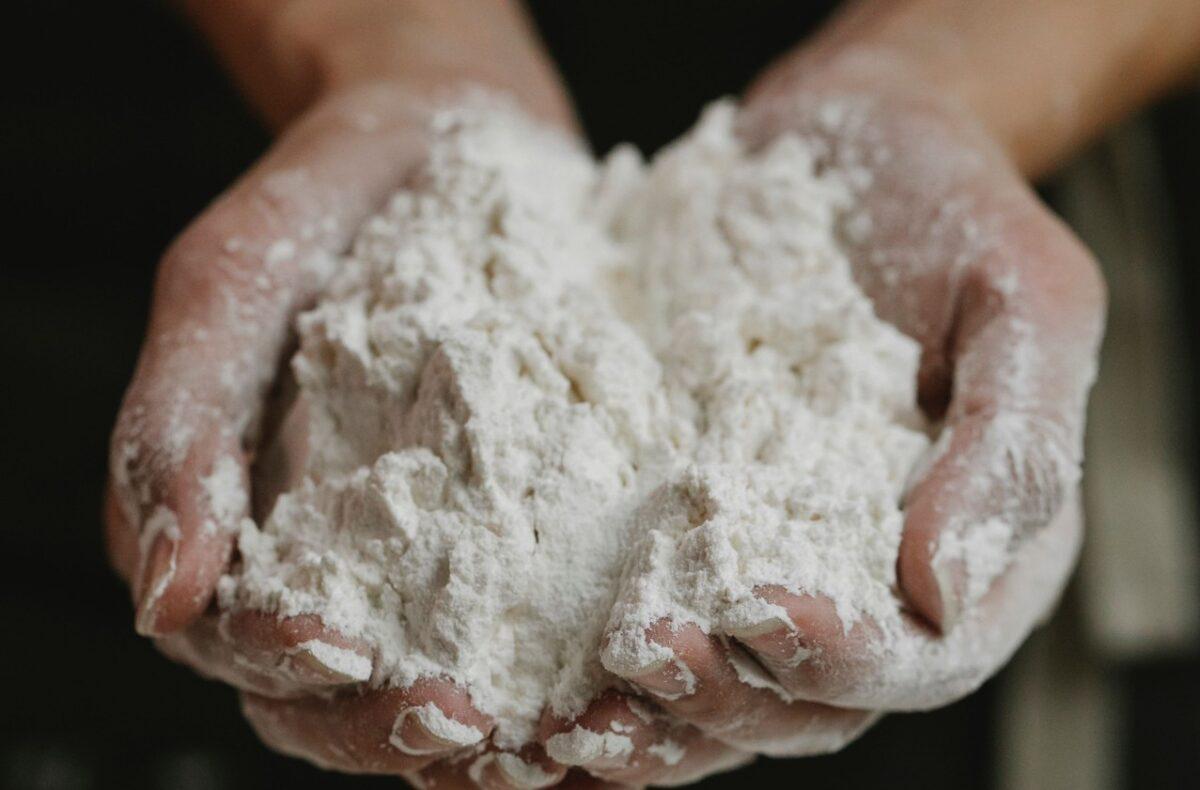
We’re all familiar with flour designations such as Type 550, 405 and 1050. But what do these numbers actually mean? What is the story behind ancient grains and organic flour? In this Insight, I delve into the surprisingly complex world of flour and offer a brief guide. IMAGE: Pexels
What is flour, and how do flour types differ?
When people talk about flour, they are usually referring to the fine powder produced by grinding different types of grain. However, the term is not limited to grains: other finely ground foods, such as legumes and pseudocereals, as well as processed insects since the enactment of an EU regulation, are also referred to as flour. Consequently, flour is primarily distinguished by its source material. Other factors include the type of flour (e.g. Type 550) and how finely it is ground.
The type of flour indicates
The flour type indicates the ash content, expressed in milligrams per 100 grams of flour. In other words, it measures the amount of ash remaining after a combustion test on 100 g of flour. Knowing the ash content is useful because it is closely related to the mineral content, including magnesium, zinc and iron. This, in turn, depends on how many parts of the original grain, such as the bran, were ground. This is why there is no flour type designation for whole-grain flour, since the ‘whole’ grain is used. In other words: The higher the type, the higher the mineral content.
Flour grind
The grind, on the other hand, refers to terms such as “fine,” “coarse,” “medium,” and “all-purpose,” and indicates how finely a flour has been ground. For more information, see here.
What about organic and ancient grain flour?
The types of grains used and the method of production do not differ between organic and conventional flour. Whether flour can be labeled as organic depends solely on how the grains were grown. In organic farming, synthetic chemical pesticides are prohibited, and only water-soluble fertilizers are used.
Info: The use of pesticides and fertilizers in conventional agriculture is a documented problem for our groundwater.
On the other hand, ancient grain flour is simply flour made from ancient grains. The term is neither protected nor clearly defined. In Germany, however, it generally refers to einkorn, emmer, wild rye, and Khorasan wheat. These are varieties of grain that have undergone less breeding over the years and therefore remain very close to their original form.
Unlike popular modern grains, such as wheat, they have tougher husks that protect them better from pests and environmental factors as well as greater resilience and a distinct flavor.
Unfortunately, they are less suitable for baking because they produce very soft, unstable dough.