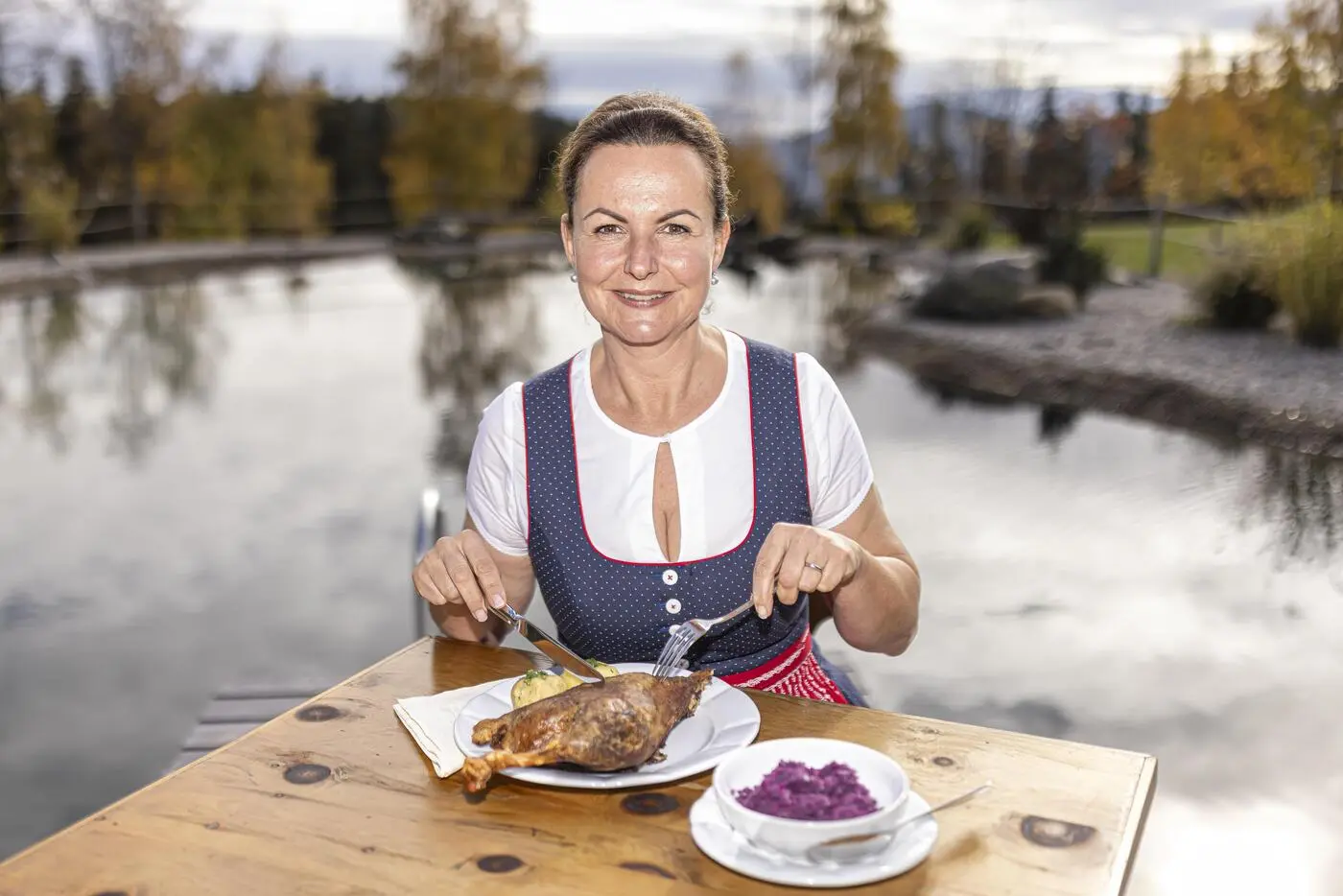
For many, roast goose is a traditional dish served between St. Martin’s Day and Christmas. But how was the goose raised, and what was it fed? Barbara Sonnleitner of the Dorfschenke at Ebner 1822 investigated these questions for her kitchen.
She and her husband, Mario, operate three farmhouse-style vacation rentals that are part of the Green Pearls® network. In front of the property sits a natural swimming pond, with the village tavern right next to it. Inside, Barbara cooks classic Austrian dishes for guests and locals.
WWF: How your roast goose might be linked to deforestation
The first question is whether or not meat should be included in the festive meal. Those who decide to include meat should consider the source of the animal’s feed. The WWF points out that conventional goose farming, which relies on soy as feed, contributes to the destruction of South American forests and savannas. Their recommendation is: “Buy less meat, but choose higher-quality meat.”
When it comes to animal husbandry, the Consumer Advice Center recommends looking for an organic certification or a protected designation, such as “free-range.” Claims such as “farm-raised,” on the other hand, are not reliable.
A closer look is better than blind trust
“We always want to know the people behind our products,” Barbara explains. That’s why she personally visited the Granitzer organic farm where her geese are raised. “We took a very close look at how the geese live.”
She brought her attention to ingredients from her previous Heurigen business in Vienna with her. However, when it comes to seasoning, she deliberately keeps it simple.
Barbara’s tips for holiday goose
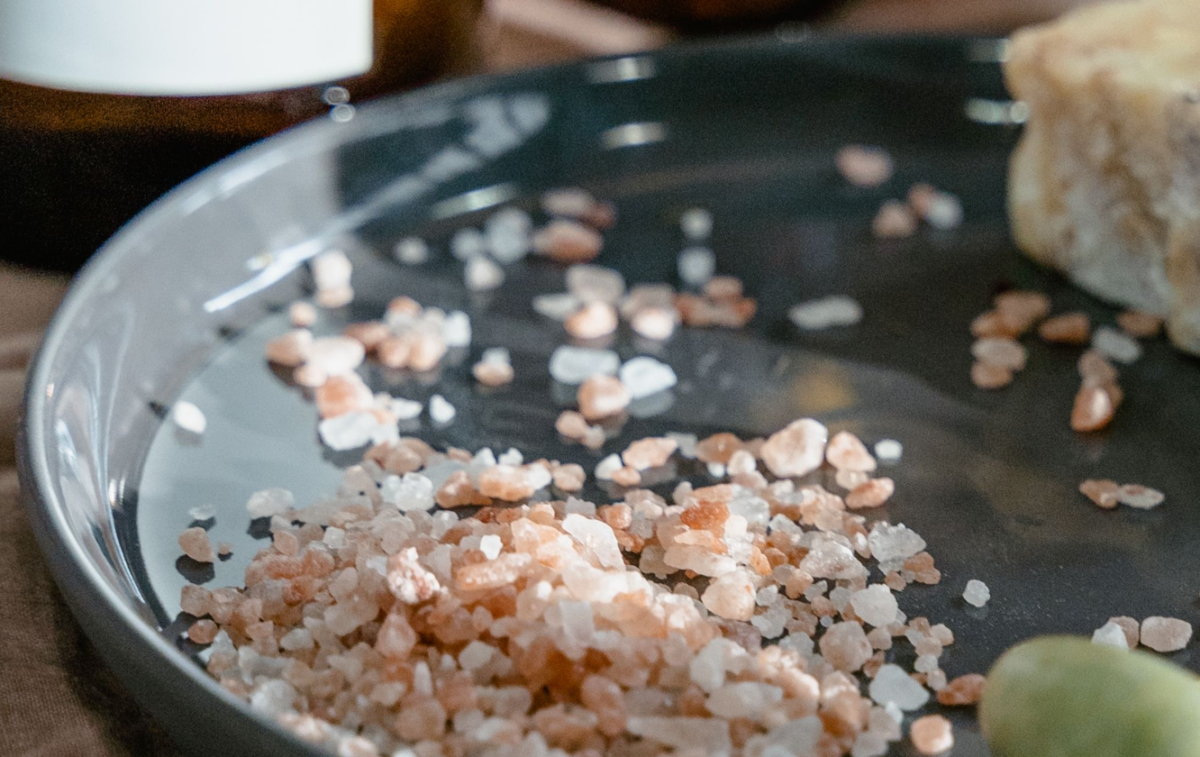
- Preparation: Pat the ready-to-cook organic goose dry. Season it with salt, pepper, and marjoram, using more seasoning inside than outside. Place an apple and some marjoram inside the cavity.
- Roasting: Cook in a roasting pan with a little water at 160 to 180°C with top and bottom heat. Add more liquid as needed during cooking. As a general rule, Barbara recommends 45 to 60 minutes per kilogram. (That’s three hours for a three-kilogram goose.)
- Also, check for doneness. The core temperature must reach at least 70 °C.
- For crispy skin: Toward the end, briefly increase the temperature and watch carefully so the skin doesn’t burn.
- Serving: Serve with apple-red cabbage, small bread, and potato dumplings. Barbara’s tip for the red cabbage: Grate the apple very finely.
You can find more insights and the recipe feature in the Kleine Zeitung.