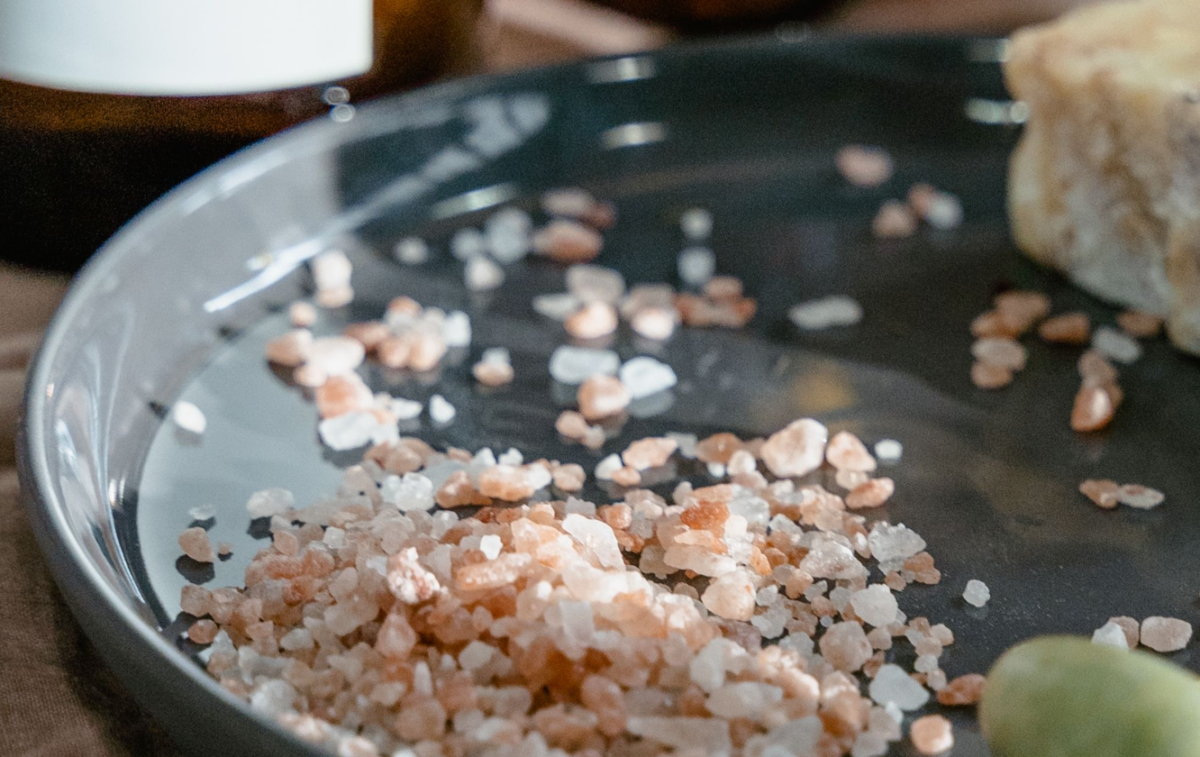
Salt lies deep within the earth, is dissolved in the world’s oceans, and shapes entire landscapes. Our bodies need salt, too—more precisely, the minerals it contains, such as sodium and chloride. But does this also apply to external use? For thousands of years, salt has been used in therapeutic baths and health treatments. What’s the story behind this? IMAGE: Pexels
Salt, brine, and salt caves—what does the science say?
Salt on the Skin: Salt scrubs remove dead skin cells. However, there is insufficient evidence to show whether salt has any advantages over other exfoliating agents. More interesting is the research on mineral-rich salt baths, such as those using Dead Sea salt.
Saltwater Baths: Saltwater baths can benefit certain skin conditions, such as psoriasis. The combination of saltwater baths and UV light therapy has been well-studied. However, it is often difficult to distinguish the effects of the salt from those of light therapy.
Salt Caves: These caves are often promoted for their purported beneficial effects on the respiratory system. However, there is currently insufficient scientific evidence to support the effectiveness of halotherapy, or the inhalation of salt-rich air, in treating respiratory diseases (e.g., asthma).
Although not all of its health benefits have been scientifically proven, salt is a fascinating natural substance with a history stretching back thousands of years. And for many, salt baths and brine treatments are an essential part of a relaxing wellness experience.
In search of the white gold
Salt plays a special role at the Klosterhof Alpine Hideaway & Spa in Bayerisch Gmain. In Bad Reichenhall, salt has shaped the region’s history for centuries. This fall, the Green PearlsⓇ hotel will spotlight salt and pair it with the forest behind the hotel.
At the Artemacur Spa, you can relax in the brine pool, which has a salt content of 15 percent, or treat yourself to a salt scrub. If you’d like to experience the “white gold” outside the spa, the hotel can suggest excursions, such as hiking along the historic brine pipeline trail, visiting the Old Salt Works in Bad Reichenhall, or strolling past the Graduation House in the Royal Spa Gardens, where brine trickles over blackthorn bushes.
- Learn more about the Salt & Forest Retreat at Klosterhof.
And in case you’re wondering which salt is the most sustainable for cooking, check out the linked article.