Moss art, moss walls, and logos made from lichen: We love using natural materials in interior spaces. But does “natural” automatically mean environmentally friendly? IMAGE: Pexels
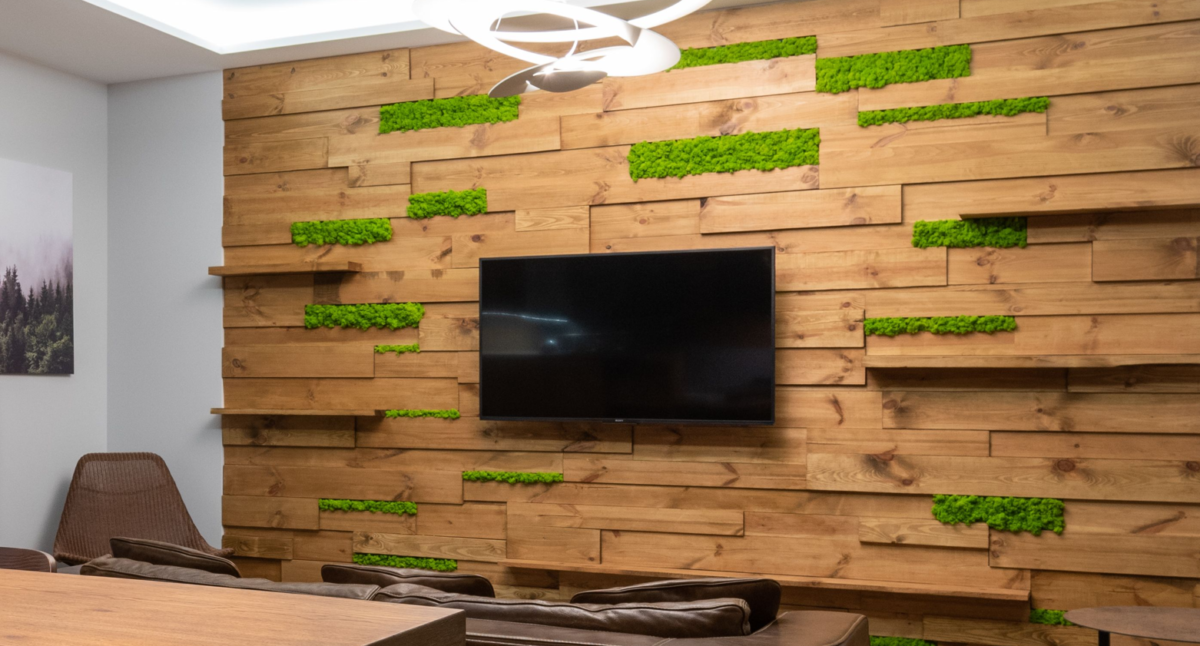
Benjamin Förtsch, the host at Hotel Luise in Erlangen, had the same question. The hotel features several decorative elements made from moss and lichen. However, after investigating their origin more closely, the team decided not to purchase any more.
„“We have found that many mosses and lichens used for decorative purposes are harvested from the wild. These plants grow back very slowly. Intensive commercial harvesting can delay regeneration and harm natural habitats.” —Benjamin Förtsch
In fact, vendors often use phrases like “harvested in Scandinavian forests” in their advertising. But is that problematic?
Moss or lichen as wall decor? And the reason the walls are dead
Mosses are plants. The popular “Iceland moss,” however, is a lichen, which is a symbiotic relationship between a fungus and a photosynthetic partner. Both mosses and lichens play useful roles in the ecosystem and are not parasites. In fact, a scientific review refers to mosses as “ecosystem engineers.” Depending on the species and location, they can:
- store water and influence soil moisture,
- reduce erosion and influence nutrient cycles,
- help shape microhabitats and conditions for seedlings.
Lichens are also extremely useful in forests because they provide habitats for a variety of small animals.
A moss wall is not a houseplant
Moss and lichen are only suitable for home wall décor when they are preserved, or dead, material. Even if you were to regularly spray the moss wall, it would be difficult to replicate the humid forest climate indoors. (And even if you could, it would lead to problems like mold growth.) Therefore, moss and lichen are usually treated with glycerin and color pigments.
After that, the moss or lichen stops growing, stops photosynthesizing, and no longer requires light or water. A positive aspect is that it remains biodegradable even after being preserved with glycerin.
The problem: Some grow quite slowly
According to the U.S. Forest Service, the average growth rate of commonly found reindeer lichen (Cladonia) is just 4.8 to 11.1 millimeters per year. It can take up to 10 years for a large patch to form.
Therefore, it is extremely important to determine how much moss and lichen is collected.
A 2009 scientific dissertation recommends collecting no more than 20 percent of the mosses and lichens in a forest area and then giving the area 5 to 6 years to recover through a collection ban. The question is whether this recommendation is being followed. After all, it is only a recommendation, not a law.
What should I look for when buying moss or Iceland moss?
If you still want to purchase moss or lichen, you should find out how and where it was collected, as well as whether the populations can regenerate.
- Where exactly does the material come from? Specify the country and, if possible, the region, rather than just “from nature” or “from Scandinavia.”
- How was it harvested? If it was harvested in the wild, it should be clear that the harvest is permitted and that there is a regeneration plan.
- Is there verifiable proof of this? When you see claims such as “controlled,” “certified,” or “sustainably harvested,” ask which specific certification, control, or approval is behind them.
Or should you do without?
The Hotel Luise has adopted a pragmatic approach: It will continue to use the elements it already has, but won’t purchase any new ones.
What do you think? Do you think moss and lichen are acceptable as wall decor? Let us know in the comments!